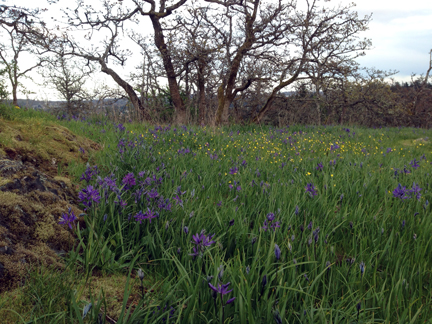
Blue camas, buttercups and spring gold bloom in a south Vancouver Island Garry oak meadow. Photo © Monique Keiran

When I first moved here, one winter many years ago, a long-time area resident gifted me with a list of some of her favourite outdoor spaces.

She rattled off the names of parks and trails that she enjoyed. Then she let slip the name of a small hilltop Saanich park.

“For spring wildflowers,” she said, adding, as if no explanation were needed, “It’s original Garry oak meadow.”

The following April, I found my way there. The day was damp and blustery. Watery-looking sunlight filtered through evergreens towering along the path. Not far into the woods, the sound of traffic from the busy roadway behind dropped off.

I climbed the hill and stepped out of the trees. Blue camas, buttercups and spring gold carpeted the ground. A few gnarly, naked oaks stood guard. Beyond some rocky outcrops, I found a patch of fawn lilies. A few satin flowers lingered on.

“So this is a Garry oak meadow.”
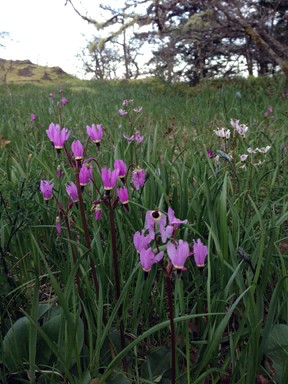
Shooting stars - pink and white. Photo © Monique Keiran

In the years since, the small farms that once bordered the park have bred single-families dwellings and townhouses instead of sheep and horses. Ivy, blackberry, Daphne laureola and other invasive plants choke the lower forested slopes, while other non-native plants invade the south-facing meadows.

But the greatest threat to this quiet, little jewel remains ill defined and uncertain, as it does to special places everywhere. Scientists predict that, over the next decades, the seasons here will feature greater extremes. Hotter, longer, drier summers will anchor the year, with frequent, intense storms punctuating the other seasons. How changing climate and its attendant baggage will affect Garry oaks and their attendant plants, microbes, insects and other critters remain unknown. Whether this Garry oak meadow will survive also remains uncertain….

Read the rest of this editorial at the Victoria Times Colonist.

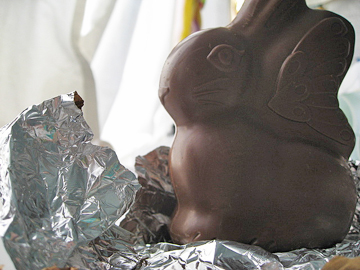
Chocolate bunny. Photo © Michelle (pa1nt), via creative commons and flickr

Warning: The following contains information that may be disturbing to chocolate-lovers. Reader discretion is advised.

I hate to break it to you just as you nibble on your chocolate Easter bunny’s ear, but we’ve been misled.

Happily and willingly misled, but misled nonetheless.

Chocolate eggs. Photo © Emily McCracken, via creative commons and flickrThose expensive, for-adult-consumption-only Easter eggs you stashed out of the kids’ reach? They aren’t going to keep your teeth from falling out.

The dark chocolate bunny (85 per cent cocoa) you selected—expressly, I know—to help stave off the heart disease that lurks in your DNA? It won’t.

Neither will it help you out-debate your belligerent brother-in-law at the festive table this evening, nor remember the names of his three—or was that five?—ex-wives and their abundant broods that he’s invited along.

I’m sorry.

For two decades, we’ve heard that the taste-good, feel-good, go-to food we turn to for a legal dopamine fix when our bosses, brothers-in-law and kids infuriate us can help keep us healthy. Popular media celebrated every study that hinted at links between chocolate consumption and decreased tooth decay, improved memory, improved circulation, decreased risk of heart disease and strokes, lower body mass index, and so on.

The reports provided hope—and justification for indulging…..

Read the rest of this editorial at the Victoria Times Colonist….

British Columbia’s south coast school districts are responsible for hundreds of schools and for the safety of students, faculty and staff learning and working within them. Although early earthquake warning systems have been around for years, when a school board seeks to install the systems in dozens or even 100 schools, the systems’ cost becomes a concern.

A device made of strong motion detectors and designed by University of British Columbia (UBC) engineers a few years ago provides cash-constrained school districts with a basic solution. The systems—developed by civil engineers at the UBC’s Earthquake Engineering Research Facility—use off-the-shelf accelerometers that cost pennies each, detect vibrations and measure ground motion. Large numbers of low-cost accelerometers are assembled and configured to optimise the quality and sensitivity of the motion signals detected and measured.

As with most early earthquake warning systems, the devices designed for schools are calibrated to detect earthquakes’ compression (P) waves, which children may not notice and adults may ignore. Fast-moving P-waves, which rarely damage structures, may be mistaken for the rumbling of a heavy truck nearby. They precede a quake’s slower, damaging shear (S) waves—by just a few seconds or as many as tens of seconds, depending how far away the earthquake’s ground zero is.

Encased in plastic cylinders, the school devices are usually buried in pairs—each about 30 metres apart from its partner—and about two metres deep in a schoolyard. They connect to black boxes in the schools, and relay signals and measurements to powerful servers at UBC, where software monitors and analyses them. The system is calibrated to recognise and disregard  tremors caused by construction, transport trucks or school buses. In actual earthquakes, it triggers alarms in the schools. This occurs within milliseconds and gives children, teachers and staff seconds to seek shelter beneath desks or in designated safe areas before the damaging S-wave arrives.

Earthquake Engineering Research Facility Director Dr. Carlos Ventura, P.Eng., presented information about the earthquake early warning system already implemented and operational in the province to the BC Liberal caucus and Opposition leaders during APEGBC’s recent meetings with the provincial government.

Read the original article in Innovation, March/April 2016

Clover Point, site of one of Victoria's primary sewage screening plants, from across Ross Bay. Photo © Blake Handley, via Creative Commons and flickr

Clover Point, site of one of Victoria’s primary sewage screening facilities, from across Ross Bay. Photo © Blake Handley, via Creative Commons and flickr

The new sewage-treatment schedule that the Capital Regional District proposed earlier this month contains tight deadlines.

In order for this latest development to pan out, proponents for building a secondary treatment plant in the region must determine a new timeline and acquire all approvals and a site for the treatment plant by this time next year.

At stake is an $83.4 million grant from PPP Canada for a facility to handle material removed from liquid sewage.

Project opponents may see the extension as yet one more year to cause delay.

Of course, if the CRD or either group of municipalities that is exploring sewage-treatment options doesn’t meet the March 2016 conditions, the larger initiative will churn on. Two other federal grants, worth $170 million, and the province’s contributions have roomier deadlines that may accommodate the region’s revised forecast for completion by 2023.

Delay, in fact, may result in better sewage treatment options. For example, researchers announced this January that they had identified and successfully extracted appreciable amounts of rare metals from biosolid samples collected from cities across the U.S. Their study focused on 13 high-value minerals, including gold, silver, copper, iridium, and platinum. Extrapolating their results, the researchers estimate $16 million dollars worth of metals could be accumulating every year in the sewage of a city with one million residents.

Of that, the researchers say almost $3.5 million could come from gold and silver alone….

Read the rest of this editorial at the Victoria Times Colonist….

Clover Point, from the west. Photo © Blake Handley, via Creative Commons and flickr

Photo © Ray Frances Ong, via flickr and Creative Commons


I hope the organic food I purchase is “organic,” even though I KNOW all the food I eat is organic.

I realise that sounds confusing, but the word organic has many definitions.

The B.C. Government recently announced it would introduce regulations to govern the word’s use by food producers.

As we know, some farmers undergo extensive and expensive certification to demonstrate they’ve eliminated chemically made fertilizers, hormones and pesticides and genetically altered seed from their operations. Under B.C. and Canadian law, these producers may legally call their products “certified organic.”

Some other farmers eliminate the nasty stuff, but aren’t certified organic. These operations tend to be small and often lease farmland instead of owning it. Current regulations permit them to call their products organic, unsprayed, or pesticide free, provided they don’t market or sell their products outside B.C., or claim certification.

A third group of producers and sellers may exist who don’t use organic practices, but market their goods as such. The intended regulations mostly are meant to stifle these claims.

In these examples, we use Merriam-Webster’s definition of organic—“of, relating to, yielding, or involving the use of food produced with the use of feed or fertilizer of plant or animal origin without employment of chemically made fertilizers, growth stimulants, antibiotics, or pesticides.”

The dictionary’s other definitions of organic encompass broader meanings—for example, “of, relating to, or derived from living organisms” and “of, relating to, or containing carbon compounds.” These definitions turn the organic word-world into a muddy, microbe-infested swamp of connotation and implication….

Read the rest of this editorial at the Victoria Times Colonist….

Orion nebula. Photo © NASA

Orion nebula. Photo © NASA

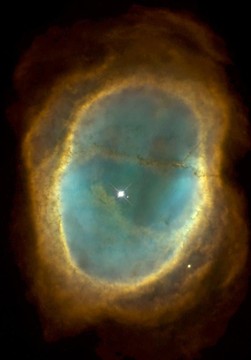
Ring Nebula. Photo © NASA

Ring Nebula. Photo © NASA

Next weekend, a few hardy members of the Royal Astronomical Society of Canada’s Victoria chapter will mark the start of spring with a little-known ritual. Clear skies willing, they will stay up until dawn on Sunday to participate in an astronomical test of endurance, knowledge and night-sky navigation skills.

Their marathon differs from most. Instead of running long distances, participants will spend the night hunched over their telescope eyepieces, twiddling knobs and adjusting their instruments by hand.  They seek not to cover territory on the ground, but in the sky. Their goal is to locate 110 very specific heavenly objects before dawn. The objects were first catalogued by a French astronomer named Charles Messier more than two centuries ago….

Read the rest of this editorial at the Victoria Times Colonist….

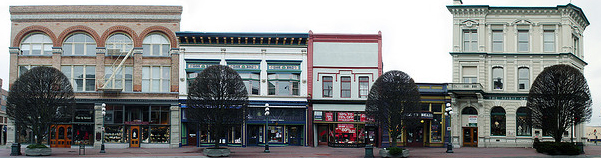
One block along Victoria's Government Street. Photo © Jason Vanderhill, via flickr & Creative Commons

One block along Victoria’s Government Street. Photo © Jason Vanderhill, via flickr & Creative Commons

I have little need for t-shirts, caps or jackets emblazoned with our capital’s name. I don’t bother with coasters, tea cozies or trinkets to remind me of my day-to-day existence here.

When I can step out my door to live the dream, I rarely think of shops that sell souvenirs to people who visit and want reminders of their brief time here.

I’m not the intended market.

However, a market clearly exists to keep the souvenir-type shops along Government Street in business, year after year.

They comprise about a dozen of the 50 or so shops along the eight blocks between Humboldt to Fisgard streets. This stretch of Government Street has been in the news lately, after Victoria Mayor Lisa Helps suggested lowering commercial property taxes along the street to encourage revitalization. The number of empty storefronts and For Rent signs—13 blackened storefronts at recent count—prompted her proposal.

Yet, while shops catering mostly to tourists are a minority along that stretch, their presence greatly influences the street’s informal, local brand. When many local residents think of Government street, it is often these shops that come to mind – and long lines of idling tour buses, sidewalk-clogging crowds, and phalanxes of kamikaze scooters.

Read the rest of this editorial at the Victoria Times Colonist….


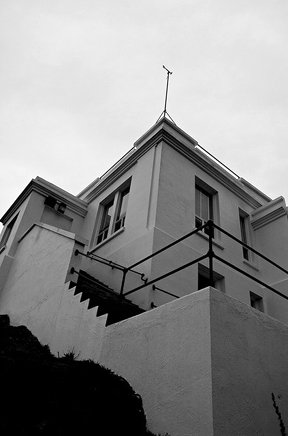
Gonzales Observatory served as Victoria's weather and time station. Photo © Cindy Andrie via flickr and Creative Commons


We lost an hour last night.

Don’t send out a search party. The hour is not hiding under the bed, or communing with dust bunnies at the back of the closet. It hasn’t eloped with a dish or a spoon, or ridden a cow bareback over the moon.

Our concept of time, with its discrete hours, minutes and seconds, is a result of our need for predictability and stability, and the progress of our technology.

Before moment-to-moment measurement became possible, we relied on the Earth’s tilted, spinning loops around the sun to measure time. Every sunrise, sunset, high noon, or full or new moon brought a new unit of time. The sun’s creep along the horizon signaled seasons. Animals and our own patterns provided points of approximate precision to our days. Wrinkles creeping across faces, children becoming adults, saplings maturing into trees, and other signs indicated decades.

Technology overturned that. Fire and electricity made night into day. Clocks introduced minutes and seconds, and made promptness, regular schedules and shift work possible.

Even after clocks became portable, sailors relied on the sun to determine how far east or west they had travelled. Ships’ captains determined high noon where they were, set one time piece on board to that time, and compared the difference against another time piece. On any ship flying under the Union Jack, that second time piece was set to Greenwich time, in England. In those pre-GPS days, time accuracy was essential for ships in port to set their time pieces and measure position.

As a major shipping port for the British Empire, Victoria benefited. For example, in February 1859, the Victoria Gazette reported that Captain Trevett of the Hudson’s Bay Company steamer Labouchere, which was in harbour, consented to fire a gun at noon every Thursday, so that the citizens of Victoria could “regulate their time pieces and obtain the true time.” Two decades later, the Work Point garrison established a time-keeping routine by firing its time gun at eight or nine o’clock on Monday nights….

Read the rest of this editorial at the Victoria Times Colonist….