Upon waking at la Maison des roses on our first day in St-Gély, about 20 minutes west of Bagnols-sur-Cèze in the south of France, we were up with the roosters. Before the roosters. And at about 9:00 A.M., right when the village was stirring, Gaston announced he was in need of a nap: jet lag was taking its toll.
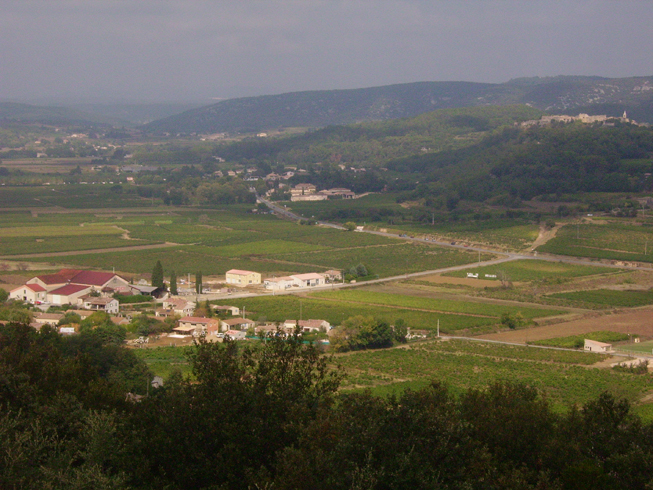
view-of-st-gely

St-Gély on the valley bottom at the left; Corneillon on the hilltop to the right

Two hours later, he was awake and ready to walk the three kilometres through wood and vale into Gourdagues for groceries. But—ah!— it was Sunday: We managed to catch the bakery just before it closed, but were too late for the supermarket. Half the week had passed before we amassed ingredients for a green salad.

As Mrs. Plaskett said to Helen Sawyer Hogg on the subject of incessant afternoon-tea engagements in Victoria in the 1920s and 1930s: “It has quite simply ruined my digestion.”

France pretty much shuts down at noon on Sundays. This is, of course, the case any day of the week. At midi, which lasts from noon until 2:00 P.M. at least, the only creatures that stir in the country’s towns and villages are cats, lizards, and visitors such as ourselves who haven’t figured out the French daily rhythm. And, on Sundays in deep France, you often don’t even have the post-siesta opening hours to look forward to.

However, after about a week of getting it wrong, in Fanjeaux, a village perched on the north edge of the Sault plateau about 20 minutes from Mirepoix, we found a wee salon du thé serving through the prolonged lunch hour. It opened its doors across from the back door to the Dominican abbey.
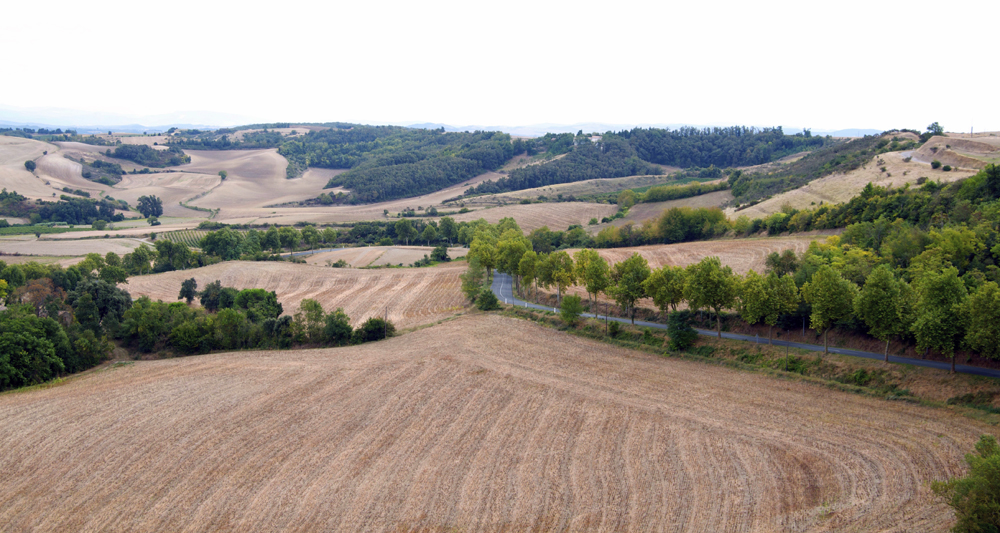
view-from-fanjeaux
Defenders of the faith at Fanjeaux’s Dominican abbey would have literally overseen miles of countryside.
The church and abbey themselves were firmly closed until 3:00 P.M.; Fanjeaux is a pilgrim town, being not only one of the way stops along the route through France to the via Compostela but home also briefly to Saint-Dominic. Church and abbey offer the faithful hope for refreshment on Sunday afternoons.

When we met up with Jason, whom Gaston had hired at Kananaskis Country 15 to 20 years ago, for supper on our one evening in Paris, he warned us about French mealtimes and their implications on the rest of one’s life if one does not abide with traditional working hours. He’s been in Paris for a few years now, working with producers and musicians there, as well as producing his own tunes in his studio, and he said it took him many, many many months to parse out the few cafes—mostly ethnic—in his faubourg, Montmartre, that remain open during the afternoon’s dark hours.

“I had to. Sometimes I don’t get out of the studio until 3:00 or 3:30, and after working for seven or eight hours straight, I can’t wait until 7:00 P.M.” Like many Parisians, Jason doesn’t cook much at home.

Not that any self-respecting restaurant in France would be ready to serve a guest at 7:00 P.M. Sure you can go in (with a reservation, bien sûr) and have a leisurely aperitif or two, but the staff are going to be bustling around you preparing for the evening for at least another half hour. It unlikely they’ll ask you for your order much before eight. But then, in France, they don’t rush you at the end of the meal by presenting the bill until you ask for it.

Since the early days in our vacation, we have adapted to local rhythms. Gaston now gets up in time to walk down to the bakery in our current village for croissants au beurre still warm from the oven. The neighbour’s dog, which greets him noisily and annoyingly on his return gets me up. We’re up and out the door for the morning’s adventures by 10:00 A.M., which is the earliest you can expect anything to be open around here. We’ve had a number of al fresco picnics on the side of the road while traveling from point A to point B. We consider that clever and efficient use of the extended noon-hour, which shows how un-French we are.

However, by the time the French lunch time is over and everything is once again open (by 3:00-ish, if you’re thinking commercial establishments), my lunch-time blood sugar levels start to dive. That, combined with the heat at the hottest part of the day and the searing sunshine and the day’s increased traffic on the roads, makes for clenched, knotted jaws and headaches for one, perhaps both, of us. Not completely adjusted, in other words. And the latest we’ve managed to eat supper at home is 7:00 P.M.

There was the very Parisian sight on leaving the hotel in the rue de Malte on our first morning in France. A man exited the building across the street and relieved himself au français by the front door.

This was perhaps considered acceptable behaviour a couple of centuries ago. It’s illegal now. Pissing perps can be fined hundred of Euros… if they’re caught. This explains the furtive look both ways for police as the guys sidle to the sides of buildings. That they continue to do it explains the smell of Paris in August or after any warm spell without rain for several days.

That this particular law-breaker was dressed in traditional Hassidic get-up, with high-crowned hat, black coat and side-curls, and the door next to which he was faire pisser was the entrance to a store-front synagogue added local colour.