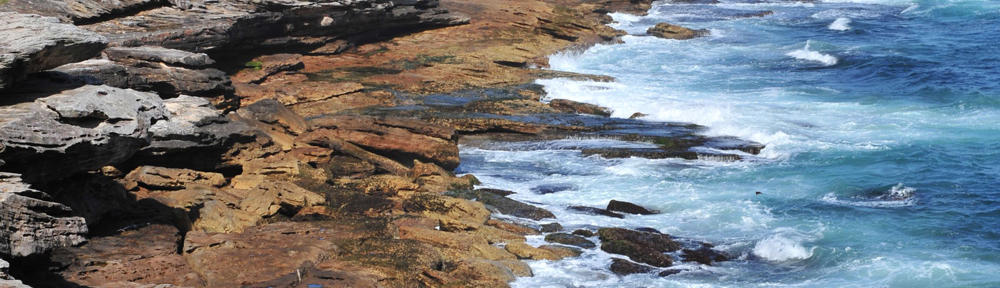
Waves breaking on the Ogden Point breakwater, Victoria, BC. Photo by Stewart Butterfield.

Someday, our hilltop house may be waterfront property. It won’t happen soon—certainly not this century, and maybe not even this millennium. However, if global warming continues, the surf may indeed break at the bottom of our driveway.

Nature Boy can’t wait.

When I point out the timelines don’t work with his schedule, he says, “Did you ever in a million years think we would live in a house that’s worth what our house is worth now?”

If he’s that excited about sea level rising in the next 200 to 1,000 years, it’s just as well he wasn’t around 11,000 to 13,000 years ago. Bison fossils on the San Juan islands and Vancouver Island suggest lower sea levels at the time created a landbridge from Victoria to the mainland. The link would have allowed plants, bison and other animals to spread here from the mainland at the end of the last ice age.

But the ice age is over, and climate is changing again. Last year marked the 36th year in a row in which global temperatures outpaced the 20th-century average. It was also the 10th warmest year since 1880, when people first started recording temperature.


Continue reading this editorial in Victoria’s Times Colonist newspaper….


Other sources include:

Sea-level rise in 21st Century

Sea-level rise and Vancouver flood protection upgrades

Canadian Arctic glaciers

Joint Victoria–Saanich–CRD meeting, November 21, 2012

Saanich Climate Change Adaptation Plan

Victoria Climate Change risk assessment

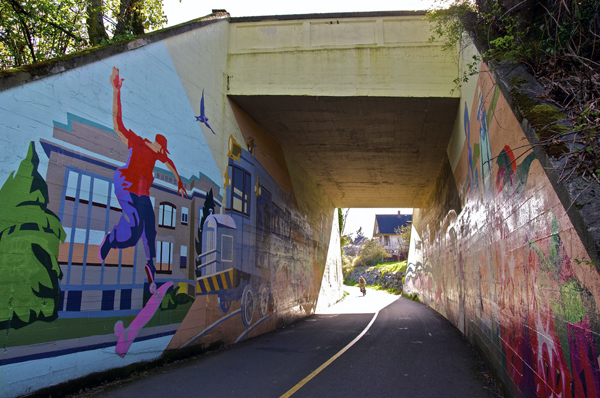
Mural art along the Galloping Goose trail. Photo by Alejandro Erickson

A couple of years back, archeologists undertook to examine decades-old graffiti on the walls of a London flat once rented by the punk-rock band the Sex Pistols.

The vandalism comprises eight scrawling cartoons. Most were created by John Lydon, a.k.a. Johnny Rotten, and feature himself, his fellow band members and other Pistols associates.

The archeologists later intoned in the journal Antiquities that the drawings, like the cave paintings at Lascaux, France, are pieces of art and deserve archeological investigation.


Continue reading…


Sources for this article include:

Johnny Rotten’s graffiti: the new heritage?

Capital Regional District bylaw

Church dome painted by graffiti artists


sequins, by Nina Matthews, www.redbubble.com/people/ninasphotos

Bling is in the air and here in Victoria, it isn’t frost crystals. Nor has it anything to do with Monday’s New Year festivities.
It has more to do with the disco-flashing crosswalk signals cropping up at Saanich intersections and the sun-catching glitter recently developed south of the border.


Read more….


Sources include:

GreenTech Exchange, Royal Roads University, November 2012 – Video

Carmanah Technology’s crosswalk signals

U.S. Department of Transportation crosswalk study


Victoria Times Colonist, December 15, 2012—Before I moved to Saanich, I never thought a person could suffer from sidewalk envy.

But here I am, living on a somewhat busy street in a neighbourhood that shed its last rural traces decades ago. On one side of the street, a ditch drains stormwater and runoff. On the other side, a narrow, raised ribbon of asphalt separates a strip of tarmac from the roadway.

That strip is the sidewalk. It’s usually adequate. Thanks to “no parking” signs on every power pole, nobody parks on it for long anymore, but during storms, entire sections become rivers. Its narrowness forces users to step into traffic when they meet oncoming pedestrians.

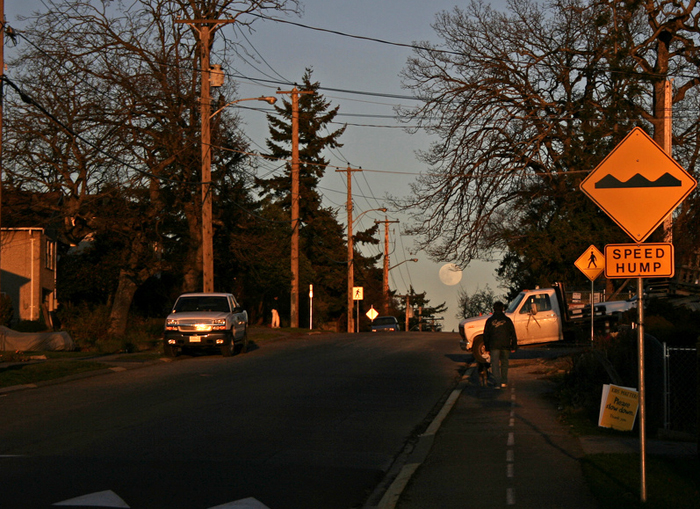
city non-sidewalk, by Jay-P at www.flickr.com/photos/esqenzo

Kids and parents troop up and down that strip to the schools at the end of the street every school day.

I’m thankful for this bit of pedestrian-only tarmac, yet every time I step out my door and head down the hill, I covet the sidewalks of Oak Bay and Victoria—concrete sidewalks, sidewalks raised inches above real gutters, lining most streets, lining both sides of streets….

In the 2012 CRD Regional Pedestrian and Cycling Masterplan, which despite its title is largely about cycling, the authors state one of the reasons they don’t identify pedestrian-trail networks in the document is that most municipalities in the region lack detailed information about sidewalks, curb let-downs, and marked crossings.

Indeed, great disparity in pedestrian information and facilities exists here. Esquimalt, with its 2007 Pedestrian Charter explicitly committing the township to developing pedestrian facilities and networks, is a high point. Oak Bay and Victoria do well by their walkers, as well. View Royal also has some lovely pedestrian boulevards.

And then there are large areas of urban Saanich. The municipality is playing catch-up on decades of residential development that omitted sidewalks. Every year, engineers and crews now retrofit a few more kilometres of raised, curbed walkways along busier streets.

The masterplan’s authors provide a second reason for not dwelling on pedestrian matters: pedestrians tend to walk locally—on local streets, through local parks, to nearby banks, libraries, shopping—and in combination with other forms of transportation—to and from bus stops, bike racks and parking lots. With such foot-traffic patterns, the authors say, pedestrian-related efforts should focus on developing access to regional services, centres and transportation hubs.

That would be helpful.

However, among the 10 percent of regional residents identified as regular pedestrians, a small but significant number of people regularly walk four, five or six kilometres across entire municipalities twice a day to get to offices or appointments. I know individuals who walk or used to walk to work from near Oak Bay Village to Blanshard Street, from near Macaulay Point to the Inner Harbour, from Hillside Avenue to Cook Street Village, and from Carey Road to Fort Street. Why are people like these discounted?

It’s strange to live in a community where something so fundamental as walking is overlooked. If pedestrians in the region feel disenfranchised, well, they are.

It sometimes seems dogs, with their impassioned owners, have a greater voice around here than pedestrians do.

The region’s foot soldiers could learn from the Greater Victoria Cycling Coalition, formed in 1992 to advocate on behalf of cyclists. Instrumental in developing the Galloping Goose Trail, the organization is now providing input into the E&N Railway Trail. It actively solicits members for participation and comment on cycling-related issues and initiatives such as the Pedestrian and Cycling Masterplan and on road-safety improvements to routes such as the Shelbourne Street corridor and Admirals Road. It is involved in Bike to Work Week, it offers regular safety clinics to area cyclists, and helps keep cyclists’ interests on each municipality’s agenda.

Way to go! The coalition has earned its successes through hard work and clear vision.

So, pedestrians of Victoria, in these dark days of the year when your own are being injured and killed in marked crosswalks and fingers are being pointed and wagged at you, consider this: Are you upset enough with the current state of pedestrian matters to unite your disparate selves, find your collective voice, and begin advocating for your own safety, rights, interests and needs?

Including sidewalks.

–30–


A version of this article appeared in the Victoria Times Colonist.
 

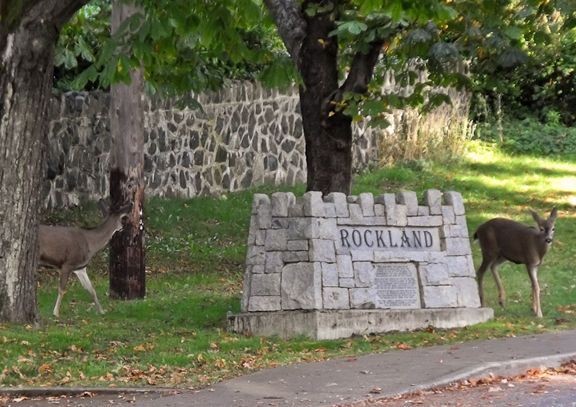
deer in rockland, by Mike Nelson Pedde, http://www.flickr.com/photos/wolfnowl/5445478667/


Victoria Times Colonist, December 1, 2012—Four schools were locked down in November due to cougar sightings, and on Wednesday, CRD’s planning, transportation and protective services committee began considering the new Regional Deer Management Strategy.

Predator. And prey.

No discussion of one can completely ignore the other.

We’ve heard a great deal about the apparent increase in local deer populations, about aggressive deer, increased damage by deer to crops and gardens, and deer-caused car accidents.

Deer have always lived here. They come to our gardens, farms and parks, lured by tasty pickings. They reproduce. They become habituated to humans.

And they are protected by our intolerance of large carnivores, like cougars, wolves and bears, and by our laws restricting hunting, harassment and transport of wildlife.

We create an island paradise for deer. Then we complain.

But, by encouraging abundant deer, we also invite their predators to move in. If we’re uncomfortable with the current numbers of deer, we’re even more nervous about their predators.

In the 12 years I’ve lived here, I’ve seen a cougar once, but I know they’re around. There are too many green spaces, too many new developments squeezing big-cat territory, and too many deer for the region to be cougar-free.

Cougars prefer to eat deer. When deer are unavailable, the cats will prey on rabbits, rodents, raccoons, dogs, house cats, geese… even insects. British Columbians are more likely to be killed by domestic dogs, stinging insects, deer or moose, or other humans than by cougars, but that doesn’t mean we want cougars anywhere near our children or our pets. Or us. Because very occasionally, cougars do attack humans.

Every time a cougar is reported in the area, focus turns on the cats. If conservation officers and their dogs confirm the sighting, the cat is tracked, usually captured and carted away, sometimes killed.

I suspect most cougars that find their way into urban Victoria are young males trying to establish themselves on edges of territories claimed by older, tougher males. They have to be young to be here, because we removed the older cats long ago.

The curious thing is, when we did that, we paved the way not just for the current increase in deer–human encounters, but also for increased cougar–human encounters. According to researchers at Washington State University, when you kill off older, experienced cougars—the cats that have learned to avoid humans—young, dumb cats move in. The youngsters are just looking to survive their first years away from Mom, and aren’t yet wise to the fact that mixing with humans is Trouble.

Every wildlife issue we’ve experienced in the region—the feral rabbits, the abundant and aggressive deer, the less common cougar and bear incursions, the garbage raccoons and the rats—is really a human-management issue. We did away with the predators. We introduced rabbits and rats. We encourage the raccoons and deer. We live in their territory. We don’t learn.

Wildlife biologists agree that coexistence between carnivores and humans depends primarily on managing human attitudes and behaviours. Among the recommendations included in the Regional Deer Management Strategy for decreasing deer–human conflicts are a number that touch on our own unhelpful behaviours.

These recommendations include enforcing municipal bylaws against feeding wildlife, encouraging use of deer-resistant plants in gardens and landscaping, fencing in food gardens and using repellants wherever possible, and generally discouraging deer from habituating to humans.

The strategy also recommends municipalities adjust bylaws to allow higher, deer-proof fences, examine and implement population-reduction measures appropriate to each area, provide support to farmers, in terms of fencing costs, hazing tactics, and crop protection, and adjust signage, speeds, and road-allowance maintenance on roadways to lower the number of vehicle collisions with deer.

It also suggests region-wide public education will be critical.

As capturing and relocating humans from the region aren’t options, addressing our ongoing contributions to wildlife problems is critical.

When we consider the strategy’s recommendations to the CRD over the coming months, we must consider also the broader wildlife implications. Whatever we do about prey species will affect their predators. And vice versa.

And not necessarily the way we intend.

–30–

A version of this article appeared in the Victoria Times Colonist.