Chateaux Lastours

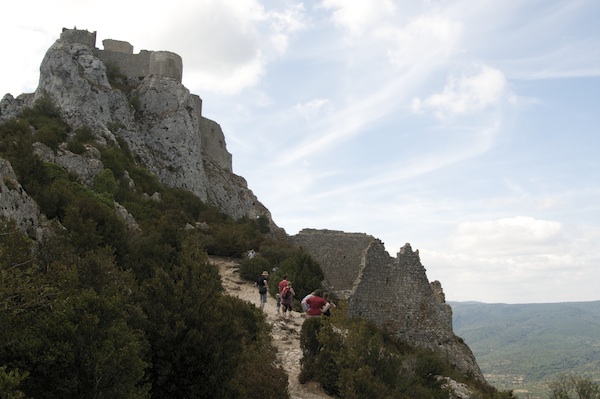
This was our first big hike of the vacation. It occurred towards the end of the day, after a visit to our favourite vigneron (and accompanying wine tasting—by Mimi. Gaston abstained from more than a few slurps, as he was DD), lunch below the troglodyte village of Minerve (two stars on the Michelin road map), and a winding journey across the southern slopes of the Black Mountain.

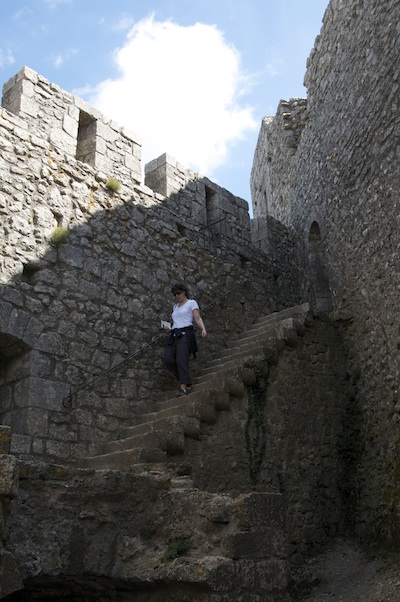
It was one of the first days of 35° temperatures, and the climb almost did Gaston in.

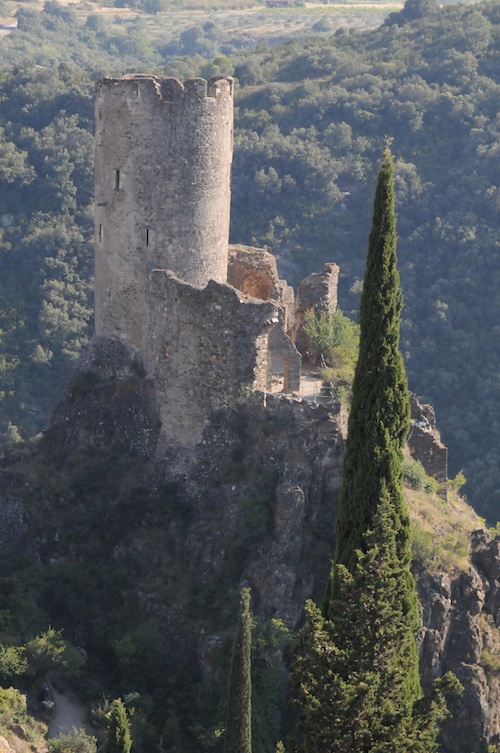
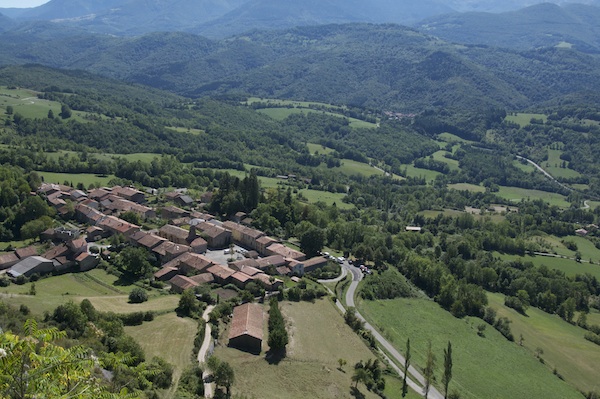
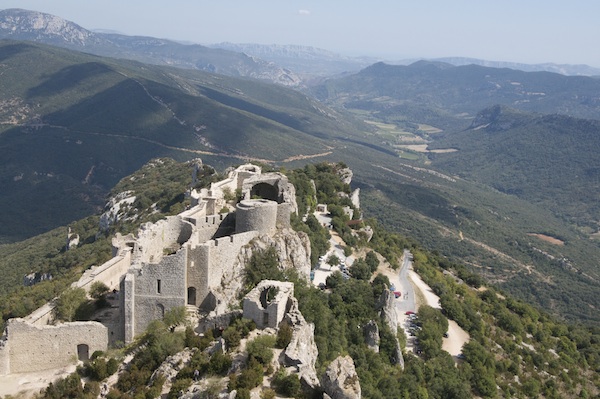
chateau régine, at one of the four lastours castles

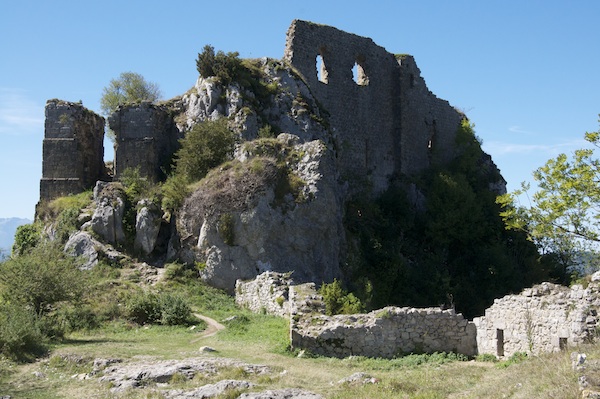
Chateau Aguilar

Aguilar chateau

One of the “National Monument” ruined Cathar castles in the Aude.

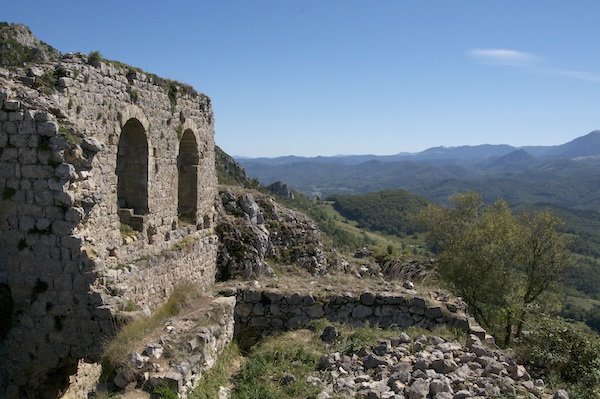
Aguilar chateau

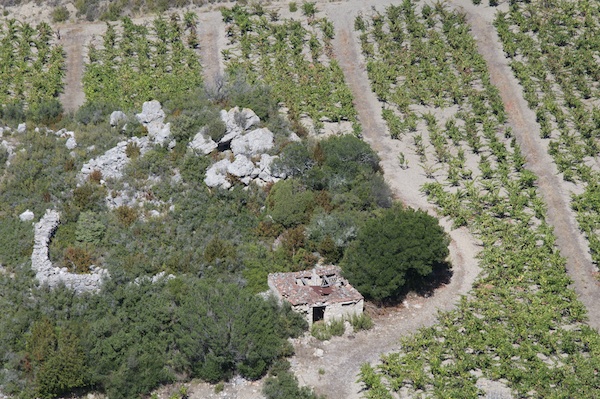
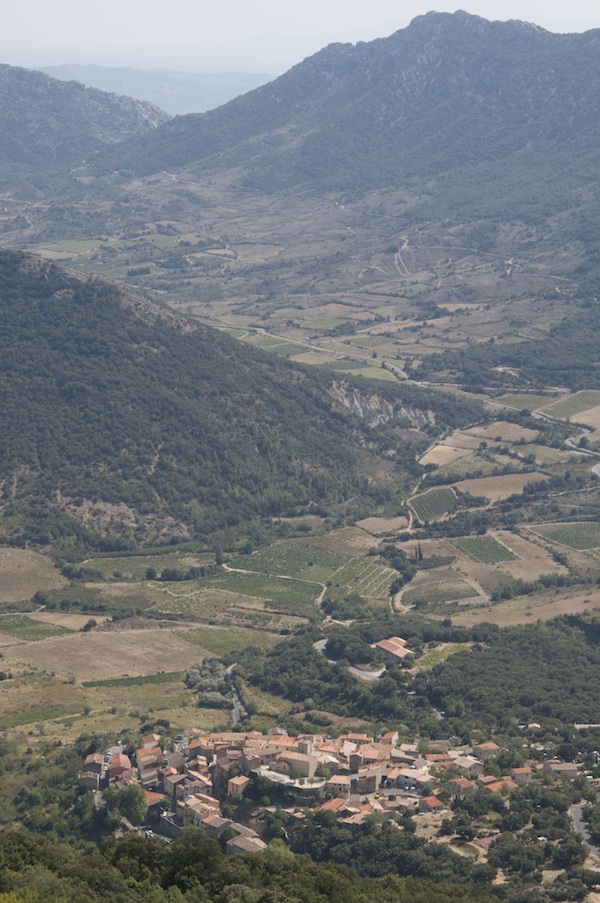
Looking down on the vineyards below chateau Aguilar.

Chateau Roquefixade

Gaston and I caught the Friday market in Foix, took a heap of photos as the light was crystal clear—that would have been the first day of Autumn light—then departed to conquer Roquefixade.

We’d been intimidated by this chateau on previous visits. The approach appears vertiginous.

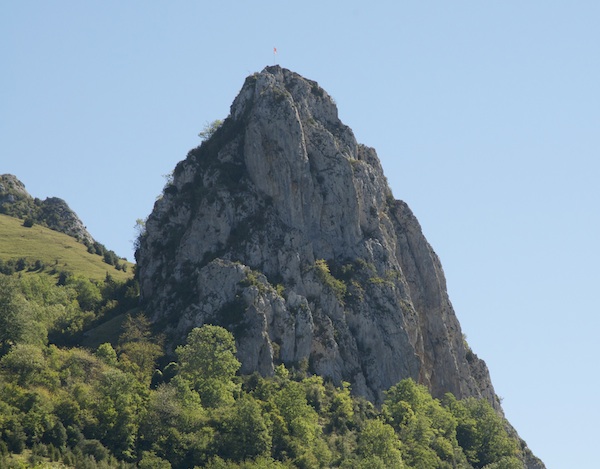
The pog of Chateau Roquefixade

Chateau Roquefixade: the wee red flag at the top of the peak marks the ruins of this Cathar stronghold.

First visit to the area, which encompassed only six days, we gazed at it from Montségur and noted the cathar-cross flag flying at the top of the peak. On visit #2, we explored the town at the base of the cliff, climbed to the rock face, then decided, “Another day.” I believe a mild case of food poisoning or airplane stomach-bug played a role in that choice.

Even this time ’round, as we drove towards it from the west and saw how steep the outcrop on which the ruins are perched, Gaston and I were each dreading the endeavour. But, of course, we didn’t say anything. Which I think is mighty big of Gaston, who has confessed to me that, actually, he really doesn’t care for hiking, and especially doesn’t care for hiking up steep inclines, especially when it is warm out.

Does this mean he was humouring me? Who cares!

It turns out the hike to the chateau is deceptive: it isn’t nearly as rigorous as it appears from up the valley or from the village.

Roquefixade village

At the base of the village, overlooking the valley to the southwest, was a small “villa” (modern house) with a million-dollar view and cracks so large in the walls, you can see into the interior. Said house is for sale “on condition of unbuilding.” The edge of the hill beneath the house is subsiding. What a heartbreak for the owner who invested.

Don’t believe me? The trail winds around the base of the rock to the back side of the pog, then ascends at fairly reasonable, albeit still steepish, incline to the back of the fortress.

And we saw our first Griffin vulture whilst lounging at the top: a freaking HUGE, black bird that was riding the thermals off the crest.


Chateau Peyrepertuse

01. October 2012 · Write a comment · Categories: France · Tags: ,

Next to the entrance to the local supermarket, the owners have parked a spiffy trailer-wagon that has caught Gaston’s eye.

It’s small enough and light enough to tow behind a gutless Yaris. It has collapsible side bars that can be raised or lowered, together or separately. It would be the perfect alternative to Gaston folding the seats of his Toyota down, lining the back with a tarp and stuffing the works with the bi-weekly batch of garden waste en route to the municipal compost facility.

This being Europe, where they made peace with the ridiculous price of fuel back in the ’70s by embracing small, energy-efficient cars, accessories suitable to such vehicles exist here.

Watching the covetous gleam in his eye everytime we walked by, I suggested to Gaston that he get an import license and set up a business bringing items like this into Canada. That won’t be going anywhere.

Instead, he will be keeping that eye out for the time when wagons for wee cars become available on our home turf.

The word la peyre is a derivation of la pierre, or stone. We have encountered a number of places whose names incorporated “peyre.

La Peyre

La Peyre

Chateau Peyrepertuse, which translates roughly into (tee hee) Stone-Whooping cough Castle—the spectacular mountaintop ruin of a former Cathar fortress, then French-border fortress and chapel to Saint-Louis/Louis IX, north of the town of Maury, in the Aude.

Peyrefitte-du-Razès—a farming village in the Razès region of the Aude, where we’ve hiked.

The double-hitter Peyrie-et-Peyrols—a hamlet near Mirepoix.

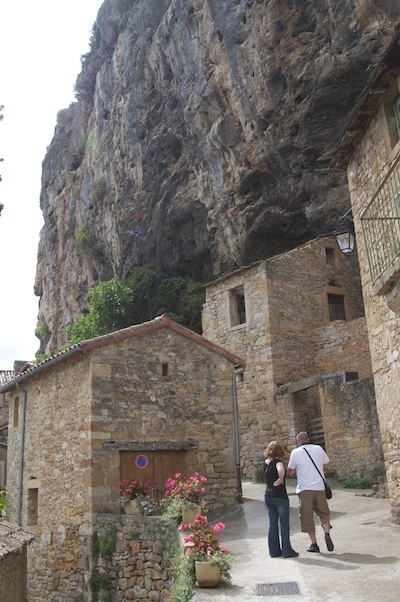
La Peyre—a village built into the cliff, close the the Millau Viaduct in the upper Tarn. These kinds of places, in which past architects and builders took advantage of how rivers now far below had eroded overhangs, caves and natural shelters out of their former banks to erect shelters, Anasazi-style, are called villages des troglodytes, or villages of the cave dwellers. The original church in La Peyre, now a private residence and art gallery, is once of the cave dwellings.

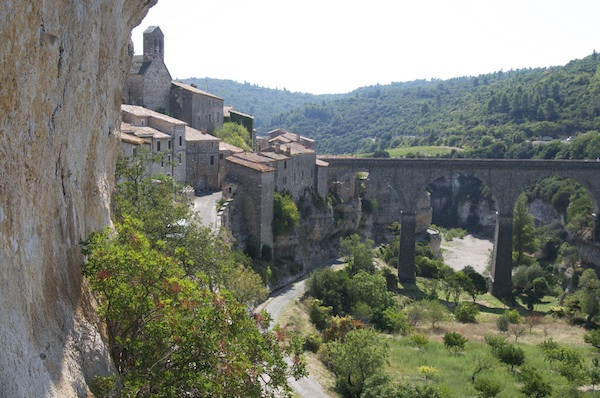
One of the most renowned troglodyte villages in southwest France is Minèrve (in the Minèrvois region of Languedoc, funnily enough). Alerted to its potential by the two stars the Michelin road map marking its name, we visited this cliff-village after we picked up our month’s supply of wine from our favourite winery just to the south. We had lunch in the riverbed, the river flowing underground for most of the year.

Minerve

Minerve

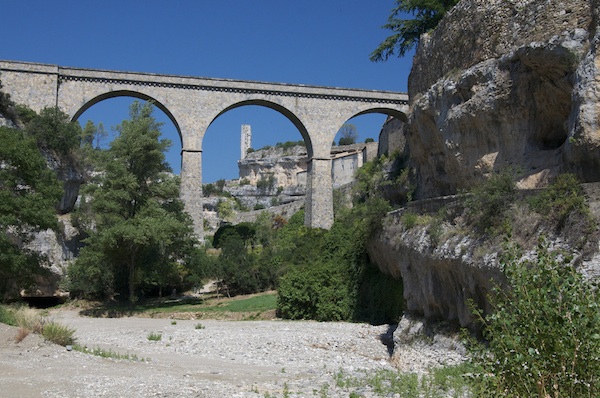
Minerve bridge and fortress gate

The tower of rock is all that is left of Minerve’s former defensive wall


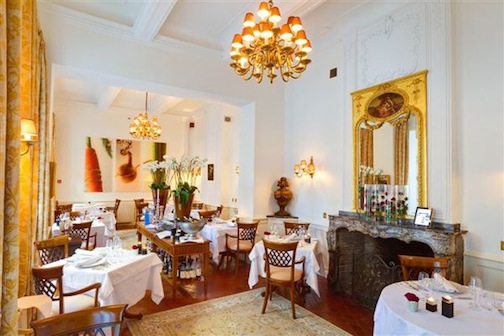
The dining room of le Ciel d'Or restaurant, Mirepoix, FranceI’ve frequently enjoyed soups and sauces made from mirepoix stock, but this was the first time I’d had the actual mixture of chopped celery, carrots and onion that is called mirepoix explicitly showcased on my plate.

Gaston and I were enjoying the Friday fixed lunch at le Ciel d’Or, the restaurant at the Relais Royal hotel in Mirepoix, France. Chef Rogier van den Biggelaar, here in Mirepoix-the-town, clearly is proud of his position’s occupational, geographic and historical connections to mirepoix-the-food. The aromatic mixture, which forms the flavour base of many stocks, soups, stews and sauces, is named for Charles-Pierre-Gaston François de Lévis, duke of Lévis-Mirepoix, whose family had ruled the area since the 11th century. Mirepoix-the-lord employed the cook credited with establishing and codifying mirepoix-the-cooking-technique within the canon of French cuisine in the 18th century.

Our meal in present-day Mirepoix-the-town was both simple and simply delightful.

It started with a salad featuring a few leaves of crisp oak-leaf lettuce that cupped a generous spoonful of pink foam redolent of tomato roasted just long enough to concentrate the fruit’s sugars. Slices of vine-ripened cherry tomatoes, a drizzle of bright olive oil, and a lick of balsamic reduction lifted the dish into art, both visually and gastronomically.

But the main course was, of course, the main attraction. The menu provided just one offering: roast pork with brunoise.

Brunoise consists of a small-dice mirepoix cooked with diced ham or pork belly.

In other words, we were going to lunch on mirepoix in Mirepoix.

The chef had highlighted the natural flavours within the mirepoix, and as soon as the plates were brought into the dining room, the aromatics filled the high-ceilinged room. Steeped in a rich, savoury sauce made from the reduced juices of the pork and the vegetables, this mirepoix consisted of orange, and translucent green and golden flavour jewels that seduced the senses and silenced Gaston and I. The tiny cubes had cooked only briefly and remained satisfyingly firm in texture. This dish, so commonly relegated to the background of everyday cooking, was both revelatory and familiar, pleasantly astounding us with the fullness of its flavour on the one hand and soothing us with the comfort of an old friend on the other.

The four generous slices of roasted pork loin we were each served were tender, flavorful, and moist, with a thin, slightly chewy, slightly caramelized crust, and were perfectly set off by the brunoise.

We both would have been content if the meal had ended with this main course. Being a weekday in September, the restaurant was quiet. The staff allowed us time to sip our wine and appreciate the lingering taste-memories before presenting the sweet course—a trio of small taste treats that pleased the palate without burdening the belly. Gaston particularly enjoyed the berry smoothie that was served in a shot glass, while I appreciated the tiny tiramisu.

Coffee, of course, completed the meal.

Some notes I compiled in response to a query from a fellow-Victorian regarding renting accommodation in France, sight unseen, over the internet.

The only way to make the process of finding and booking a place successful and endurable is to narrow things down:

1) Which region you are interested in? Lots of Peter Mayle-genre books, by people writing about their adventures travelling in/moving to/living in/interacting with natives in various regions of France exist; the Victoria public library has a good selection. Peruse them, talk to people, yada-yada. That’s how I focussed on Mirepoix for part of our first recent trip to France in 2009: Angela Murrill’s Hot Sun; Cool Shadow was the book that did it for me.

2) What you want to do while you’re there? (food? Michelin-starred restaurants? markets? wine tastings? beaches? hiking? artisan shops? barging down the Midi Canal? accessibility to getting elsewhere? History of the French/Roman/medieval variety? pre-history? museums?… etc.) The answers will inform your decisions re: 1), as well as where you decide to stay within a region.

3) Do you want the village, the city, or the country experience? There are advantages and disadvantages to each, and your decision should be based on 2) and your personality and tastes. Gaston and I are both introverts at heart, and we really like the “little house in the woods” experience, but it does mean we have to drive 15 minutes to pick up the daily baguette. We’re fine with that, having also tried the village “walk out the door and down the street to the bakery” experience in 2009. We found village life to be a bit too noisy-ish, busy-ish, and nosy-ish for us (it really brought out Gaston’s until-then secret nosy-ness). And the townhouses that exist in old villages are a bit like caves, with narrow street fronts and few windows. That was kind of weird. And dark. But you might like it. There is certainly something to be said for walking down the street for your morning coffee and croissant. As I said: personality and taste.

4) If you have the time, aren’t sure, and are opening to trying different kinds of experiences, book a week at each of a number of different kinds of accommodations in different settings, and decide which you like best for future reference. This is what we did. We booked our first week in a working farm village in the côtes du Rhone area (http://www.lamaisondesroses.info/#!__region); our 2nd week south of Mirepoix, and our third week south of Pézenas, in Nézignan-l’Evêque. Each was in a very different setting, in a different region, with different kinds of things to recommend it.

As to websites, we’ve found vrbo.com to be helpful, except when booking in Paris (there, we prefer rentparis.com). We’ve also used homeaway.com (owned by the same parent company as vrbo, but not as expensive to landlords, apparently), which tend to have more French-owned places for rent. (VRBO has a lot of ex-pat rentals.) French-owned may mean you get to experience firsthand the difference in standards in cleanliness/fastidiousness that exist French vs N. American/British. But then again you may not: it may be fabulous. The website gites de france.com targets the French, but we found some great B&Bs through it. I’ve seen signs in stunning little villages for CléVacances.com, as well, which might be worth checking out—We’re especially intrigued by N° D’AGRÉMENT: 81MS00191 in Hautpoul, on the north edge of the Montagne Noire, above Mazamet.

There are things to be wary of when booking via the internet: scrutinise the photos, and be aware that most of the photos are taken with fish-eye lenses, so the rooms appear much larger than they actually are. Also, the photos may be several years old, and may or may not reflect maintenance. Try to plot out the size and arrangement of the place from the photos. Read the reviews. Unfortunately, VRBO permits hosts to filter reviews about their units, but nonetheless if you read the reviews with a critical eye and read between the lines, you can determine a lot of what isn’t being said. Communicate with the owner, ask questions, etc.