I have succeeded.

I have, just now, finished reading the last of 25 issues of Scientific American—dating from early 2009 until September 2012—packed along to France as sacrificial reading material. I’d say that deserves a toast.

At least until I return home, where as many issues of Discover magazine await attention.

How nice to know I have something to do post-November 9.

As Gaston and Mimi are unlikely to be in a city that is home to a Joël Robuchon restaurant with enough cash in their bank account to splurge on a meal planned, if not actually cooked, by the many-starred Robuchon, they recently resorted to the pauper’s experience of the Gault Millau‘s Chef of the (Last) Century.

French chefs who make the three-star Michelin grade on French soil frequently expand and diversify. They open additional restaurants in Tokyo, New York, Las Vegas, and other well-heeled metropoles. They create specialty and ordinary food product lines for specialty and ordinary people, respectively. They publish cookbooks or star in reality T.V. shows on the Food Network. They capitalize, generally, on any means of branding and production in the food, cuisine, and cooking domaine.

Because, apparently, succeeding in the restaurant business is a precarious enterprise for even the best. Even in the country that reveres its top chefs and idolizes them more than movie stars.

So, in addition to opening a dozen restaurants in eight cities around the world, publishing multiple cookbooks, and managing the expectations that a total of 28 Michelin stars inspire, M. Robuchon teamed up with a producer of frozen foods to recreate T.V. dinner, French-style.

After a long day’s hike, Gaston and Mimi pulled two packages out of the frigo, threw them in the oven, and subsequently sampled confit de canard parmentier (butter-laden shepherd’s pie with duck) and pâtes à la basilique et poulet (pesto linguine with chicken). The food was pretty good, for frozen dinners. Certainly tastier than anything they’d find in the supermarket freezer section at home.

But, then, the French would require that.

And M. Robuchon does have a reputation to consider.
Great to see Ingrid and Peter on their way from Toulouse to Aix. We met, we drank, we walked, we drank some more, we ate, we drank, we ate, and ate, we walked, we ate again, we lounged in the sun on the terrace, and then ate and drank again.

We hope the sun follows you. (Because you took it with you!)


“Who comes to France to make soup?” asks Gaston.

“What more French thing to do than to boil up a carcass with some mirepoix to make potage?” Mimi responds.

Making soup is part of our Monday ritual at Montplaisir. First, visit the Monday morning Mirepoix market and purchase produce for the week. Next, go to the bakery and stock up on baguettes and other breads to last the next 36 hours. Last stop on the excursion: go by the rotisserie wagon to pick up lunch: one whole chicken and a carton of potatoes roasted in a pan under the turning chickens to catch all their jus (and fat).

Back to Montplaisir, where Gaston debones the bird and sets the skeletal bits to boil in a potful of water on the stove. Mimi makes a green salad and slices bread. They eat; the carcass simmers; they sip blanquette; the carcass simmers; they clean up; the carcass simmers; they find their current reading material and lounge on the terrace; the carcass simmers. At last, Mimi strains the stock and sets it to cool, and Gaston brings the resulting chicken trash up to the dustbins at the top of the road.

Then, the creative part: consolidating and taking care of many of the bits in the frigo—that last carrot from the previous week’s trip to the market, the lonely, withering stalk of celery, the handful of leek leaves and half an onion, the leftover potatoes and bits of meat from lunch, the rice from the previous night’s supper, and the herbs harvested from fields and trailsides during the week’s hikes.

Different each time. Satisfying every time.

roast-chicken wagon at the market

Roast-chicken wagon at the market

Other kitchen adventures include:

  • Duck, cooked lightly with coat of fresh-ground pepper, then served with steamed spinach and apricot-and-onion confit. That was yummy;
  • A green salad dressed with peaches stewed in balsamic vinegar and strips of dry ham.
  • Pasta in a ham, wine, eggplant and tomato sauce, with field herbs;
  • Onion tart with Dijon-mustard seasoning;
  • Onion and tomato tart;
  • Mimi’s signature fennel-apple-hazelnut salad with Dijon vinaigrette—the real French dressing;
  • Stacks of roasted eggplant, roasted red pepper, roasted tomato and fresh cheese, with balsamic syrup and figs;
  • and Cédric Diant’s pastries from Mirepoix.

Last time, Mimi tried cooking rabbit stew, but ended up with stewed leather instead.

On our first full day in France, we ventured down the River Tarn at the suggestion of our B&B hosts to explore the hilltop bastide villages that the region is known for.

Click on each gallery image for more information.

Chateau Quéribus is one of the Cathar castles that fell to the King of France/Rome Pope during the early 13th Century Albigensian Crusade. After what is now south France was rolled up into French territories, Louis IX (the “saint”) ordered the fortress and many other former cathar castles manned to guard his new border against Spain. In those days, the French-Spanish border ran not far south of the Aude Valley.

Sixty-some cathars manned the fortress during its final days during the crusade. Louis reduced that number to about 20. By the 16th Century, seven lucky souls were exiled to wind, sun, and drought in order to guard the castle.

On clear days, you can see the Mediterranean from the castle walls.

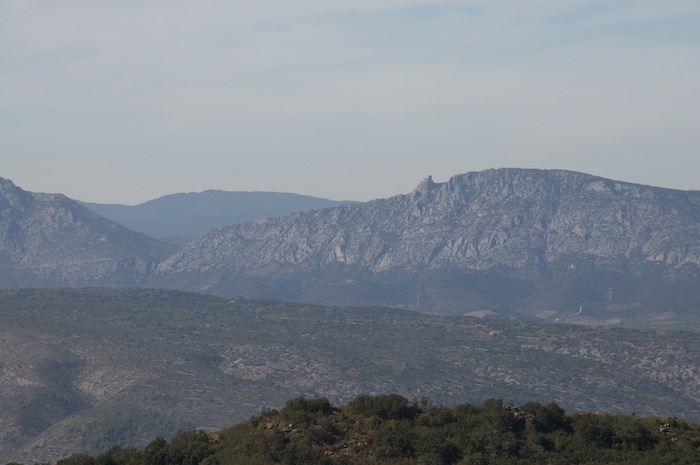
Chateau Queribus from across the Aude Valley (Forca real)

Chateau Queribus, seen from across the Aude Valley, sits on the pimple-like promontory of the ridge.

Chateau Queribus from Cucugnan

Here's a view the chateau from the other side of the ridge.

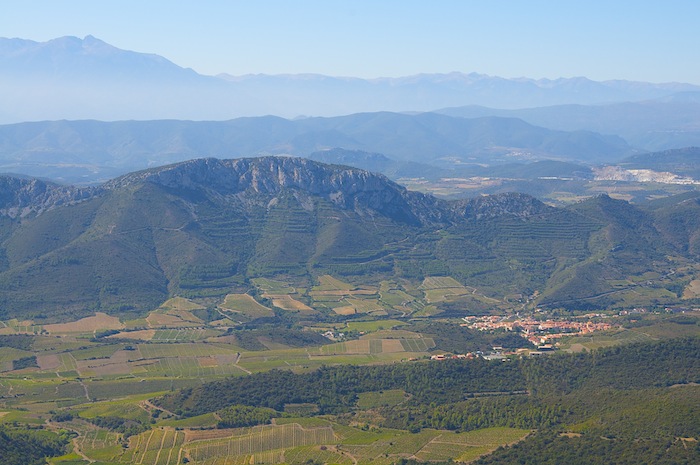
Queribus looks down on mountaintops across the Aude Valley

Queribus looks down on mountaintops across the Aude Valley. Scott, who has late-onset vertiginophobia, hated the drive up from the town of Maury, seen at the valley bottom in this photo. We're not sure what the Michelin-map abbreviation Grau stands for, but guess something like "KEEP AWAY FROM THE OUTSIDE EDGE OF THE ROAD!"

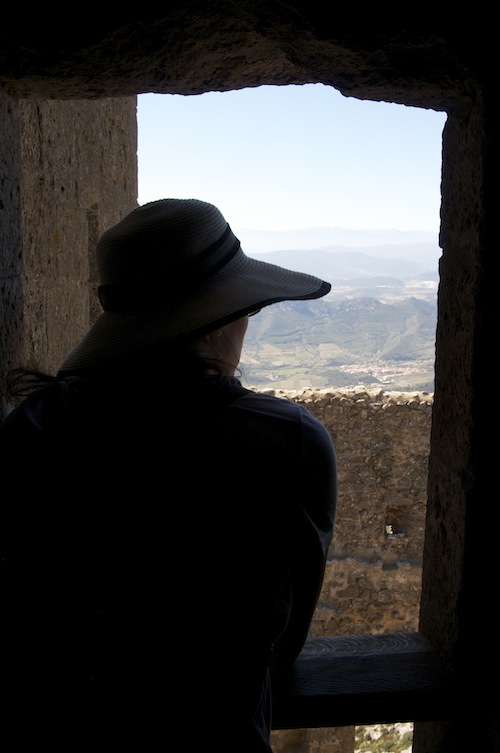
Defenders of Cathar Queribus would have seen the enemy coming from miles away

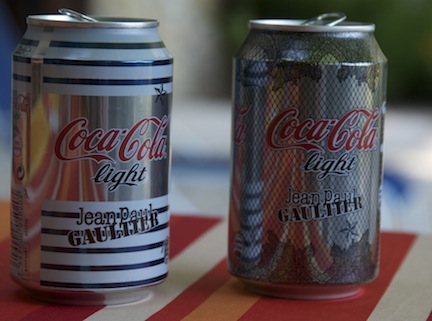
Only in France would you see Coke cans designed by Jean-Paul Gaulthier. Black lace roses and fish-net stockings for sophisticated, putain-style, evening drinking; le sportif, Chanel-style, for afternoons on the tennis court or at the beach.

All social eventualities covered.

Designer cannettes in France

15. September 2012 · Enter your password to view comments. · Categories: France · Tags: ,

This content is password protected. To view it please enter your password below: