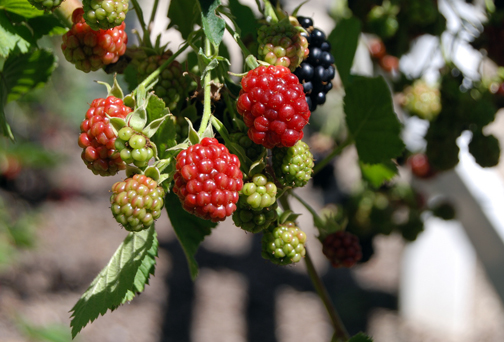
Blackberries in season. Photo © Julie (hello-julie flickr)

Blackberry picking, like developing Blackberry devices, is a prickly business.

When Nature Boy was growing up on the Mainland—long before e-mail or smartphones came along—his family would venture out to harvest THEIR blackberry patch near Pitt Meadows.

Nature Boy always assumed danger duty. He’d armor himself with rubber boots and his grandfather’s welding helmet and jacket. Then off he’d go with an ice-cream pail, pushing deep into the brambles. Once inside, he’d fill bucket upon bucket with berries no other human dared to reach.

These days, we can find berry lovers harvesting this year’s bounty along many of the region’s trails, roadsides or parks.

Likewise, we’ve recently been hearing of the tumbling fortunes of Blackberry. The Canadian tech giant has been losing market share to Samsung, Nokia even, and that other fruit company.

In August, the company announced it was seeking buyers or alternative investment options. Going private or being bought would allow the company to re-organise its business in peace without outside shareholder scrutiny.

Given the current open season on both kinds of blackberry/Blackberry, I’ve assembled a few pointers on how to approach picking either fruit….
Read the rest of this editorial in the Victoria Times Colonist.

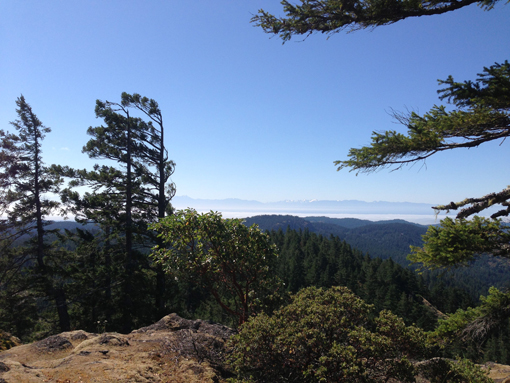
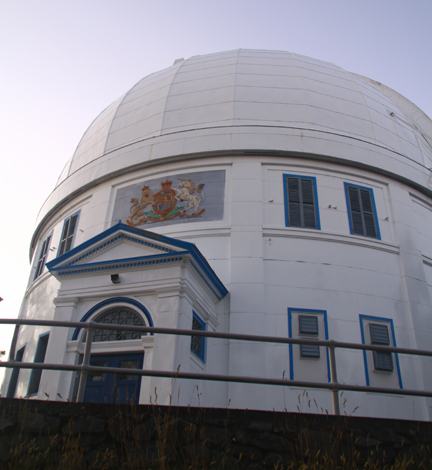
Dominion Astrophysical Observatory, on Little Saanich Mountain, Victoria, BC. Photo © Caylin (plums_deify, flickr)

No lights shine at the Centre of the Universe today.

The staff who ran the interpretive centre at Little Saanich Mountain’s Dominion Astrophysical Observatory cleaned out their desks yesterday, turned the light out, and vacated the building. So ends 12 years of educational programming about astronomy and Canada’s place in scientific research.

The National Research Council, which operates the centre, had the unenviable choice this year of cutting outreach or cutting even deeper into research.

It was one of many challenges the federal agency faces. The government recently adjusted the NRC’s research priorities to match private sector goals that focus on applied, or practical, research

Applied research is important. It can lead to patents, jobs, manufacturing, and all that good economic stuff.

However, the shift at the observatory is ironic.

In 1910, when astronomers suggested Canada’s government build a new, bigger, better national observatory, they specified it be purpose-built for studying astrophysics.

Not astronomy. Astrophysics….

Read the rest of this editorial at the Victoria Times Colonist….

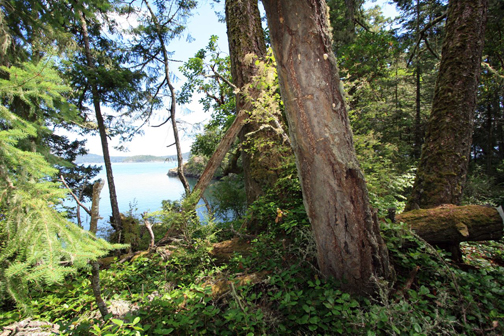
Parks like East Sooke Park help make nearby residents happier and healthier. Photo by Logan C (flickr's LoganTech)Back when Nature Boy worked at a big California museum, I flew down to visit on a semi-regular basis.

I remember looking out over the city as the aircraft made its final approach to L.A.’s airport. Below me stretched mile upon mile of concrete: buildings, roads freeways, parking lots. Few trees and no green spaces relieved the sunbaked ugliness that extended from the mountains in the city’s east to the Pacific Ocean.

No wonder, I thought at the time, crime rates were so high. No wonder crazy people were using drivers on Los Angeles freeways for daily target practice—events which, by that time, were so commonplace, even the most reputable of the city’s news organizations no longer reported them.

With so many people living in Los Angeles, the absolute number of already-crazy people living among them was going to be high.

But packing so many people in so close together would surely compound the problem. Those conditions could easily push anybody unstable and close to the breaking point, mentally and emotionally speaking, over the edge into outright nuts-dom….

Continue reading at the Victoria Times Colonist

Tomato salad

Tonight’s supper

Five varieties of tomatoes, two kinds of peppers, and fresh herbs picked from the garden 10 minutes ago. Drizzled with a bit of olive oil and balsamic vinegar.

Mmmm.

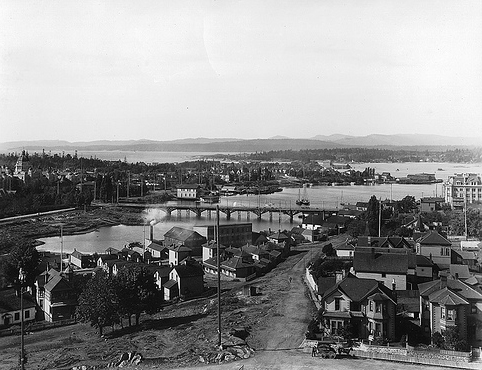
Victoria from cathedral tower, 1897, from http://www.vintag.es/2012/09/old-photographs-of-canada-from-1858-1935.html

Victoria from cathedral tower, 1897, before the mudflats where the Empress now stands were filled in and the causeway built. Victoria was home to a thriving opium-processing industry at this time, yielding substantial revenues for the federal government in Ottawa.

Four former mayors of Vancouver, three former attorneys-general, and municipal councils. All have gone on record supporting the decriminalization, regulation and taxation of marijuana in British Columbia. And now Federal Liberal Party leader Justin Trudeau has pushed debate on the issue one step further, stating the drug should be legalized.

And thanks to all these letters and statements, residents of Greater Victoria get to watch history repeating itself. We have front-row seats in this latest development in our region’s long historical association with officially sanctioned production and trade in drugs.

For almost 50 years, beginning in the 1860s, Victoria reigned as the opium capital of the New World. Fifteen Chinese-owned refineries operated between Herald and Johnson streets in the late-1880s, and employed dozens of workers. In one year alone, they refined about 41,000 kg of opium. Okay, nowhere near the magnitude of output of B.C. Bud today, but significant for the time. …

Read the rest of this article in the Victoria Times Colonist….

Some friends organized a hike to Sugarloaf Mountain, near Sooke, this last weekend.

Mosquito. Photo by Eli Christman (Gamma Man), Creative Commons

“Incredible,” she said. “It’s evening, we’re eating outside, and THERE ARE NO MOSQUITOS. We’d never be able to do this down east. We’d be eaten alive.”

“it’s Victoria’s secret,” I told her. “If the rest of the country knew how few and how lame our mosquitos were, we’d be overrun.”

When Nature Boy and I moved to Victoria from Small Prairie Town, Alberta, we marveled at the lack of window screens in houses here.

It wasn’t until summer that we learned the reason. Victoria, we discovered in our own screenless home, boasted many annoying flies, huge spiders, and endless trails of tiny ants, but few nippers and biters.

Hooray! Nature Boy cheered, and promptly went out and fired up the barbecue. He’s one of those useful people the rest of us like to have around in mosquito-infested territories. The bugs love him above all other warm-blooded animals within carbon dioxide-sniffing distance. It’s just part of his animal magneticism.

We’d discovered another reason to be smug about living here.

But we don’t talk about it. Not only would the rest of Canada not believe us, but we wouldn’t want to call down the wrath of the gods by boasting about our good fortune or anything.


Continue reading this piece at the Victoria Times Colonist….


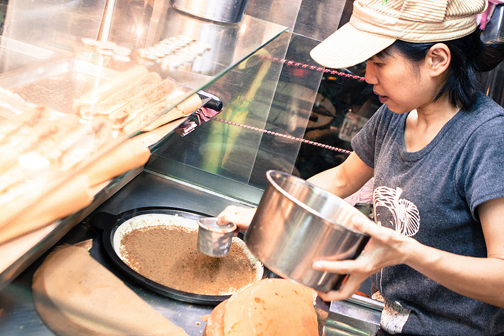
Food being prepared at an open-air food stall. Photo by Jirka Matousak

Victoria recently licensed 26 mobile food vendors to ply downtown residents and workers with grab-and-go lunches. Although a far cry from the 114 wheeled eateries licensed to operate on Vancouver’s downtown streets, it’s a welcome start.

Whether we’re eating tacos from the Puerto Vallarta Amigos truck at Yates and Wharf streets, snacking on a perogy sandwich from the Hungry Rooster on Courtney Street, or buying lunch from other vendors set up on private, and now city, property, we’ve long credited our mouths for our ability to taste. The tongue’s taste buds are tiny locks awaiting to be fitted with the sweet, sour, salty, bitter or umami (meaty) keys that are now considered the five major taste groups.

However, our sense of taste contributes only the broadest brushstrokes to what we call flavour. Flavour, say researchers presenting at the American Chemical Society’s annual shin-digs, is a complex, intricate, sublime sensation–combination.


Read the rest of this article in the Victoria Times Colonist….

(and let me know if this link doesn’t work)