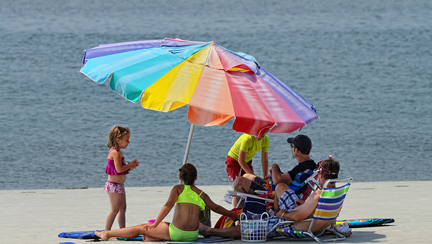
Anticipating a vacation extends the period of happiness a vacation causes. Photo by Ralph Daily

A friend started a long-planned vacation last week. I interrupted her last-minute preparations with a phone call to wish her a happy and safe journey.

“You must be really looking forward to this.”

“Umm, well…. I am…. Now.”

“Just now?”

“You know, I’d booked the essentials almost a year ago, but I haven’t thought about it much since. With everything that’s been going on at work, I just haven’t had the time.”

Alas for my friend, in neglecting to nurture anticipation for her vacation, she has cheated herself out of some key holiday-related happiness. Psychologists have been trying to nail down the effects of vacations on emotional wellbeing for years. The verdict to date is that taking vacations boosts a person’s overall level of happiness only slightly and only over the very short term. However, a person can engineer an early jump in their vacation gladness—they can extend the holiday-happiness window—if they consciously feed their own anticipation for the getaway….

Continue reading this article at the Victoria Times Colonist….

Mosquito. Photo by Eli Christman (Gamma Man), Creative Commons

“Incredible,” she said. “It’s evening, we’re eating outside, and THERE ARE NO MOSQUITOS. We’d never be able to do this down east. We’d be eaten alive.”

“it’s Victoria’s secret,” I told her. “If the rest of the country knew how few and how lame our mosquitos were, we’d be overrun.”

When Nature Boy and I moved to Victoria from Small Prairie Town, Alberta, we marveled at the lack of window screens in houses here.

It wasn’t until summer that we learned the reason. Victoria, we discovered in our own screenless home, boasted many annoying flies, huge spiders, and endless trails of tiny ants, but few nippers and biters.

Hooray! Nature Boy cheered, and promptly went out and fired up the barbecue. He’s one of those useful people the rest of us like to have around in mosquito-infested territories. The bugs love him above all other warm-blooded animals within carbon dioxide-sniffing distance. It’s just part of his animal magneticism.

We’d discovered another reason to be smug about living here.

But we don’t talk about it. Not only would the rest of Canada not believe us, but we wouldn’t want to call down the wrath of the gods by boasting about our good fortune or anything.


Continue reading this piece at the Victoria Times Colonist….


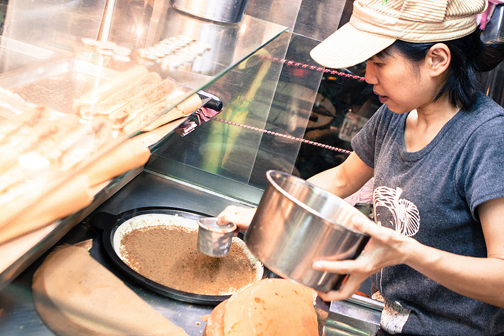
Food being prepared at an open-air food stall. Photo by Jirka Matousak

Victoria recently licensed 26 mobile food vendors to ply downtown residents and workers with grab-and-go lunches. Although a far cry from the 114 wheeled eateries licensed to operate on Vancouver’s downtown streets, it’s a welcome start.

Whether we’re eating tacos from the Puerto Vallarta Amigos truck at Yates and Wharf streets, snacking on a perogy sandwich from the Hungry Rooster on Courtney Street, or buying lunch from other vendors set up on private, and now city, property, we’ve long credited our mouths for our ability to taste. The tongue’s taste buds are tiny locks awaiting to be fitted with the sweet, sour, salty, bitter or umami (meaty) keys that are now considered the five major taste groups.

However, our sense of taste contributes only the broadest brushstrokes to what we call flavour. Flavour, say researchers presenting at the American Chemical Society’s annual shin-digs, is a complex, intricate, sublime sensation–combination.


Read the rest of this article in the Victoria Times Colonist….

(and let me know if this link doesn’t work)

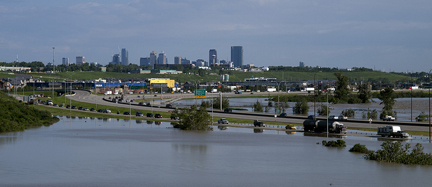
Calgary flooded, June 21 2013. Photo by Wilson Hui, flickr.

We can’t help ourselves, it seems. Every time disaster strikes, we humans feel compelled to watch. Once. Twice. Again. And again. And again.

It’s as if by looping through the experience vicariously, we’re trying to imprint on our brains the images we find horrifying.

Yet weirdly and somewhat twistedly, we’re mesmerized by those images, too.

I’m speaking, of course, of last week’s pictures from Alberta and southeastern B.C.: of houses swept under bridges, towns and cities sitting deep in water, cats and their people swimming across raging rivers that were once roadways.

Continue reading this editorial at the Victoria Times Colonist


Calypso orchids, by Jason Hollinger
During a recent walk through John Dean Provincial Park, Nature Boy encountered his first Calypso orchid of the year.

He was so excited, he called the rest of us back to crowd around and join the admiration parade. He dusted off his annual Calypso orchid lecture: blah, blah, blah, and so on and so forth.

I’d long thought this little orchid with its spiky purple flower was named for the Greek nymph Calypso, whose youth, beauty and — ahem — other charms waylaid wayward Greek hero Odysseus for umpteen years on his way homeward after the siege of Troy.

The orchid’s other names similarly hint at ability to beguile and enchant. Venus lady’s slipper, fairy slipper… the names for this wee flower imply a big reputation.

Continue reading this article at the Victoria Times Colonist….

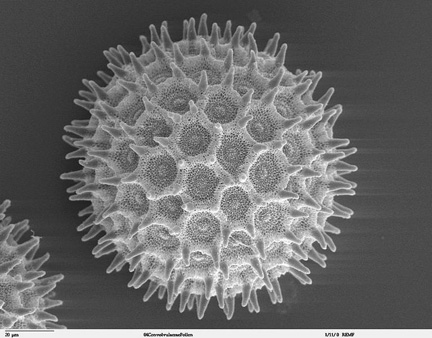
Plant-pollen particle. Pphoto by yellowikis, Creative Commons

I’m allergic to plant sex. Specifically, plant sex of the windblown variety. Even more specifically, grass sex.

Lucky me, the Aerobiology Research Laboratories report high levels of grass pollen in Victoria this week, so I’m keeping eye drops and hankies on hand. The Ottawa-based labs use measurements of plant pollen in cities across Canada to track and predict local week-by-week allergy severity.

With so much of Victoria’s landscape bursting into bloom at this time of year, we could celebrate a Spring Sneeze-Up following April’s Blossom Count.

Flowers are plants’ naughty bits, after all. Because plants suffer from mobility issues, they take advantage of wind, rain and animal pollinators to help them do the deed and make plant  embryos, or seeds.

We who suffer from airborne-pollen misery are merely immunologically protesting the presence of abundant, floating sperm released by plants without regard to Victorian propriety or the neighbours.

Continue reading this post at the Victoria Times Colonist….


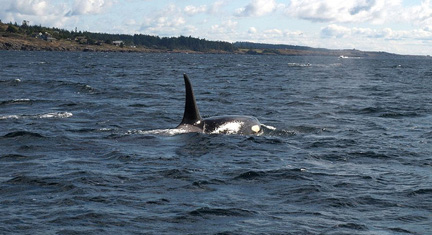
Orca off Vancouver Island. Photo by internets_dairy, Creative Commons

With vomiting harbour porpoises becoming stranded in Patricia Bay, humpback whales colliding with boats off the north Island, dead whales found drifting near Tofino, and poison-laden orca starving off Victoria, our coastal wonderland seems to be anything but for wildlife residents.

So much of what we do to the ocean remains hidden from sight. We flush our toilets into it, let the wind blow our garbage into it, dump our bilges into it, wash our streets into it. And despite receiving our filth for more than 150 years, the sea around us continues to reflect sunshine, sky and shorelines.

The ocean holds its secrets close.

Fortunately, we’re getting better—slightly better—every year at tracking what goes on in the watery depths. Complex high-tech advances and tried-and-true low-tech applications help us plumb more of Davy Jones’s locker each year. We use satellites, sea-floor fibre-optic arrays, and next-generation genetic decoding, as well as the usual see-’em-and-count-’em census taking to peek beneath the waves.


Continue reading this editorial in the Victoria Times Colonist….

More information:

New maps show how shipping noise spans the globe

Trends in the Status of Native Vertebrate Species in B.C. (1992-2012)

Distinguishing the Impacts of Inadequate Prey and Vessel Traffic on an Endangered Killer Whale (Orcinus orca) Population

Rescued porpoise recovering slowly at Vancouver Aquarium

Massive skeleton of young humpback whale destined for Royal B.C. Museum

To scientists, dead killer whale a lucky find

Here on the coast, where concerns about frost pass sooner, the warm-weather construction season begins earlier than most places in Canada.

At home, Nature Boy and I are moving on to Book 3 in the ongoing saga of our kitchen renovation. Outside, we get to experience snarled-up traffic due to the year-by-year march of road-repair projects throughout the region.

According to my property-tax bill, the region and municipalities accepted the necessity of upgrading subsurface infrastructure years ago. Those upgrades (and the tax notice) are other seasonal highlights.


Read the rest of this column in the Victoria Times Colonist.