Tonight’s supper
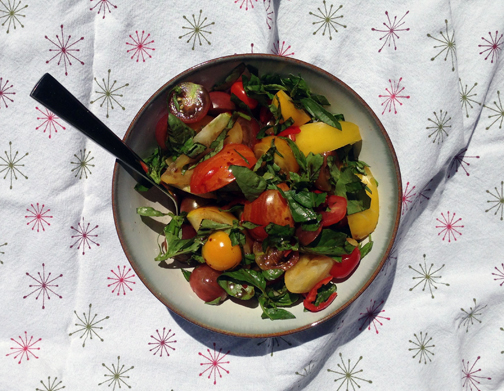
Five varieties of tomatoes, two kinds of peppers, and fresh herbs picked from the garden 10 minutes ago. Drizzled with a bit of olive oil and balsamic vinegar.
Mmmm.
Tonight’s supper
Five varieties of tomatoes, two kinds of peppers, and fresh herbs picked from the garden 10 minutes ago. Drizzled with a bit of olive oil and balsamic vinegar.
Mmmm.
 I find the recent cooler days and periods of rain a relief. My garden does, as well, but more to the point, the cooler weather means things smell better. The effect is particularly noticeable along the dog-park section of Dallas Road and at Thetis Lake’s unsanctioned dog beach.
I realize dogs (and their owners) need a place to be dogs (and owners) and to socialize with their kind, but after 30-plus days of blue skies and warm temperatures, the resulting accumulations of ammonia, methane and, well, toilet can make the driest eyes water and the strongest stomach clench.
Rain and cooler temperatures help dampen the fumes of the dog days of summer.
But let’s get something straight. The phrase “dog days” does not refer to Fido or his doo-doo. Nor does it describe Rover’s snooze-all-day-in-the-shade summer behaviour.
The ancient Greeks and Romans believed Sirius — the Dog Star, not the radio satellite — influenced summer weather.
When I mentioned this to Nature Boy, he looked at me blankly, then burst out: “That’s impossible. Sirius (the star) is a winter star. At this time of year, it’s barely over the horizon.”
Yup. Sirius is the largest and brightest star in Canis Major, and this, the Big Dog constellation, chases the constellation Orion the-hunter-with-the-studded-belt across the winter sky.
At this time of year, the sun’s light hides Sirius, except just before dawn. At that time of day, at this time of year, if you peer toward the east, near where the sun will first peep over the Earth’s curve, a bright, party-coloured star glimmers just above the horizon.
That’s Sirius, the Dog Star, the bright, glowing heart of the Big Dog constellation.
The observant ancients noticed the hottest days of the year coincided with the star’s appearance in the same part of the sky as the sun, just before dawn.
They concluded that the celestial canine must exert some constructive force on our star. The word “Sirius” comes from the Greek for “scorching” or “glowing.”
Because it lies so close to the horizon at this time of year, you see it through a shallower angle of atmosphere than the stars above. The water and dust and everything else in the atmosphere act like a gelatin filter on a stage light, altering Sirius’s colour and causing it to twinkle. It shimmers and glints, and can glow green, red, yellow or white.
This changeability led the ancients to believe Sirius not only made the sun go into heat, but caused people down here on Earth to go off their rockers.
Anybody working in an office without air conditioning or cooling breezes this July knows that heat can make concentration difficult and patience in shorter supply.
Many hot-climate cultures accommodate this effect of heat on productivity by institutionalizing longer lunch breaks that push the end of the work day into cooler, more productive hours of the evening.
Noel Coward captured the sentiment with “mad dogs and Englishmen go out in the midday sun,” and acknowledged that the English, and most northern cultures, “detest-a the siesta.”
Although Sirius appears to be a single point of light to us, it’s actually two stars dancing in tight orbit around each other. We see Sirius A, the bigger, brighter star. Its companion is a much dimmer white dwarf star, nicknamed the Pup.
Preceding Canis Major in pursuit of Orion-the-hunter across the sky is another marker named for our loyal, four-legged friends: Canis Minor, or the Small Dog constellation.
The dog days of summer might refer to celestial phenomena, not our pets, but long-ago European sky-watchers commemorated the likes of Fido and Rover in the heavens.
Long before orbiting cremation satellites and space burials became possible or even affordable, as was announced this week by new high-tech memorial startup Elysium Space, the ancients affected a general glorification for all canine companions in our lives — whatever the season.
Or the temperature.
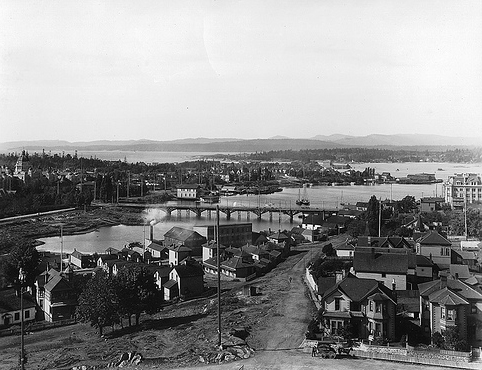
Victoria from cathedral tower, 1897, before the mudflats where the Empress now stands were filled in and the causeway built. Victoria was home to a thriving opium-processing industry at this time, yielding substantial revenues for the federal government in Ottawa.
Four former mayors of Vancouver, three former attorneys-general, and municipal councils. All have gone on record supporting the decriminalization, regulation and taxation of marijuana in British Columbia. And now Federal Liberal Party leader Justin Trudeau has pushed debate on the issue one step further, stating the drug should be legalized.
And thanks to all these letters and statements, residents of Greater Victoria get to watch history repeating itself. We have front-row seats in this latest development in our region’s long historical association with officially sanctioned production and trade in drugs.
For almost 50 years, beginning in the 1860s, Victoria reigned as the opium capital of the New World. Fifteen Chinese-owned refineries operated between Herald and Johnson streets in the late-1880s, and employed dozens of workers. In one year alone, they refined about 41,000 kg of opium. Okay, nowhere near the magnitude of output of B.C. Bud today, but significant for the time. …
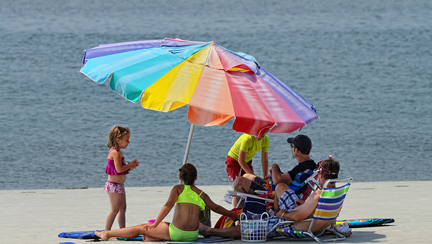
A friend started a long-planned vacation last week. I interrupted her last-minute preparations with a phone call to wish her a happy and safe journey.
“You must be really looking forward to this.”
“Umm, well…. I am…. Now.”
“Just now?”
“You know, I’d booked the essentials almost a year ago, but I haven’t thought about it much since. With everything that’s been going on at work, I just haven’t had the time.”
Alas for my friend, in neglecting to nurture anticipation for her vacation, she has cheated herself out of some key holiday-related happiness. Psychologists have been trying to nail down the effects of vacations on emotional wellbeing for years. The verdict to date is that taking vacations boosts a person’s overall level of happiness only slightly and only over the very short term. However, a person can engineer an early jump in their vacation gladness—they can extend the holiday-happiness window—if they consciously feed their own anticipation for the getaway….
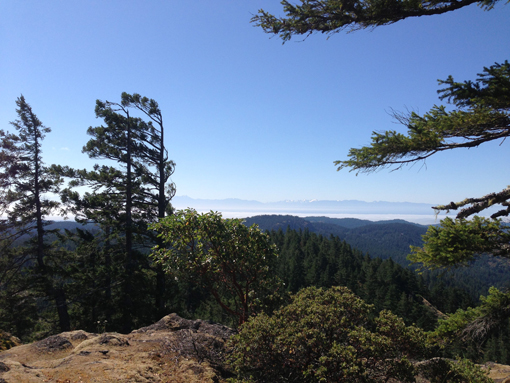
Some friends organized a hike to Sugarloaf Mountain, near Sooke, this last weekend.


“Incredible,” she said. “It’s evening, we’re eating outside, and THERE ARE NO MOSQUITOS. We’d never be able to do this down east. We’d be eaten alive.”
“it’s Victoria’s secret,” I told her. “If the rest of the country knew how few and how lame our mosquitos were, we’d be overrun.”
When Nature Boy and I moved to Victoria from Small Prairie Town, Alberta, we marveled at the lack of window screens in houses here.
It wasn’t until summer that we learned the reason. Victoria, we discovered in our own screenless home, boasted many annoying flies, huge spiders, and endless trails of tiny ants, but few nippers and biters.
Hooray! Nature Boy cheered, and promptly went out and fired up the barbecue. He’s one of those useful people the rest of us like to have around in mosquito-infested territories. The bugs love him above all other warm-blooded animals within carbon dioxide-sniffing distance. It’s just part of his animal magneticism.
We’d discovered another reason to be smug about living here.
But we don’t talk about it. Not only would the rest of Canada not believe us, but we wouldn’t want to call down the wrath of the gods by boasting about our good fortune or anything.
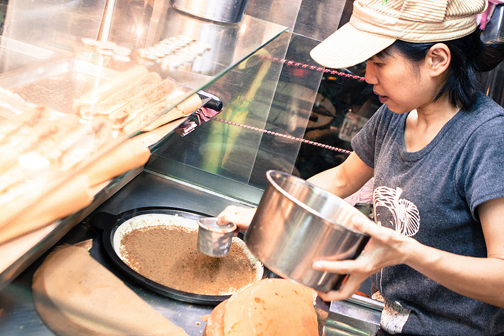
Victoria recently licensed 26 mobile food vendors to ply downtown residents and workers with grab-and-go lunches. Although a far cry from the 114 wheeled eateries licensed to operate on Vancouver’s downtown streets, it’s a welcome start.
Whether we’re eating tacos from the Puerto Vallarta Amigos truck at Yates and Wharf streets, snacking on a perogy sandwich from the Hungry Rooster on Courtney Street, or buying lunch from other vendors set up on private, and now city, property, we’ve long credited our mouths for our ability to taste. The tongue’s taste buds are tiny locks awaiting to be fitted with the sweet, sour, salty, bitter or umami (meaty) keys that are now considered the five major taste groups.
However, our sense of taste contributes only the broadest brushstrokes to what we call flavour. Flavour, say researchers presenting at the American Chemical Society’s annual shin-digs, is a complex, intricate, sublime sensation–combination.
(and let me know if this link doesn’t work)

During a recent walk through John Dean Provincial Park, Nature Boy encountered his first Calypso orchid of the year.
He was so excited, he called the rest of us back to crowd around and join the admiration parade. He dusted off his annual Calypso orchid lecture: blah, blah, blah, and so on and so forth.
I’d long thought this little orchid with its spiky purple flower was named for the Greek nymph Calypso, whose youth, beauty and — ahem — other charms waylaid wayward Greek hero Odysseus for umpteen years on his way homeward after the siege of Troy.
The orchid’s other names similarly hint at ability to beguile and enchant. Venus lady’s slipper, fairy slipper… the names for this wee flower imply a big reputation.


