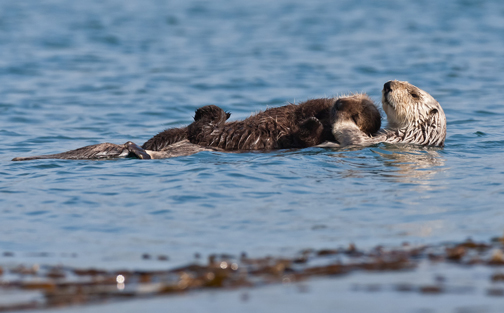
“Sea otters, bah!” Nature Boy says, tongue in cheek. “They’re too easy to love. How can you respect a plush toy?”
Nature Boy is responding to recent reports of sea otters off Langara Island, in Haida Gwaii, and elsewhere on our coast. Although still not common in mid-B.C. waters after its 1970s’ re-introduction, the small marine mammals are slowly repopulating their historic range.
The sea otter’s return is one of Canada’s conservation successes. Confirmed as extirpated by the 1920s, listed as “threatened” in 2002, the sea otter is now considered a “species of concern.”
Nature Boy continues, “Now, the sea urchin—that is a remarkable animal. It has these amazing, intricate jaws….”
“—No match for sea otter jaws,” I interrupt. “Nor is the sea urchin a species at risk. Unlike the sea otter. Or the abalone.”
“Abalone are pretty cool, too,” he admits. “They have those weird breathing holes in the shell, and of course lovely mother of pearl. And they taste real good, too.”
Always a disadvantage for an animal….
Read the rest of this editorial at the Victoria Times Colonist.
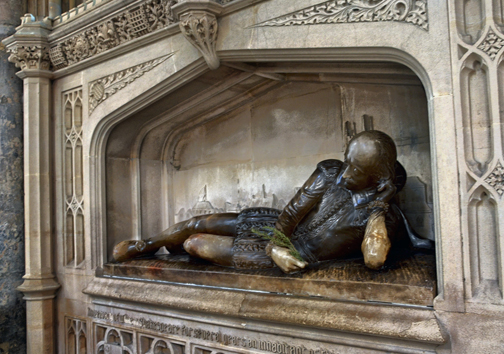
William Shakespeare had a lot to say about the importance of sleep. His memorial at Southwark Cathedral, U.K.
We can sleep a little longer this weekend. Most of North America resets its clocks one hour back tonight, marking the end of daylight saving time.
If we choose to slumber through the hour gained, we’ll wake up slightly more rested and slightly better able to deal with the coming week’s events and obligations.
For some of us, that week includes attending Tuesday’s opening performance of the new show at Victoria’s Belfry Theatre. A Tender Thing, by British playwright Ben Power, re-imagines Shakespeare’s Romeo and Juliet as lovers grown old together. It is the second of three Shakespeare-inspired shows the Belfry audiences will see this season.
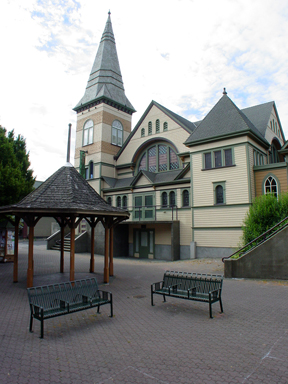
Victoria’s Belfry Theatre presents Shakespeare three ways this season. A Tender Thing starts the week after clocks change back to Pacific Standard Time.
As with so many aspects of life, William Shakespeare had something to say about the importance of sleep. Four centuries ago, he described sleep as “sore labour’s bath / Balm of hurt minds, great nature’s second course / Chief nourisher in life’s feast” (MacBeth).
Sleep research, most of which has occurred only within the last few decades, confirms the accuracy of Shakespeare’s 400-year-old descriptions. …
Continue reading this editorial at the Victoria Times Colonist….
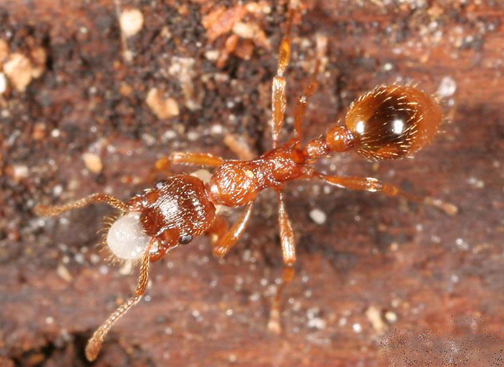
The European imported fire ant is one of many introduced insect species that are getting comfortable in the Victoria area.
In Germany earlier this year, a woman called the police after her doorbell rang repeatedly in the night, terrifying her. The cops apprehended the culprit—an ant nest built tight into the doorbell was tripping the switch.
My friend experienced a similar problem. Her home-security system spontaneously and repeatedly went off over a period of several months. It usually rang during the day, when she was at work. The alarm would signal the alarm company. The alarm company would notify the police. The police would come by and find nothing amiss. Telephone calls and letters from the company to my friend would follow. My friend would—again and again—call in technicians to find the problem.
It turns out the problem had eight legs and a dime-sized body, and liked to hide in crannies….
Read the rest of this editorial in the Victoria Times Colonist….
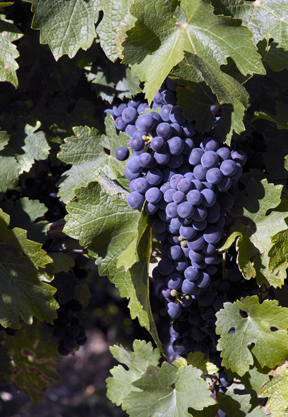
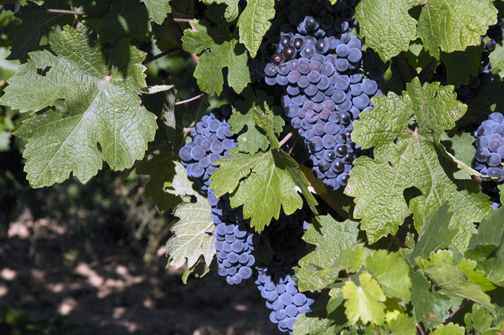
We rarely see grapes being crushed by foot these days, but visitors to the Cowichan Wine and Culinary Festival earlier this month witnessed an old-fashioned grape stomp. Seven teams, dressed in costume, with grape juice soaking the hems of their trousers, shorts, gowns and dresses, competed against each other to stomp the grapes the fastest.
Their bare feet and enthusiasm served to remind spectators of wine making’s fundamentals.
Here and everywhere, wine making starts with sun, water, soil, and vines that take all of the above and turn it into grapes. Those who tend the vines and those that turn the grapes into wine strive to create product that represents and reveals the most desirable qualities of the fruit, place, climate, and so on. Each resulting bottle contains a bit of the heart and soul of the land and of the people who work it.
Yet, behind the growers of grapes and makers of wine, another community of players calls the shots. I’m not talking about grape stompers, who have been mostly replaced by mechanical presses these days. I’m talking about more enduring, pervasive contributors.
In the most basic sense, microbes make the wine….
Continue reading this editorial at the Victoria Times Colonist….
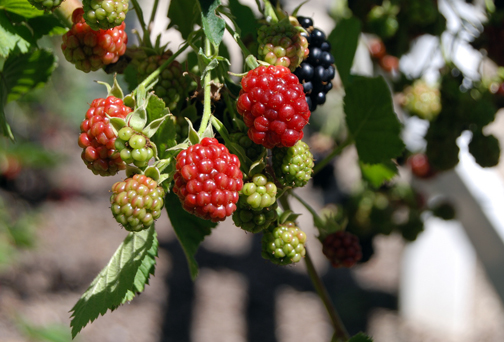
Blackberry picking, like developing Blackberry devices, is a prickly business.
When Nature Boy was growing up on the Mainland—long before e-mail or smartphones came along—his family would venture out to harvest THEIR blackberry patch near Pitt Meadows.
Nature Boy always assumed danger duty. He’d armor himself with rubber boots and his grandfather’s welding helmet and jacket. Then off he’d go with an ice-cream pail, pushing deep into the brambles. Once inside, he’d fill bucket upon bucket with berries no other human dared to reach.
These days, we can find berry lovers harvesting this year’s bounty along many of the region’s trails, roadsides or parks.
Likewise, we’ve recently been hearing of the tumbling fortunes of Blackberry. The Canadian tech giant has been losing market share to Samsung, Nokia even, and that other fruit company.
In August, the company announced it was seeking buyers or alternative investment options. Going private or being bought would allow the company to re-organise its business in peace without outside shareholder scrutiny.
Given the current open season on both kinds of blackberry/Blackberry, I’ve assembled a few pointers on how to approach picking either fruit….
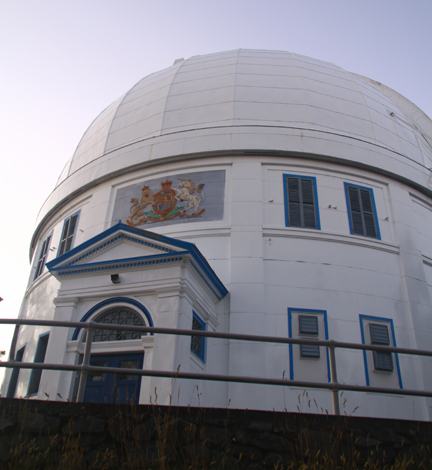
No lights shine at the Centre of the Universe today.
The staff who ran the interpretive centre at Little Saanich Mountain’s Dominion Astrophysical Observatory cleaned out their desks yesterday, turned the light out, and vacated the building. So ends 12 years of educational programming about astronomy and Canada’s place in scientific research.
The National Research Council, which operates the centre, had the unenviable choice this year of cutting outreach or cutting even deeper into research.
It was one of many challenges the federal agency faces. The government recently adjusted the NRC’s research priorities to match private sector goals that focus on applied, or practical, research
Applied research is important. It can lead to patents, jobs, manufacturing, and all that good economic stuff.
However, the shift at the observatory is ironic.
In 1910, when astronomers suggested Canada’s government build a new, bigger, better national observatory, they specified it be purpose-built for studying astrophysics.
Not astronomy. Astrophysics….
Back when Nature Boy worked at a big California museum, I flew down to visit on a semi-regular basis.
I remember looking out over the city as the aircraft made its final approach to L.A.’s airport. Below me stretched mile upon mile of concrete: buildings, roads freeways, parking lots. Few trees and no green spaces relieved the sunbaked ugliness that extended from the mountains in the city’s east to the Pacific Ocean.
No wonder, I thought at the time, crime rates were so high. No wonder crazy people were using drivers on Los Angeles freeways for daily target practice—events which, by that time, were so commonplace, even the most reputable of the city’s news organizations no longer reported them.
With so many people living in Los Angeles, the absolute number of already-crazy people living among them was going to be high.
But packing so many people in so close together would surely compound the problem. Those conditions could easily push anybody unstable and close to the breaking point, mentally and emotionally speaking, over the edge into outright nuts-dom….


