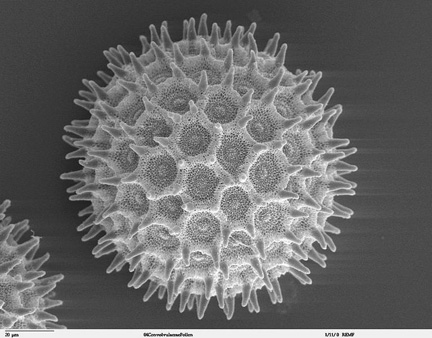
Plant-pollen particle. Pphoto by yellowikis, Creative Commons

I’m allergic to plant sex. Specifically, plant sex of the windblown variety. Even more specifically, grass sex.

Lucky me, the Aerobiology Research Laboratories report high levels of grass pollen in Victoria this week, so I’m keeping eye drops and hankies on hand. The Ottawa-based labs use measurements of plant pollen in cities across Canada to track and predict local week-by-week allergy severity.

With so much of Victoria’s landscape bursting into bloom at this time of year, we could celebrate a Spring Sneeze-Up following April’s Blossom Count.

Flowers are plants’ naughty bits, after all. Because plants suffer from mobility issues, they take advantage of wind, rain and animal pollinators to help them do the deed and make plant  embryos, or seeds.

We who suffer from airborne-pollen misery are merely immunologically protesting the presence of abundant, floating sperm released by plants without regard to Victorian propriety or the neighbours.

Continue reading this post at the Victoria Times Colonist….
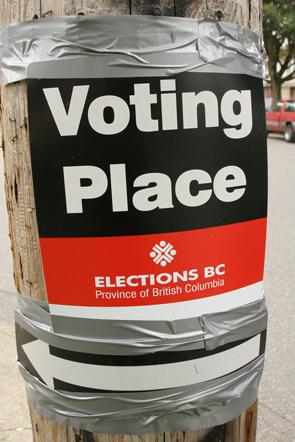


Sign for voting place. Photo by Roland TanglaoAdvance voting in B.C.’s provincial election closes today. Pollsters and pundits are pontificating on what it all means for Tuesday’s general vote. Meanwhile, I ponder how my own biases, tendencies and other psychological traits influence my perceptions of this election campaign.

Elections build community. The electoral process involves and engages (some) citizens. It commits them to common cause and values.

But communities, like nations, come with borders. Who and what are excluded defines a community as much as who and what are included.

And many election campaigns focus more on building fences around similarities than on building bridges between differences. Parties seeking election strive to distinguish themselves from the pack. They also work to define their communities, so they can efficiently entrench that support and effectively woo voters just beyond — but not too far beyond — the boundaries.

Nonetheless, the process of “building community” via democratic election can be divisive. There’s nothing like an election with one or two emotional issues to emphasize differences.

Our biases and tendencies have been shown to be subconscious and uncontrollable, even when we know they exist and how they manifest, and try to guard against them.

Let’s peek into our psyches to see how some social-psychological factors might influence us at election time.

Continue reading at the Victoria Times Colonist….
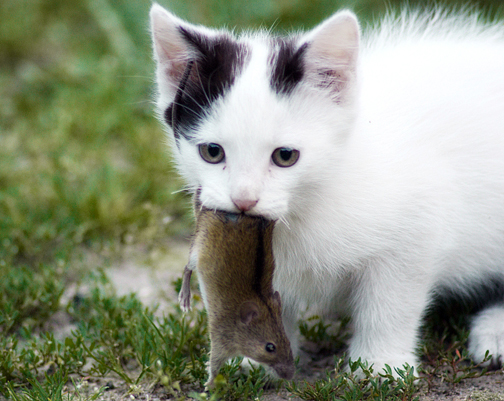
Killer kitty catches mouse. Photo by Chris (Eisenbahner)

A neighbour’s cat adopted me last year. When she’s bored and I’m home, she visits. She gets a lap to nap on. I get a cat without kitty litter, cat food, or hair on everything.

It also keeps her safe, during each brief visit, from becoming roadkill, eating or drinking noxious substances, and from stalking birds, squirrels, garter snakes and other garden wildlife.

I’ve never seen her hunt, but why would she differ from other cats?

Because Felix (or Felicia) the cat is deadly. When scientists from the Smithsonian Institute and the U.S. Fish and Wildlife Service scaled data from local surveys and studies to the national level last year, they estimated that domestic cats in the U.S. kill 2.4 billion birds and 12.3 billion mammals. Every year….

Read the rest of this editorial in the Victoria Times Colonist


Additional sources:

Stephen Raverty: Veterinary pathologist

Toxoplasma gondii-Infected Marine Sentinel Species

Impact of free-ranging wildlife: Nature Communications

Milky Way Galaxy. Photo courtesy of NASA.

The Milky Way Galaxy. Photo courtesy of NASA.

Today is International Astronomy Day. While amateur astronomers around the world will spend the day and evening extolling and exploring the wonders of the night sky, Victoria’s chapter of the Royal Astronomical Society of Canada has additional reason to celebrate. After a year of planning, the society and the municipality of Oak Bay have designated our own Cattle Point as the first urban star park in western Canada.

Cattle Point, Oak Bay. Photo by Evan Leeson, www.ecstaticist.com

At night, Cattle Point (see here in the evening) remains a dark refuge within the Greater Victoria urban area. Photo by Evan Leeson, www.ecstaticist.com

Star parks conserve and promote dark skies and the ability to see the stars. They form part of an international initiative to draw awareness to light pollution and its effects on health and quality of life. Star parks in urban areas are rare, due to nearby city lights.

Canada’s only other urban star park is located in Saint John, N.B. Canada’s 14 other dark-sky preserves are found in rural or wilderness areas.

“We’re lucky here,” says Mark Bohlman, who leads the Victoria initiative. “We can see the stars when the weather’s good. There are very few other places in North American cities where you can see the Milky Way.”

….

Read the rest of this column in the Victoria Times Colonist


 Other sources, this editorial:

Victoria sky-light quality map

Spring greens grow. Photo by James Mann, www.backyardgardeningtips.com

As a child of Depression-era children, I experienced the annual toil of backyard gardening early on. Mostly reluctantly, and only because the alternative to spending summer Saturday mornings outside among the lettuces, carrots and beans was spending that time scrubbing toilets and cleaning the weekly hairball out of the shower drains.

Despite the eloquent persuasiveness of that choice, no under-18s in the household at that time considered weeding a privilege.

Now, however, older, wiser and much busier, we each find ourselves spending time mucking around in the dirt to grow our own fodder. Our kitchen gardens range from year-round herbs for seasoning, to seasonal salad fixin’s, to more ambitious items like vegetables and fruit.

Just having the time to muck around is a treat.

It also helps that produce you produce tastes better. Even a little garden parsley and rosemary in soup creates freshness for the taste buds. Potatoes, peas, corn and carrots cooked and eaten within minutes of being picked exist in taste categories on their own.

There’s also the feeling of moral superiority and self satisfaction of getting the ultimate scoop on the 100-mile diet. Footprints from garden plot to soup pot: 20. Carbon footprint: Zero.

You can’t get much more local than that.

….

Read the rest of this editorial in the Victoria Times Colonist


Capital Region Food and Agriculture Initiatives Roundtable

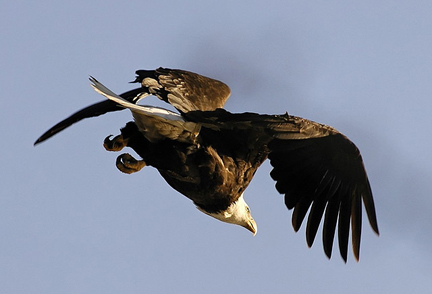
Bald eagle. Photo by Brendan Lally, www.brendanlallyphotography.com

Bald eagle. Photo by Brendan Lally, www.brendanlallyphotography.com

Bald eagles could be the bird world’s version of heavyweight-boxer Mike Tyson. The eagle is a big bruiser of a bird. It bullies other birds, steals meals, and scavenges whenever it can. Yet, during mating season, incongruously thin, soprano sweet nuthin’s emerge from predator’s curving yellow beak.

In addition to eagles’ springtime singing along the Gorge waterway, I’ve noticed local ravens pairing up and chortling amongst themselves. Robins now out-chirp each other thoughout the day, varied thrushes rend dawn with their off-key whistles, and towhees mimic hinges in need of oil. The chestnut-backed chickadee has changed its tune from “chickadee-dee” to “Hey, baby!” And the winter wren’s love-lorn performances make me wonder how these tiny avian opera singers can sustain so many trills and arpeggios with just one breath.

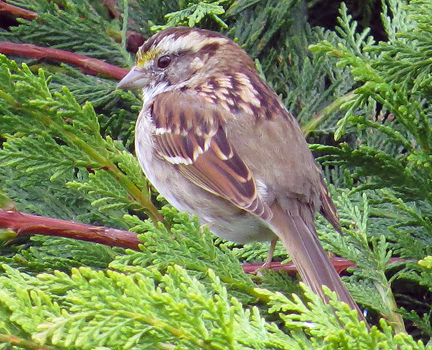
White-throated sparrow. Photo by leppyone

White-throated sparrow

It’s easy enough to guess what they’re singing about right now. Something along the lines of “Let’s make beautiful music together” to the ladies, and “Get off my beat or I’ll beat you up” to other guys. These themes play out in human songs as well, as Pacific Opera’s performance of Tosca demonstrates this month. They also cause many of the same emotional responses in both animals.

Apparently, breeding female white-throated sparrows—a songbird of Canadian forests—respond to the songs of male sparrows in the same way that humans respond to pleasant music. The reward centres in the sparrow brains light up just like ours do, say the researchers who scanned the birdbrains.

Read the rest of this editorial in the Victoria Times Colonist

Sources include:

How human language could have evolved from birdsong

Birdsong syntax

Some birds seem to have grammatical rules in their songs

Birds teach secret passwords to unhatched chicks

Birdsong: music to their ears (and hearts)

Thwarted child abduction, Toronto, March 2013

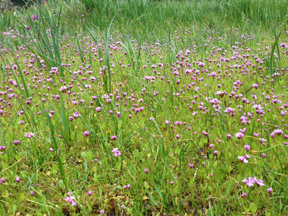
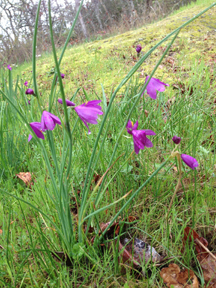
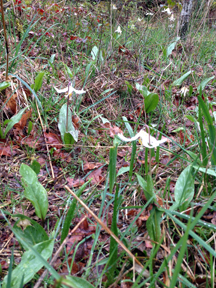
Forget the hundreds of millions of cherry blossoms in Victoria right now: the first wildflowers of the year are blooming on Knockan Hill Park.

Shooting stars, Knockan Hill Park, April 4, 2013

Shooting stars, April 4, 2013

Sea blush, Knockan Hill Park, April 4 2013

Sea blush, April 4 2013

Satin flower, April 4, 2013

Satin flower, April 4, 2013

Satin flower, Knockan Hill Park, April 4, 2013

Satin flower, April 4, 2013

Fawn lily, Knockan HIll Park, April 4 2013

Fawn lily, April 4 2013

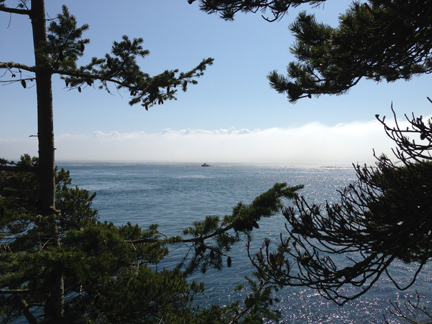
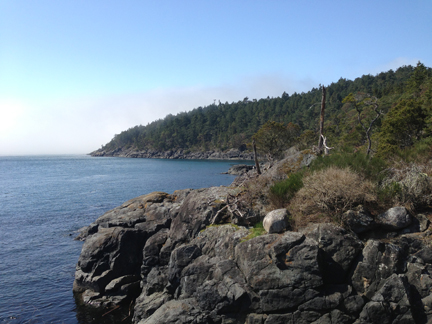
Clear in East Sooke Park; Cloudy at Rocky Point

Clear in East Sooke Park; Cloudy at Rocky Point. We were serenaded by the Race Rocks foghorn while we hiked.

A tugboat and logboom emerge from the fog, East Sooke Park, March 29 2013

A tugboat and logboom emerge from the fog bank over Juan de Fuca strait.

Fog rolling in. East Sooke Park, March 29 2013

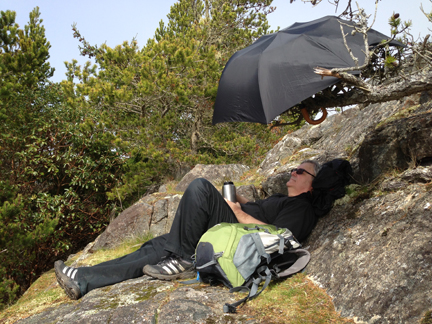
Parasol: Beechey Head.

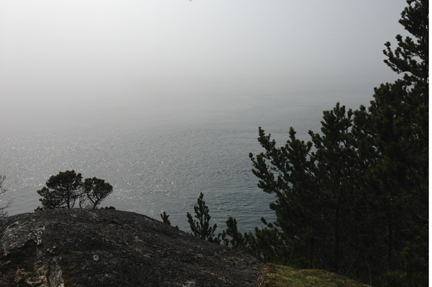
The fog closed in at Beechey Head. East Sooke Park, March 29 2013

The weather followed us. And, as we sat there, becoming enshrouded, the Race Rocks foghorn stopped its serenade. Foggy on Beechey Head; Clear at Rocky Point. :(

Fog landwards from Beechey Head. East Sooke Park, March 29 2013

The fog cleared inland. East Sooke Park, March 29 2013

Clear inland. As we walked back to the car, we left the fog behind.

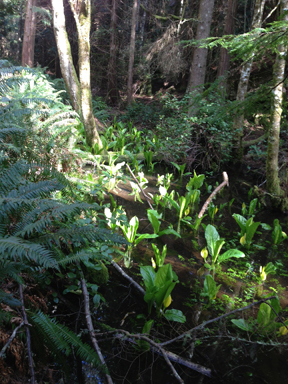
Bloomin' skunk cabbage: Smelly signs of spring in B.C.'s forests

Bloomin’ skunk cabbage: Smelly signs of spring in B.C.’s forests