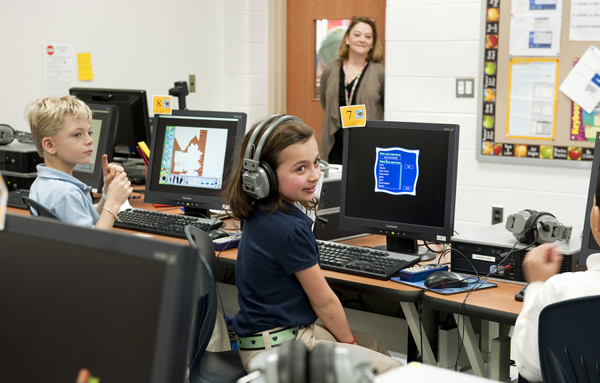
School kids in the 21st century, by Maryland GovPics


Those of us who grew up in the last century heard all about how easy we had it.

The tirade usually began, “When I was your age …” and continued with the Facts of Life.

These included:

“I had to be up at 3 a.m. to get to school on time. And that was after staying up until 4 a.m. to finish my after-school chores and homework.”

“I had to walk 12 miles to school everyday … through blizzards … uphill. Both ways!”

“We had only one pair of shoes for all of us kids. Every day, two of us got to wear one shoe.”

Continue reading…. 


Sources for this post include:

CBC’s report on students failing simple geography quizzes

Vancouver Sun: Issues with BC-certified international school in China

Vancouver Sun: New rules for BC-certified international schools

Walking, by Elliot Margolies, www.emargolies.blogspot.com

Thousands of British Columbians will wake up tomorrow, put on their shoes, and walk.

They’re raising money through the Alzheimer’s Society of BC’s Walk for Memories. Funds raised support the society’s community programs.

The event’s signature activity and timing create an intriguing, synergistic combination.

Scheduled for the last Sunday in January, Walk for Memories comes on the heels of the week containing “the most depressing day of the year.” According to calculations first done in 2005 as a publicity stunt for a British travel agency, we’ve survived 2013’s nadir.

Continue reading….


Sources include:

Alzheimer’s Society of Canada’s report, Alzheimer’s Disease: What’s it all about? Where do we stand in search of a cure?

Alzheimer’s Society of BC

Minds in Motion

 No cellphones, by Oscar Anton, www.oscaranton.com

According to the most recent survey of cellphone use, these devices have now invaded every aspect of our lives.

Seventy-five per cent of the survey’s respondents admitted to using handheld devices to text, talk, surf, purchase items and conduct business while attending to other business with another handheld device in the washroom.

I suppose announcing this information is in the public interest. We really don’t want to know, but now that we do, we can act to limit how these behaviours affect and infect us.

Say no to norovirus. Say no to phones in the WC.

 Continue reading….


Sources include:

11mark’s survey of phone use in toilets

Accidents and close call situations connected to use of mobile phones, by Leena Korpinen and Rauno Pååkkåonen

2012 Ipsos Reid survey for ICBC on distracted driving

Study on cell-phone use by perfusionists at SUNY Upstate Medical University


This week, the Weather Network’s Flu Report shows significant numbers of influenza cases in the Lower Mainland. Google Flu Trends provides less detail — it rates all of B.C. as having high flu activity.

Google Flu Trends tallies Google searches for information about influenza-like illness to estimate real-time flu activity around the world. When compared to results from traditional flu-surveillance systems, Google’s estimates match on-the-ground illness patterns. But unlike traditional reports, Google updates Flu Trends daily.

The launch of Flu Trends in 2008 launched an even greater trend in health research. Google may have led the way, but new methods for tracking health indicators and mining the Internet for health-related social information seem to come online each year.

Continue reading…


Additional sources include:

Sickweather

Piggydemic

Health Tracking Network


An elderly woman was found dead and three people sick with flu-like illness were taken off a Vancouver-Toronto train in Parry Sound, Ont., on Dec. 29. This incident demonstrates how serious infections like influenza can be.

Before the holidays, we heard flu season started early this year. And with people travelling for the holidays, officials warned the virus might spread as people met over turkey and under mistletoe.

Read more….

sequins, by Nina Matthews, www.redbubble.com/people/ninasphotos

Bling is in the air and here in Victoria, it isn’t frost crystals. Nor has it anything to do with Monday’s New Year festivities.
It has more to do with the disco-flashing crosswalk signals cropping up at Saanich intersections and the sun-catching glitter recently developed south of the border.


Read more….


Sources include:

GreenTech Exchange, Royal Roads University, November 2012 – Video

Carmanah Technology’s crosswalk signals

U.S. Department of Transportation crosswalk study


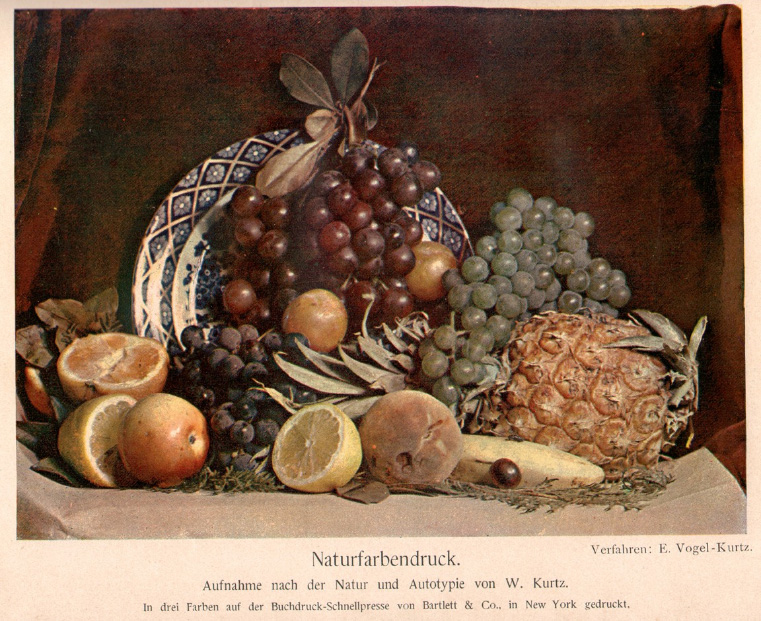
 William Kurtz Still life of fruit, from www.photoseed.com/blog/2011/08/17/new-fruit-in-color-black-white-and-shades-in-between

’Tis the season. Those who are dear to us gather near to us to feast, share and converse. We assemble around the groaning board, and retire from it, groaning, “I couldn’t eat another thing.”

But when they pass around the coffee and the pumpkin pie, we gather our resources, loosen our belts one more notch and manage one more bite.

The sharing of food and drink, and the celebration of plenty, are integral to our social and cultural life. At this time of the year, in this part of the world, turkey and some mistletoe truly bind us together.

Read more….


Sources include:

American Journal of Clinical Nutrition article 1article 2; article 3

Victoria Times Colonist, December 15, 2012—Before I moved to Saanich, I never thought a person could suffer from sidewalk envy.

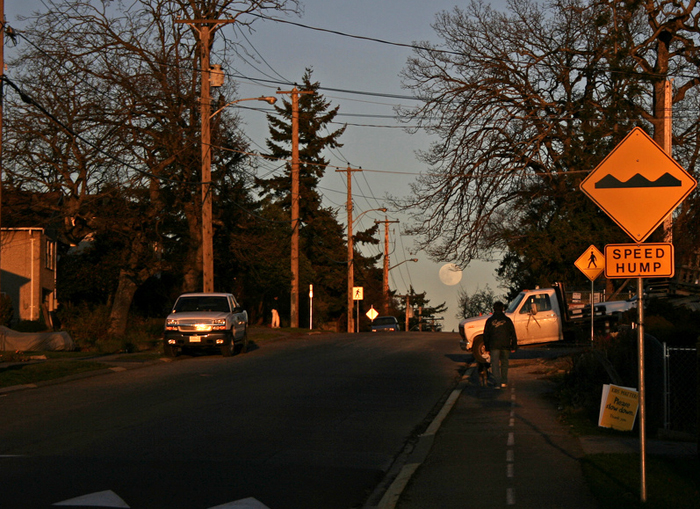
But here I am, living on a somewhat busy street in a neighbourhood that shed its last rural traces decades ago. On one side of the street, a ditch drains stormwater and runoff. On the other side, a narrow, raised ribbon of asphalt separates a strip of tarmac from the roadway.

That strip is the sidewalk. It’s usually adequate. Thanks to “no parking” signs on every power pole, nobody parks on it for long anymore, but during storms, entire sections become rivers. Its narrowness forces users to step into traffic when they meet oncoming pedestrians.
city non-sidewalk, by Jay-P at www.flickr.com/photos/esqenzo

Kids and parents troop up and down that strip to the schools at the end of the street every school day.

I’m thankful for this bit of pedestrian-only tarmac, yet every time I step out my door and head down the hill, I covet the sidewalks of Oak Bay and Victoria—concrete sidewalks, sidewalks raised inches above real gutters, lining most streets, lining both sides of streets….

In the 2012 CRD Regional Pedestrian and Cycling Masterplan, which despite its title is largely about cycling, the authors state one of the reasons they don’t identify pedestrian-trail networks in the document is that most municipalities in the region lack detailed information about sidewalks, curb let-downs, and marked crossings.

Indeed, great disparity in pedestrian information and facilities exists here. Esquimalt, with its 2007 Pedestrian Charter explicitly committing the township to developing pedestrian facilities and networks, is a high point. Oak Bay and Victoria do well by their walkers, as well. View Royal also has some lovely pedestrian boulevards.

And then there are large areas of urban Saanich. The municipality is playing catch-up on decades of residential development that omitted sidewalks. Every year, engineers and crews now retrofit a few more kilometres of raised, curbed walkways along busier streets.

The masterplan’s authors provide a second reason for not dwelling on pedestrian matters: pedestrians tend to walk locally—on local streets, through local parks, to nearby banks, libraries, shopping—and in combination with other forms of transportation—to and from bus stops, bike racks and parking lots. With such foot-traffic patterns, the authors say, pedestrian-related efforts should focus on developing access to regional services, centres and transportation hubs.

That would be helpful.

However, among the 10 percent of regional residents identified as regular pedestrians, a small but significant number of people regularly walk four, five or six kilometres across entire municipalities twice a day to get to offices or appointments. I know individuals who walk or used to walk to work from near Oak Bay Village to Blanshard Street, from near Macaulay Point to the Inner Harbour, from Hillside Avenue to Cook Street Village, and from Carey Road to Fort Street. Why are people like these discounted?

It’s strange to live in a community where something so fundamental as walking is overlooked. If pedestrians in the region feel disenfranchised, well, they are.

It sometimes seems dogs, with their impassioned owners, have a greater voice around here than pedestrians do.

The region’s foot soldiers could learn from the Greater Victoria Cycling Coalition, formed in 1992 to advocate on behalf of cyclists. Instrumental in developing the Galloping Goose Trail, the organization is now providing input into the E&N Railway Trail. It actively solicits members for participation and comment on cycling-related issues and initiatives such as the Pedestrian and Cycling Masterplan and on road-safety improvements to routes such as the Shelbourne Street corridor and Admirals Road. It is involved in Bike to Work Week, it offers regular safety clinics to area cyclists, and helps keep cyclists’ interests on each municipality’s agenda.

Way to go! The coalition has earned its successes through hard work and clear vision.

So, pedestrians of Victoria, in these dark days of the year when your own are being injured and killed in marked crosswalks and fingers are being pointed and wagged at you, consider this: Are you upset enough with the current state of pedestrian matters to unite your disparate selves, find your collective voice, and begin advocating for your own safety, rights, interests and needs?

Including sidewalks.

–30–


A version of this article appeared in the Victoria Times Colonist.