No cellphones, by Oscar Anton, www.oscaranton.com

According to the most recent survey of cellphone use, these devices have now invaded every aspect of our lives.

Seventy-five per cent of the survey’s respondents admitted to using handheld devices to text, talk, surf, purchase items and conduct business while attending to other business with another handheld device in the washroom.

I suppose announcing this information is in the public interest. We really don’t want to know, but now that we do, we can act to limit how these behaviours affect and infect us.

Say no to norovirus. Say no to phones in the WC.

 Continue reading….


Sources include:

11mark’s survey of phone use in toilets

Accidents and close call situations connected to use of mobile phones, by Leena Korpinen and Rauno Pååkkåonen

2012 Ipsos Reid survey for ICBC on distracted driving

Study on cell-phone use by perfusionists at SUNY Upstate Medical University


This week, the Weather Network’s Flu Report shows significant numbers of influenza cases in the Lower Mainland. Google Flu Trends provides less detail — it rates all of B.C. as having high flu activity.

Google Flu Trends tallies Google searches for information about influenza-like illness to estimate real-time flu activity around the world. When compared to results from traditional flu-surveillance systems, Google’s estimates match on-the-ground illness patterns. But unlike traditional reports, Google updates Flu Trends daily.

The launch of Flu Trends in 2008 launched an even greater trend in health research. Google may have led the way, but new methods for tracking health indicators and mining the Internet for health-related social information seem to come online each year.

Continue reading…


Additional sources include:

Sickweather

Piggydemic

Health Tracking Network


An elderly woman was found dead and three people sick with flu-like illness were taken off a Vancouver-Toronto train in Parry Sound, Ont., on Dec. 29. This incident demonstrates how serious infections like influenza can be.

Before the holidays, we heard flu season started early this year. And with people travelling for the holidays, officials warned the virus might spread as people met over turkey and under mistletoe.

Read more….

sequins, by Nina Matthews, www.redbubble.com/people/ninasphotos

Bling is in the air and here in Victoria, it isn’t frost crystals. Nor has it anything to do with Monday’s New Year festivities.
It has more to do with the disco-flashing crosswalk signals cropping up at Saanich intersections and the sun-catching glitter recently developed south of the border.


Read more….


Sources include:

GreenTech Exchange, Royal Roads University, November 2012 – Video

Carmanah Technology’s crosswalk signals

U.S. Department of Transportation crosswalk study


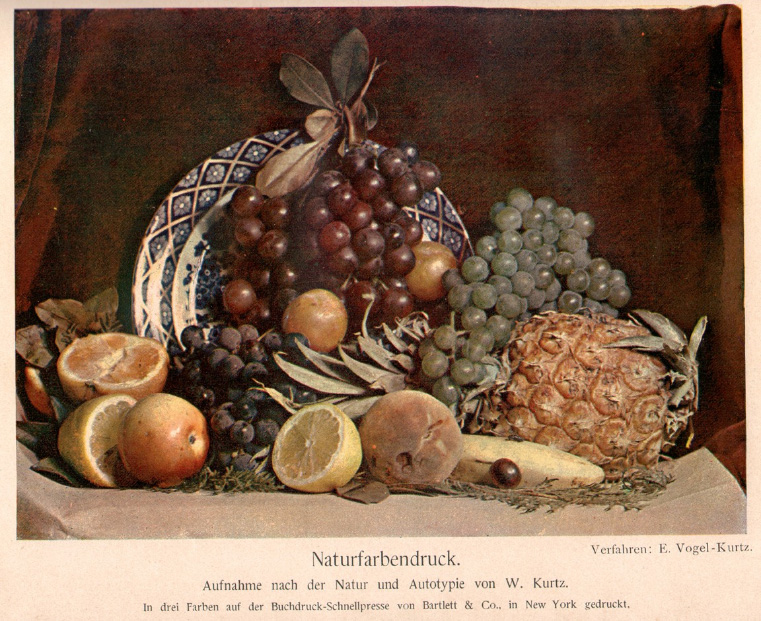
 William Kurtz Still life of fruit, from www.photoseed.com/blog/2011/08/17/new-fruit-in-color-black-white-and-shades-in-between

’Tis the season. Those who are dear to us gather near to us to feast, share and converse. We assemble around the groaning board, and retire from it, groaning, “I couldn’t eat another thing.”

But when they pass around the coffee and the pumpkin pie, we gather our resources, loosen our belts one more notch and manage one more bite.

The sharing of food and drink, and the celebration of plenty, are integral to our social and cultural life. At this time of the year, in this part of the world, turkey and some mistletoe truly bind us together.

Read more….


Sources include:

American Journal of Clinical Nutrition article 1article 2; article 3

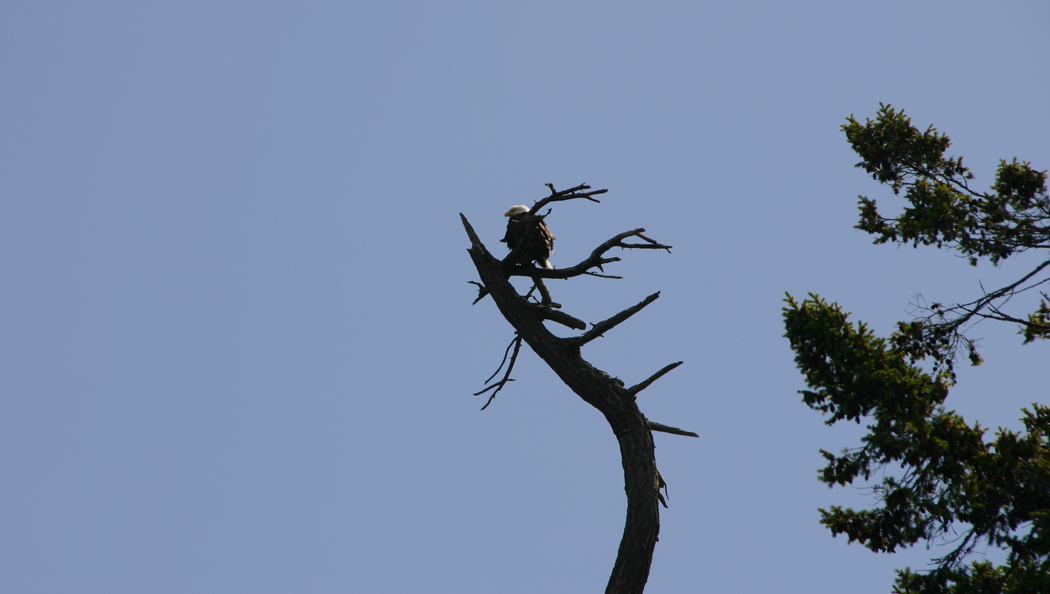
bald eagle, by Mark Stephenson

Victoria Times Colonist, December 8, 2012—We’re in Courtenay at the end of this year’s salmon run. We’ve already seen two eagles fly over the Comox Air Force Museum like B-52 bombers with full payloads. From where we stand today on the banks of the Puntledge River, we spot three more birds of prey perched in trees overhead. The seagulls near us are in a post-feast daze, too full to fly, too full to eat.

A few salmon skitter through the shallows, but most lie dead and grey on the gravel bars.

“Such a waste,” says Nature Boy.

Nature Boy, decrying the natural cycle of life and death and organic matter! Can it be?

Then he says, quite testily, “Yes, yes, I know it’s not a waste. I was just thinking of how much salmon costs at the grocery store.”

These stinky fish corpses are—thank goodness!—food for thought today, not food for us. Instead, they’ll be feeding the forest around us. The salmon spend four years at sea gulping down ocean nutrients, then return to the river to spawn and die. Eagles, gulls, bears and other scavengers eat the ocean-fed carcasses, carrying them deep into the bush. There, what remains fertilizes the forest.

During the last decade, researchers at the University of Victoria have discovered salmon-derived nitrogen in trees, shrubs, moss, beetles and other insects. They’ve even found it in the feathers of songbirds that feast on the insects that feast on dead salmon.

Their work tracking salmon-nutrient cycling through coastal forests parallels research by others into how corn nutrients filter through the human food chain. Salmon confers a unique signature on its nitrogen. Carbon from corn likewise carries a molecular label that shouts “Corn!” to those equipped to read it. It shows up in corn-fed animals and in animals that eat corn-fed animals.

Including us. We North Americans nibble nachos and niblets like nobody’s business. We ingest dextrose, lecithin, high-fructose corn syrup, and other unpronounceable corn products. We feast on corn-fed beef, pork, and poultry, and on eggs, milk and cheese from those animals.

Apparently, as much as half of the carbon in the typical North American is corn carbon.

But there’s more about the food we eat staying with us and within us. Scientists in China have discovered genetic material from rice and vegetables circulating in the blood and tissues of humans and other animals.

If nutrients such as nitrogen and carbon are a body’s most basic ingredients, then genetic material provides the blueprint that dictates an organism’s design and the processes for assembling and maintaining an organism out of that raw “stuff.”

The genetic material in question here is microRNA. Ribonucleic acid—RNA—is critical to gene coding, decoding, control and expression. MicroRNAs—tiny snippets of RNA—help control cellular production of proteins, which do most of a cell’s work. The snippets amplify or dampen protein production, thereby affecting cell function and, thus, an organism’s development and health.

The researchers found 30 kinds of plant microRNAs in human and mouse blood and cells. The microRNAs come from rice, broccoli, cabbage and other vegetables.

The scientists are still determining how the plant molecules interact with animal genes, but some are apparently similar enough to mammal microRNA and abundant enough to affect protein production within our own cells.

Clearly, we have to watch what we eat. Literally. While it is inside us.

All this goes to show we each carry within us ghosts of repasts past, rattling our chains of DNA and RNA, haunting our health, and directing our cellular mechanisms into the future in ways we haven’t yet imagined.

It’s something to contemplate as the eagles and seagulls on the Puntledge River finish their feasting season and we embark on our own. With each mouthful, we will become those mouthfuls: ham, cheese, chicken, turkey, tart, fruit.

Nuts!

And because the pigs that become the ham we eat eat corn, and the cows that provide the milk that becomes the cheese we eat eat corn and the turkeys that become the drumsticks and leftovers we eat eat corn, we will remain corn-y, too.

… With a side of rice and veg.

… And salmon, too.


A version of this article appeared in the Victoria Times Colonist….


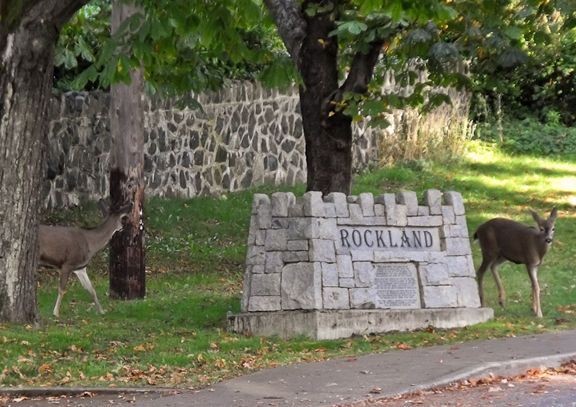
deer in rockland, by Mike Nelson Pedde, http://www.flickr.com/photos/wolfnowl/5445478667/


Victoria Times Colonist, December 1, 2012—Four schools were locked down in November due to cougar sightings, and on Wednesday, CRD’s planning, transportation and protective services committee began considering the new Regional Deer Management Strategy.

Predator. And prey.

No discussion of one can completely ignore the other.

We’ve heard a great deal about the apparent increase in local deer populations, about aggressive deer, increased damage by deer to crops and gardens, and deer-caused car accidents.

Deer have always lived here. They come to our gardens, farms and parks, lured by tasty pickings. They reproduce. They become habituated to humans.

And they are protected by our intolerance of large carnivores, like cougars, wolves and bears, and by our laws restricting hunting, harassment and transport of wildlife.

We create an island paradise for deer. Then we complain.

But, by encouraging abundant deer, we also invite their predators to move in. If we’re uncomfortable with the current numbers of deer, we’re even more nervous about their predators.

In the 12 years I’ve lived here, I’ve seen a cougar once, but I know they’re around. There are too many green spaces, too many new developments squeezing big-cat territory, and too many deer for the region to be cougar-free.

Cougars prefer to eat deer. When deer are unavailable, the cats will prey on rabbits, rodents, raccoons, dogs, house cats, geese… even insects. British Columbians are more likely to be killed by domestic dogs, stinging insects, deer or moose, or other humans than by cougars, but that doesn’t mean we want cougars anywhere near our children or our pets. Or us. Because very occasionally, cougars do attack humans.

Every time a cougar is reported in the area, focus turns on the cats. If conservation officers and their dogs confirm the sighting, the cat is tracked, usually captured and carted away, sometimes killed.

I suspect most cougars that find their way into urban Victoria are young males trying to establish themselves on edges of territories claimed by older, tougher males. They have to be young to be here, because we removed the older cats long ago.

The curious thing is, when we did that, we paved the way not just for the current increase in deer–human encounters, but also for increased cougar–human encounters. According to researchers at Washington State University, when you kill off older, experienced cougars—the cats that have learned to avoid humans—young, dumb cats move in. The youngsters are just looking to survive their first years away from Mom, and aren’t yet wise to the fact that mixing with humans is Trouble.

Every wildlife issue we’ve experienced in the region—the feral rabbits, the abundant and aggressive deer, the less common cougar and bear incursions, the garbage raccoons and the rats—is really a human-management issue. We did away with the predators. We introduced rabbits and rats. We encourage the raccoons and deer. We live in their territory. We don’t learn.

Wildlife biologists agree that coexistence between carnivores and humans depends primarily on managing human attitudes and behaviours. Among the recommendations included in the Regional Deer Management Strategy for decreasing deer–human conflicts are a number that touch on our own unhelpful behaviours.

These recommendations include enforcing municipal bylaws against feeding wildlife, encouraging use of deer-resistant plants in gardens and landscaping, fencing in food gardens and using repellants wherever possible, and generally discouraging deer from habituating to humans.

The strategy also recommends municipalities adjust bylaws to allow higher, deer-proof fences, examine and implement population-reduction measures appropriate to each area, provide support to farmers, in terms of fencing costs, hazing tactics, and crop protection, and adjust signage, speeds, and road-allowance maintenance on roadways to lower the number of vehicle collisions with deer.

It also suggests region-wide public education will be critical.

As capturing and relocating humans from the region aren’t options, addressing our ongoing contributions to wildlife problems is critical.

When we consider the strategy’s recommendations to the CRD over the coming months, we must consider also the broader wildlife implications. Whatever we do about prey species will affect their predators. And vice versa.

And not necessarily the way we intend.

–30–

A version of this article appeared in the Victoria Times Colonist.
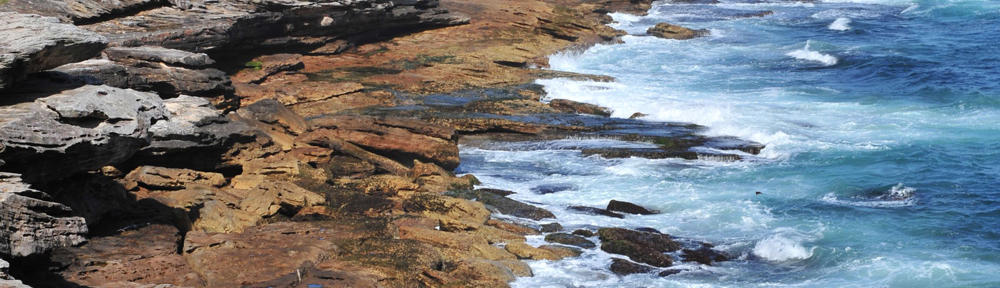
Victoria Times Colonist, November 23, 2012—The words “isle” and “isolation” share linguistic roots. Both derive from the Latin word insula, which itself gives us the word “insulate”.

A curious thing can happen to large-ish mammal species that live on isolated, insulated isles. Over long periods of time, some species become smaller.

This phenomenon is called island, or insular, dwarfism. Scientists believe it results from the limited food resources typically available on islands and in other geographically cut-off areas.

In the short term, food deprivation leads to smaller birth weights and decreased growth in mammals. Over the long term, smaller bodies require less energy, or food.

Think of how much a football player or a basketball player or, better yet, a Sumo wrestler eats to maintain muscle mass and energy levels.

When food is persistently scarce, being petite confers a survival advantage.

And, so, over time, mammals on the large side when they live on mainlands may shrink in size when marooned for generations on desert isles.

(Gilligan, the Skipper, too, the millionaire and his wife, and the rest of S.S. Minnow gang weren’t stranded on their island long enough to show the effects….)

Living examples of island dwarfism include the Key Deer, found only on the Florida Keys. The Channel Island fox is the world’s smallest fox. It is native to California’s—you guessed it—Channel Islands.

Here on the B.C. coast, we have the Sitka deer on Haida Gwaii. Columbian black-tailed deer that live on the smaller Gulf Islands tend to be smaller than their mainland cousins. This, despite the abundant shrubberies and other garden delicacies we provide year-round.

Extinct species include dwarf ground sloths in the Caribbean, dwarf elephants in the Mediterranean and small elephant-like creatures in Southeast Asia. The Philippines once were home to small buffalo. Indonesia’s Bali boasted the smallest tiger of all until it went extinct in the last century.

And so, when B.C. Ferries raises rates and cuts service, and adds to the existing physical isolation of B.C.’s islands, the spectre of island dwarfism raises its tiny cranium in my own tiny cranium. As a science nerd, when I hear of the ferry corporation’s proposed cuts to meet budget constraints, I sigh and think of the Hobbit.

Not Bilbo Baggins. Nor the Peter Jackson movie due out mid-December. I’m talking about Homo floriensis, that wee relative of modern humans whose remains were discovered by archaeologists on the Indonesian island of Flores in 2003.

Partial skeletons of nine individuals were uncovered, dating from 95,000 to 13,000 years ago. The tallest would have stood 87 centimetres tall when alive. Hence the nickname, the “Hobbit.”

As ferry service is cut, as it and the options of flying or watertaxi-ing to and from the islands become ever more costly, what with increases in fares, fuel surcharges, airport and dock fees, parking costs, security levies, carbon taxes, cost of living, etc., etc., will our fate as Island residents be to grow ever smaller, as Hobbit Man (and Woman) did on Flores those millennia ago? Will our descendants follow the eventual path to petite-ness taken by the Sitka and local Columbian black-tailed deer? Will we, too, nibble our neighbours’ shrubberies when food imports from the mainland become too expensive? Will decreasing physical contact betwixt mainland and island eventually result in a new hominid species, our very own Homo vancouverislandensis?

Is this the destiny we choose when we choose to continue living here?

Okay, all smart-aleck questions, but the question of choice underlies them.

And it is a choice. Unlike deer, cougar or bear, we choose to live here, despite the cost of living, inconvenience, and limited employment in some fields.

More accessible and affordable alternatives exist… some, where employers are even hiring. Alberta, Saskatchewan, New Brunswick, and Nova Scotia, for instance. Where it snows more.

We choose this place.

We must also accept the consequences of that choice.

********************************************************

Note: Nature Boy, wildlife expert, assures me island dwarfism won’t happen in our lifetimes, regardless of the outcome of BC Ferries’ current public consultations or its coming service cuts and fare increases.

“I keep hearing about island dwarfism,” he says, “but I’ve lived here for more than a decade and, well, I just keep getting bigger.”

—30—

A version of this article appeared in the Victoria Times Colonist.