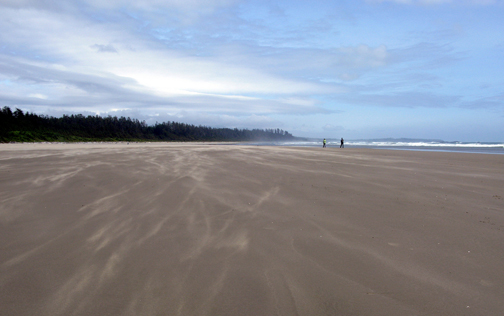
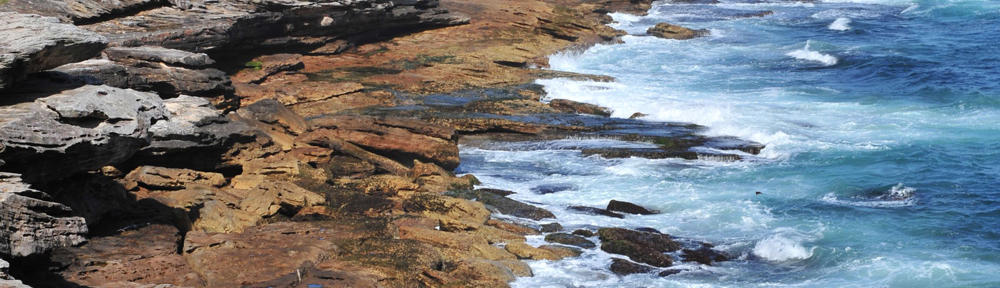
Long Beach, Pacific Rim National Park. Photo © Kyla Duhamel, via creative commons and flickr

Long Beach, Pacific Rim National Park.

Nature Boy uses a number of smartphone apps with his work. Some help him identify birds. Others help him key out wild plants, fungi and other assorted roughage. He opens the astronomy app whenever he’s outside on clear nights. And because he works with people, he often photographs—with permission—families, school groups and kids Doing Cool Stuff Together in Nature, then immediately emails the pictures to the respective parents and teachers.

For somebody who interfaces so intensely with the natural world, he’s pretty hip to the latest gadget, gizmo and gew-gaw. His use of technology to augment his and others’ experience of the outdoors exemplifies some of the more positive, constructive aspects of being constantly connected. ]

Those integrated, positive interfaces came to mind when news broke earlier this year that Parks Canada proposed to provide WIFI access at busy areas of some national parks and historic sites over the next few years.

For example, with park WIFI access, I could double-check the tides before paddling around Gulf Islands National Park Reserve. I could check the day’s weather before setting out on the Long Beach Challenge, the 9.5-kilometre route that Pacific Rim National Park is marketing as the latest, greatest B.C. marathon-fitness trail. I could get Nature Boy to look up that weed while we stomp about Fort Rodd Hill.

Of course, with cell-phone coverage in this region, I could do most of that without park WIFI. At Fort Rodd Hill, I may even receive annoying text messages from the U.S. about cell-phone roaming charges.

However, my reaction to the news about Parks Canada joining the 21st Century may have been atypical….

Read the rest of this editorial at the Victoria Times Colonist….

Water stored in the St. Mary’s Reservoir, north of Cardston, Alberta, insures area farmer’s crops against drought, which is common in that part of the province. In 1998, when the reservoir was drained to build a new spillway, researchers discovered tools used by ancient Albertans, as well as bones and footprints of at least 20 species of long-extinct animals.

“If you had stood there 11,000 years ago, you could have seen mammoths, horses, camel, caribou, bison, wolves, ground squirrels, and birds—maybe all at once,” says Len Hills, professor emeritus of geology and geophysics at the University of Calgary, and one of the scientists studying the site. Joining him in the research are university archaeologist Brian Kooyman and students Paul McNeil and Shayne Tolman, the site’s discoverer. “We know from the way the trackways are intermingled that these animals were right there, together. And man was there, too—he was part of that environment.”

The site is a window on the end of the Ice Age in southern Alberta. By inventorying the animals that lives in the region and studying the role of early humans at the site, Hills and colleagues reconstruct the ancient environment.

About 12,000 years ago, the site was an island delta at the end of a glacier-fed lake. When the St. Mary’s River later drained the lake, it created a massive floodplain west of the island Within a period of days or maybe weeks, large numbers of diverse animals visited the area to feed on the delta’s lush vegetation and drink from the nearby river, trampling the gound with their hooves and feet. Thick layers of sand and dirt blew eastward from the floodplain to bury tracks, bones, and tools. A series of brief geological moments were preserved, recording the presence of animals and humans over a 300-year period about 11,000 years ago.

The oldest tools are Clovis points, flaked-stone implements used by the first North Americans. Not far from where the team was excavating the skeleton of a horse, the researchers found toold that may have been used to kill the animal. Laboratory tests reveal traces of ancient horse protein on two of the Clovis points.

“We’ve known from other sites in North America that they hunted mammoths,” says Hills. “But this is the first sold evidence that Clovis people actually hunted horses. Maybe early humans influenced the extinction of these animals—not just mammoths, but horses, too.”

What precisely caused the disappearance of so many Ice Age mammals 12,000 to 9,000 years ago is uncertain. Climates and environments were changing rapidly as the glacier receded from the continent. Those changes alone would stress animal populations. New species from Asia may have increased competition for food, or may have introduced diseases. Humans may have been another factor in the ecological reorganization.

When McNeil inventoried and analyzed the fossil trackways, comparing information about movement and size of the ancient animals with data from tracks made by modern elephant herds, he found some evidence that the herds visiting the reservoir site 11,000 years ago were stressed.
“The ratio of young animals to adults was far below what we would consider healthy levels in modern populations of similar animals,” he says. “This site captures this one brief moment in time and tells us something was definitely happening.”

The magnitude of the site is the way that it is letting us see how these animals interacted with their environment, with each other, and with early humans.

excerpted from: Reading the Rocks: A Biography of Ancient Alberta
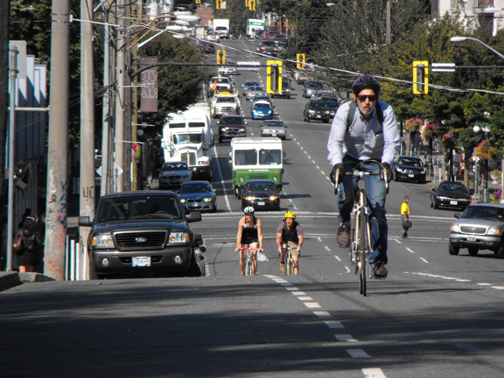
Cycling in Victoria. Photo © John Luton, via creative commons and flickr

With the 2014 Tour de France ending tomorrow, this year’s version delivered the usual combination of surprise and excitement to fans. The spectacular high-speed crashes and cringing injuries that regularly occur during the renowned cycling race brought sudden and unexpected ends to the participation of many contenders for this year’s title. For the likes of former tour champions Alberto Contador, Chris Froome, Andy Schleck and Mark Cavendish, who broke bones and left skin and blood on the roads of France and U.K., the 2014 Tour de France could be considered something of a disaster.

Fortunately, today’s Tour de Disaster, here in Victoria, contains little opportunity for that kind of excitement….

Read the rest of this editorial at the Victoria Times Colonist….

Heat wave. Photo © Steve Harris, via creative commons and flickr

The Environment Canada website for the Victoria forecast pronounced “Be prepared for … HEAT!” Normally the notices above the daily weather predictions warn of coming high winds, storms, freezing temperatures, thick fog, or heavy rains. This last week, however, it cautioned us to expect a heat wave.

Caution, indeed, is needed when so many studies document a link between high temperatures and aggression. Aggression can range from snappish impatience at home, at work, or in line at the grocery store, to road rage, verbal abuse and violent crimes such as assault, rape and murder.

The link even shows up in our language. The words “temper” and “temperature” share the same Latin origin, temperare—meaning to restrain. In that wonderful way the English language molds and changes words and their meanings, the definition of temper—anger—has deviated from the original definition. In fact, temper (anger) often has little to do with restraint.

Common expressions reinforce the link between heat and aggression in English. “Tempers flare,” “a hot temper,” “hot under the collar,” “hot headed,” “short fuse,” “slow burn,” “let off steam,” and “smouldering resentment” come to mind.

Psychologists and sociologists who study how heat influences emotions and behaviour believe high temperatures exacerbate already near-boiling levels of stress in people, bringing them that much closer to losing control.

Heat is, in itself, a stressor. It makes people physically uncomfortable, leading to impatience. It can also lead to dehydration, which affects energy levels and the brain’s ability to function and reason. The combination of discomfort and dehydration interferes with a person’s ability to regulate emotions. It causes the brain’s fright–fight–flight centre to react to even mild events, and short-circuits the reasoning part of the brain that would normally temper (restrain) temper (anger).

And that’s looking at heat’s effects at an individual level. Warming temperatures and climate appear to also affect peace and wellbeing across entire societies….

Read the rest of this editorial at the Victoria Times Colonist….

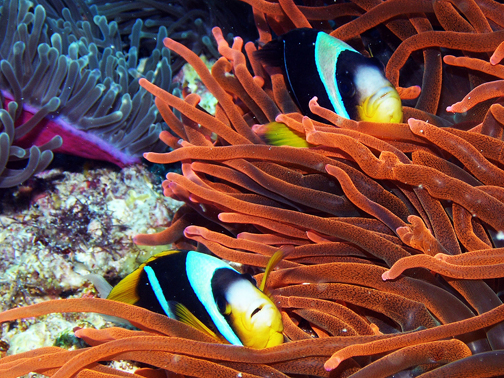
Clown fish. Photo © Rob, bbmexplorer.com, via creative commons and flickr.

When male clown fish lose their female partners, they change their sex and become female themselves. Go, Nemo/Nema.

When it comes to gender equality, researchers find Dad’s actions around the house speak louder than his words. University of British Columbia psychologists recently found that, when a father regularly engages in traditionally female household chores, his school-aged daughters are more likely to aspire to gender-neutral careers—for instance, becoming doctors, lawyers or CEOs.

Which means, guys, if you want your daughters to become highly paid white- or even blue-collared professionals, be sure you change diapers, scrub floors, pick up groceries, drycleaning and dirty socks, and make dinner—often and regularly. For, despite Peter Mackay’s reported emails to his staff, in doing so, you will indeed shape your daughters’ minds and values.

Gender-based divisions of household labour are social constructs. Yet, despite the last 40 years’ advances, women remain the primary caregivers, cooks and cleaners in many households. Some people—including some individuals in influential places—claim the roles naturally come with being the only humans biologically capable of gestating and birthing young.

But imagine if we could switch biological roles, as it were, without complicated surgeries and hormones. Imagine if we could easily adjust the division of reproductive labour. That would be the end of many questionable comments and assumptions.

Some organisms do exactly that….

Read the rest of this editorial at the Victoria Times Colonist….


More to explore:

Battle of the sexes – one gene keeps us either male or female

Dads who do housework have more ambitious daughters

Moms change diapers, Dads form leaders: Justice minister’s emails to staff

Sex change in nature—coral reef fish

Slug love


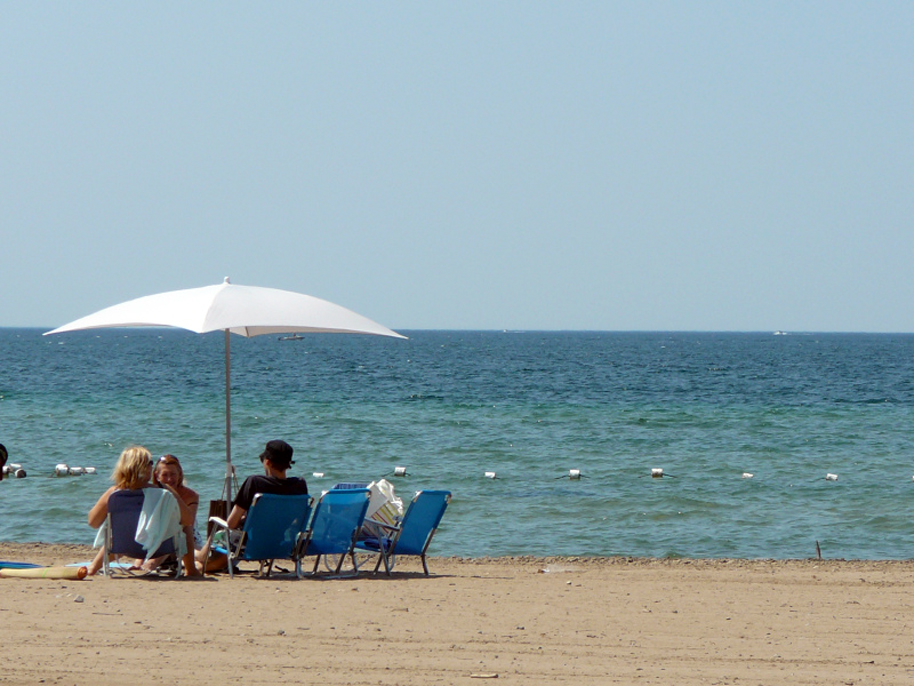
Playing on beach. Photo © Wynand Strydom, via creative commons and flickr

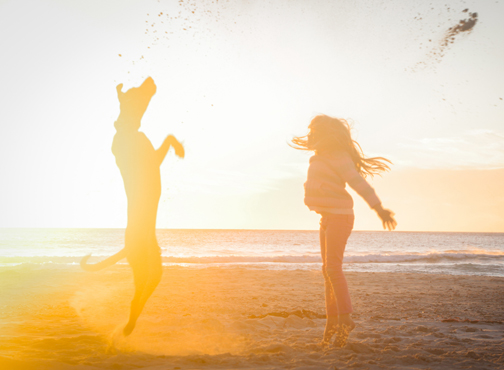
Summer calls. Many youngsters stand at the leading edge of the season and anticipate two months of endless days, sunshine, mucking around and running about. Two whole months of playing!

However, many instead will endure a packed roster of prebooked, highly managed and directed activities. Many will take part in day camp after day camp, week after week. Many will have formal and informal learning activities thrust upon them. Most will be signed up for numerous and various pursuits that will keep them occupied and out of trouble until Mom and Dad or the grandparents can take their allotted summer vacations.

Few kids will have much time for play.

Many psychologists consider play an endangered activity. Today’s children experience little free time. They participate in activities, take lessons… even play dates must be scheduled and have unwritten agendas. So much of what kids do comes with explicit expectations, predetermined objectives, and the pressing, stress-inducing need to be somewhere at such and such a time, then off to somewhere else for something else, with little time between.

The danger in all this busy-ness, warn child-development experts, is that it comes at the cost of free, creative play. Researchers have long rooted around in the human mind to tease out how play affects kids in the moment, a few months down the road, and later on when they become adults.

Play, they’ve found, is essential for children’s social, physical, mental and emotional development and health. Scientists have found that play increases mental and emotional flexibility, creativity, and social skills, as well as increases kids’ abilities to find meaning in experiences, regulate their emotions and stress, express themselves creatively, coherently and spontaneously, and think laterally and divergently….

Read the rest of this editorial at the Victoria Times Colonist….

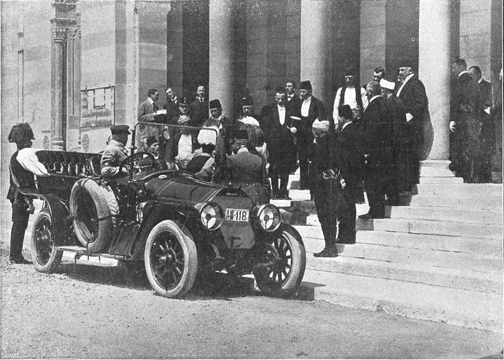
Franz Ferdinand's motorcar, June 28 1914, Sarajevo

One century ago, a sound occurred that continues to ring today. The singular blast was neither broadcast nor recorded. Nevertheless, it echoes through all of our lives today—not as sound waves, but as long, slow swells through our social fabric.

When Bosnian student Gavrilo Princip fired his pistol in the crowded streets of Sarajevo and killed the heir to the throne of the Austro-Hungarian Empire on June 28, 1914, the crack of his gunshots cracked the world apart.

Most people heard the resulting fault lines creak and quake only weeks and months later. By then, millions were dying across Europe, empires marched towards collapse, and the world was changing forever.

Few people were aware of the intricate treaties, ties and obligations that bound one European power to another then. Some of the informed few suspected this simple revolutionary act on the part of a hitherto-unknown student in a small, volatile corner of Europe would lead to war. However, none could have predicted the gunshots signalled a political, economic and social upheaval more widespread and more thorough than any French, American, Glorious or Quiet revolution.

Here in Victoria, we were pretty much oblivious….

Read the rest of this editorial at the Victoria Times Colonist….

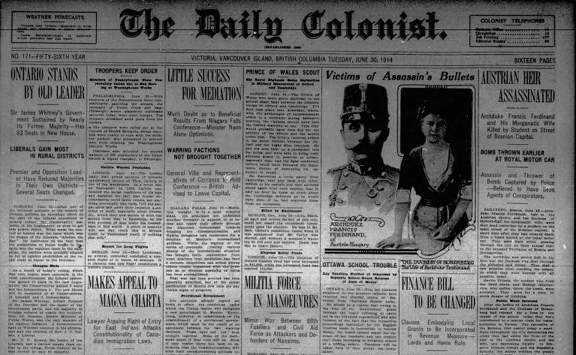
Front page headlines, Daily Colonist, June 30 1914, Victoria, B.C.

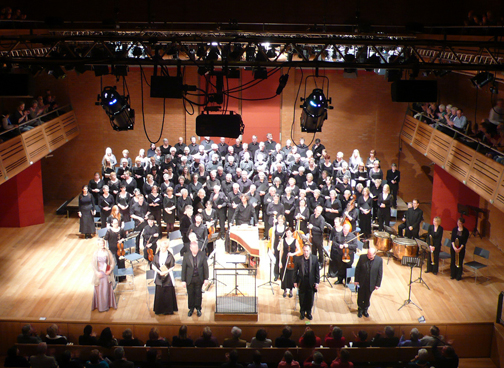
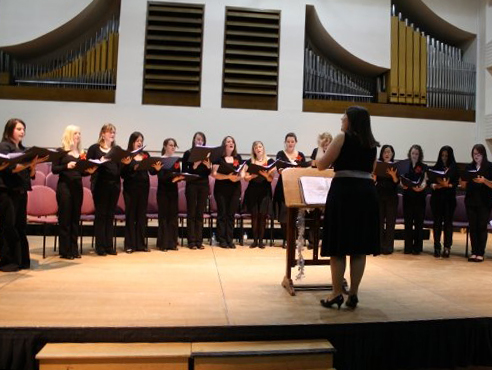
Bury Bach Choir, U.K. Photo © Tim Regan, via creative commons & flickr

Festival season has begun. We’ve seen spot prawns served multiple ways, we drank tea in Oak Bay, we entertained our guests at the Sooke River Bluegrass and Vancouver Island Cultural festivals, the Aboriginal Cultural Festival wraps today, and the Foodie Film Fest has just started making us drool. And, for the next week, Victoria’s International Jazz Festival will be bringing jazz lovers together.

So many of the big events during the summer here and elsewhere include music—as the events’ focus, part of the line-up, or a contrapuntal offering. These events are community occasions. They bring people from across the region together to share an experience.

Music stitches together our social fabric in many ways. Those who enjoy bluegrass or ska or funk or even the Grateful Dead share a common language within their genre. Fans of certain bands form their own insular groups, sometimes following the musicians’ performances, travels and lives online or in person in a way that borders on stalking. And, yes, whenever strangers gather to listen to the same music, they bop their heads to the beat, tap their fingers, and swing their feet to the rhythm, in time, together.

And it turns out, when music plays, we share the experience of melody, harmony and rhythm at a much more basic, personal level….

Read the rest of this editorial at the Victoria Times Colonist….

Amhersham A Cappella Choir, amershamacapella.com. Photo © Margaret (Lady P.P.), via creative commons and flickr