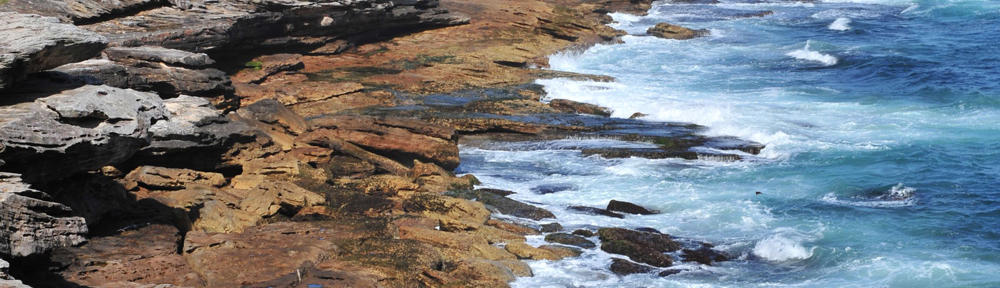
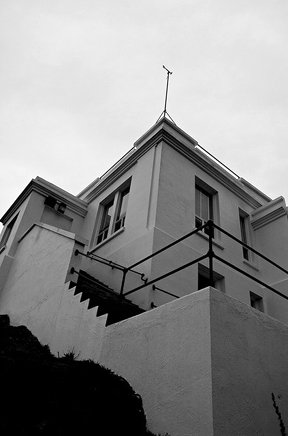
Gonzales Observatory served as Victoria's weather and time station. Photo © Cindy Andrie via flickr and Creative Commons


We lost an hour last night.

Don’t send out a search party. The hour is not hiding under the bed, or communing with dust bunnies at the back of the closet. It hasn’t eloped with a dish or a spoon, or ridden a cow bareback over the moon.

Our concept of time, with its discrete hours, minutes and seconds, is a result of our need for predictability and stability, and the progress of our technology.

Before moment-to-moment measurement became possible, we relied on the Earth’s tilted, spinning loops around the sun to measure time. Every sunrise, sunset, high noon, or full or new moon brought a new unit of time. The sun’s creep along the horizon signaled seasons. Animals and our own patterns provided points of approximate precision to our days. Wrinkles creeping across faces, children becoming adults, saplings maturing into trees, and other signs indicated decades.

Technology overturned that. Fire and electricity made night into day. Clocks introduced minutes and seconds, and made promptness, regular schedules and shift work possible.

Even after clocks became portable, sailors relied on the sun to determine how far east or west they had travelled. Ships’ captains determined high noon where they were, set one time piece on board to that time, and compared the difference against another time piece. On any ship flying under the Union Jack, that second time piece was set to Greenwich time, in England. In those pre-GPS days, time accuracy was essential for ships in port to set their time pieces and measure position.

As a major shipping port for the British Empire, Victoria benefited. For example, in February 1859, the Victoria Gazette reported that Captain Trevett of the Hudson’s Bay Company steamer Labouchere, which was in harbour, consented to fire a gun at noon every Thursday, so that the citizens of Victoria could “regulate their time pieces and obtain the true time.” Two decades later, the Work Point garrison established a time-keeping routine by firing its time gun at eight or nine o’clock on Monday nights….

Read the rest of this editorial at the Victoria Times Colonist….
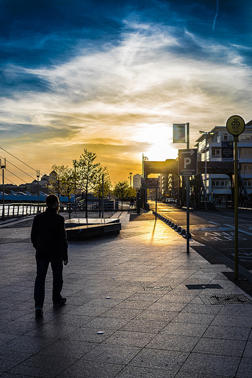
Man walking at sunset. Photo © Giuseppe Milo, www.pixael.com, via flickr & Creative Commons

Photo © Giuseppe Milo, www.pixael.com

Last year, Paul Glassen, of Nanaimo, wrote to me:

“We all walk in the first couple years of life, many start cycling and riding buses in grade school. We don’t drive the auto until we are in our later teens. Why do we call walking, cycling and transit ‘alternative transport’? Clearly, they are primary transportation, and the auto is the alternative.”

Glassen’s reasoning plays on the order in which people adopt ways of moving about during their lives. As such, walking—by itself—would indeed be the primary form of transportation. Cycling or public transit would be the secondary and tertiary modes of transport, and driving, the quaternary (car-tenary) form. Crawling, abandoned once we’re upright, loses its initial place in our early years….

Read the rest of this editorial at the Victoria Times Colonist….
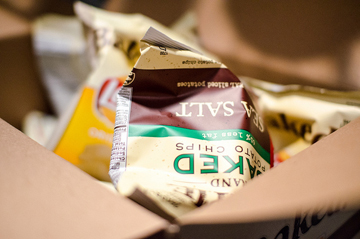
Single-serving bags of chips. Photo © m01229, via flickr and Creative Commons

Nature Boy waved a bag of potato chips at me.

“No, thanks. I’m not hungry,” I said.

“But when you see this bag, how do you feel? Do you feel a twinge of guilt? Do you feel nostalgic?”

“Actually, right now, I feel puzzled and exasperated….”

Nature Boy’s household psychological experiment came after he’d read about neuromarketing, a field of study that examines how the sight of certain products triggers specific and not always expected emotional responses deep within people’s brains.

That’s the neuro-part of the field. The marketing part comes when companies use that information to design, package and position products to increase sales….

Read the rest of this editorial at the Victoria Times Colonist….
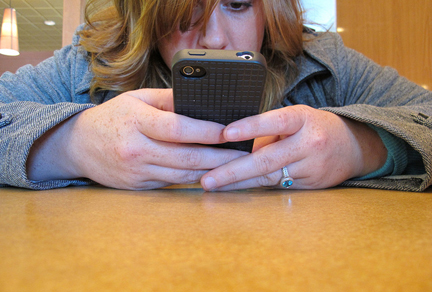
Checking email. Photo © www.buzzfarmers.com, via flickr and Creative Commons

Photo © www.buzzfarmers.com

When he was younger and had more hair, Nature Boy often marked this time of year by resolving to break annoying habits. These included snacking between meals, spending too much time onscreen, sleeping until the last possible minute before getting up and getting ready for work, and so on.

Year after year, he resolved to get smarter, fitter, faster or just get up.

You could say he was beginning to develop a habit of making resolutions to break bad habits.

Alas, as with so many resolutions made by so many people, a resolution-making habit does little to squelch the habits prompting the resolutions….


Read the rest of this editorial at the Victoria Times Colonist….


Table Setting 74. Photo © Didriks, via Creative Commons and flickr. www.didriks.com

“I’m setting out the small dinner plates,” Nature Boy announced the other evening as we prepared to welcome guests. “It will help pace us through the meal.”

Nature Boy recently assumed responsibility for setting the table for evening meals. With meals round these parts typically being the quick and informal sort, the choice of dinnerware rarely receives much thought.

But the task becomes more complicated when, as with the evening in question, guests are expected, menus encompass multiple courses, and appetites must be managed throughout the evening. Such occasions call upon Nature Boy to tune up his geometry and social-engineering skills. It’s not just a matter of how to seat so many people around a limited dining surface, but (he asserts) incorporating the latest social and neurological science into the effects of the setting—and the setting of the table—on the perception and enjoyment of the food served.

Nature Boy’s efforts at table landscaping have climbed to new intellectual and socially manipulative heights.

The studies Nature Boy called on when he selected smaller plates determined that plate size affects how much food people serve themselves and how much they think they’re eating….

Read the rest of this editorial at the Victoria Times Colonist….
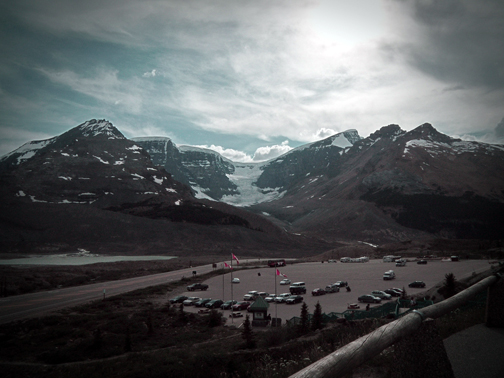
View of the Columbia Icefield from the visitor centre. Photo © Samantha Marx (@smath.com). via creative commons and flickr

When you stand on the new Glacier Skywalk, just off the Icefields Parkway in Jasper National Park, you can look down into the depths of the Sunwapta Valley 280 metres beneath your feet and up at the heights of the Continental Divide around you.

Nestled among these peaks is the Columbia Icefield, a massive complex of ice that first formed more than 10,000 years ago. Six kilometres long, almost a kilometre across, and in some places 300 metres thick, it feeds eight major glaciers and three major river systems.

One of these is the Columbia River. This waterway stretches 2,000 kilometres, from its Rocky Mountain headwaters, through eastern B.C. and four U.S. states. It drains a region the size of France, and now encounters 14 dams along its length, including three in this province.

The river is the subject of an international agreement on shared river management. On September 16, 1964—50 years ago this Tuesday—Canada and the U.S. ratified and implemented the Columbia River Treaty….

Read the rest of this editorial at the Victoria Times Colonist….


Water stored in the St. Mary’s Reservoir, north of Cardston, Alberta, insures area farmer’s crops against drought, which is common in that part of the province. In 1998, when the reservoir was drained to build a new spillway, researchers discovered tools used by ancient Albertans, as well as bones and footprints of at least 20 species of long-extinct animals.

“If you had stood there 11,000 years ago, you could have seen mammoths, horses, camel, caribou, bison, wolves, ground squirrels, and birds—maybe all at once,” says Len Hills, professor emeritus of geology and geophysics at the University of Calgary, and one of the scientists studying the site. Joining him in the research are university archaeologist Brian Kooyman and students Paul McNeil and Shayne Tolman, the site’s discoverer. “We know from the way the trackways are intermingled that these animals were right there, together. And man was there, too—he was part of that environment.”

The site is a window on the end of the Ice Age in southern Alberta. By inventorying the animals that lives in the region and studying the role of early humans at the site, Hills and colleagues reconstruct the ancient environment.

About 12,000 years ago, the site was an island delta at the end of a glacier-fed lake. When the St. Mary’s River later drained the lake, it created a massive floodplain west of the island Within a period of days or maybe weeks, large numbers of diverse animals visited the area to feed on the delta’s lush vegetation and drink from the nearby river, trampling the gound with their hooves and feet. Thick layers of sand and dirt blew eastward from the floodplain to bury tracks, bones, and tools. A series of brief geological moments were preserved, recording the presence of animals and humans over a 300-year period about 11,000 years ago.

The oldest tools are Clovis points, flaked-stone implements used by the first North Americans. Not far from where the team was excavating the skeleton of a horse, the researchers found toold that may have been used to kill the animal. Laboratory tests reveal traces of ancient horse protein on two of the Clovis points.

“We’ve known from other sites in North America that they hunted mammoths,” says Hills. “But this is the first sold evidence that Clovis people actually hunted horses. Maybe early humans influenced the extinction of these animals—not just mammoths, but horses, too.”

What precisely caused the disappearance of so many Ice Age mammals 12,000 to 9,000 years ago is uncertain. Climates and environments were changing rapidly as the glacier receded from the continent. Those changes alone would stress animal populations. New species from Asia may have increased competition for food, or may have introduced diseases. Humans may have been another factor in the ecological reorganization.

When McNeil inventoried and analyzed the fossil trackways, comparing information about movement and size of the ancient animals with data from tracks made by modern elephant herds, he found some evidence that the herds visiting the reservoir site 11,000 years ago were stressed.
“The ratio of young animals to adults was far below what we would consider healthy levels in modern populations of similar animals,” he says. “This site captures this one brief moment in time and tells us something was definitely happening.”

The magnitude of the site is the way that it is letting us see how these animals interacted with their environment, with each other, and with early humans.

excerpted from: Reading the Rocks: A Biography of Ancient Alberta

Heat wave. Photo © Steve Harris, via creative commons and flickr

The Environment Canada website for the Victoria forecast pronounced “Be prepared for … HEAT!” Normally the notices above the daily weather predictions warn of coming high winds, storms, freezing temperatures, thick fog, or heavy rains. This last week, however, it cautioned us to expect a heat wave.

Caution, indeed, is needed when so many studies document a link between high temperatures and aggression. Aggression can range from snappish impatience at home, at work, or in line at the grocery store, to road rage, verbal abuse and violent crimes such as assault, rape and murder.

The link even shows up in our language. The words “temper” and “temperature” share the same Latin origin, temperare—meaning to restrain. In that wonderful way the English language molds and changes words and their meanings, the definition of temper—anger—has deviated from the original definition. In fact, temper (anger) often has little to do with restraint.

Common expressions reinforce the link between heat and aggression in English. “Tempers flare,” “a hot temper,” “hot under the collar,” “hot headed,” “short fuse,” “slow burn,” “let off steam,” and “smouldering resentment” come to mind.

Psychologists and sociologists who study how heat influences emotions and behaviour believe high temperatures exacerbate already near-boiling levels of stress in people, bringing them that much closer to losing control.

Heat is, in itself, a stressor. It makes people physically uncomfortable, leading to impatience. It can also lead to dehydration, which affects energy levels and the brain’s ability to function and reason. The combination of discomfort and dehydration interferes with a person’s ability to regulate emotions. It causes the brain’s fright–fight–flight centre to react to even mild events, and short-circuits the reasoning part of the brain that would normally temper (restrain) temper (anger).

And that’s looking at heat’s effects at an individual level. Warming temperatures and climate appear to also affect peace and wellbeing across entire societies….

Read the rest of this editorial at the Victoria Times Colonist….