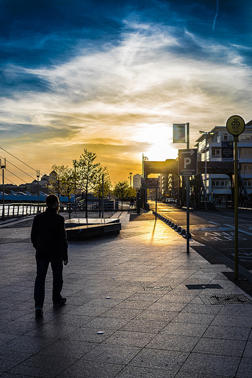
Man walking at sunset. Photo © Giuseppe Milo, www.pixael.com, via flickr & Creative Commons

Photo © Giuseppe Milo, www.pixael.com

Last year, Paul Glassen, of Nanaimo, wrote to me:

“We all walk in the first couple years of life, many start cycling and riding buses in grade school. We don’t drive the auto until we are in our later teens. Why do we call walking, cycling and transit ‘alternative transport’? Clearly, they are primary transportation, and the auto is the alternative.”

Glassen’s reasoning plays on the order in which people adopt ways of moving about during their lives. As such, walking—by itself—would indeed be the primary form of transportation. Cycling or public transit would be the secondary and tertiary modes of transport, and driving, the quaternary (car-tenary) form. Crawling, abandoned once we’re upright, loses its initial place in our early years….

Read the rest of this editorial at the Victoria Times Colonist….
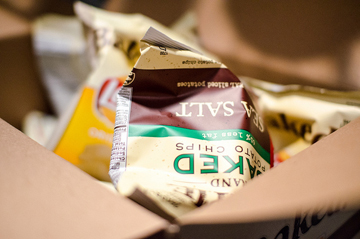
Single-serving bags of chips. Photo © m01229, via flickr and Creative Commons

Nature Boy waved a bag of potato chips at me.

“No, thanks. I’m not hungry,” I said.

“But when you see this bag, how do you feel? Do you feel a twinge of guilt? Do you feel nostalgic?”

“Actually, right now, I feel puzzled and exasperated….”

Nature Boy’s household psychological experiment came after he’d read about neuromarketing, a field of study that examines how the sight of certain products triggers specific and not always expected emotional responses deep within people’s brains.

That’s the neuro-part of the field. The marketing part comes when companies use that information to design, package and position products to increase sales….

Read the rest of this editorial at the Victoria Times Colonist….

Flu vaccination. Photo © U.S. Army Corps of Engineers, Europe District, via flickr & Creative Commons

With the annual flu season underway, the annual influenza-related controversies are also making the rounds.

They started last summer, with problems at Canada’s main flu-vaccine production facility in Quebec. A shortfall of vaccine doses resulted, forcing the Canada’s Public Health Agency to place orders with other suppliers.

By the start of flu season in November, it became known that this year’s flu-vaccine missed the virus bull’s eye. The World Health Organization decides each spring which strains of influenza to target in the year’s vaccine. It selected one strain of Influenza B and two strains of Influenza A in 2014. However, the A virus that has since come to dominate the season mutated, leaving the vaccine less effective….

Read the rest of this editorial at the Victoria Times Colonist…. 
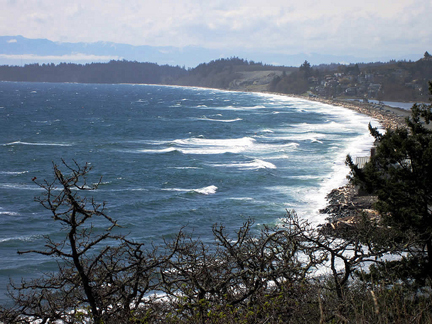
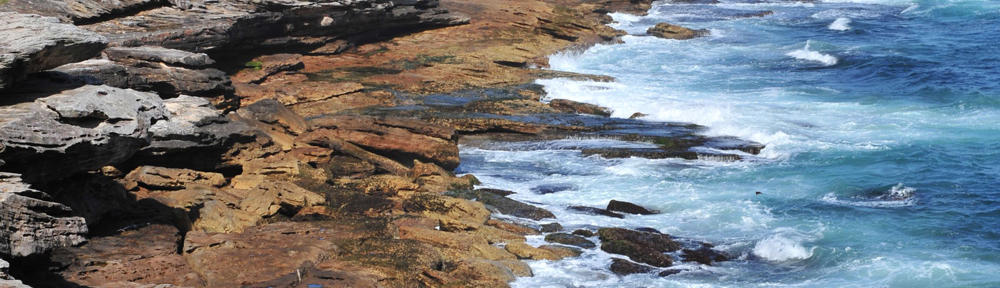
Royal Roads shoreline outside Esquimalt Lagoon. Photo © David Stanley via flickr and Creative Commons. www.southpacific.org

The year has begun amidst a series of earth-shaking events.

Three earthquakes were reported for the Vancouver Island region on January 2. The biggest, at magnitude 5.4, occurred 211 kilometres west of Port Hardy, while two smaller tremblers occurred west of Port Alberni. Five days later, a 4.8-magnitude quake west of Port Alice shook the coast.

They form part of a regional swarm of earthquakes that began late last year, as the tectonic plates beneath Vancouver Island released rock-bending pressure. To add perspective, about 4,000 earthquakes occur in B.C. every year. Of these, only a few—like the larger January quakes—are felt by people.

As solid as the ground beneath our feet seems, when the forces that shape the our planet’s surface start squeezing it, the granites, basalts and sedimentary rock on which our region’s municipalities are built take on the consistency and strength of something like fine, aged Cheddar….


Read the rest of this editorial at the Victoria Times Colonist….
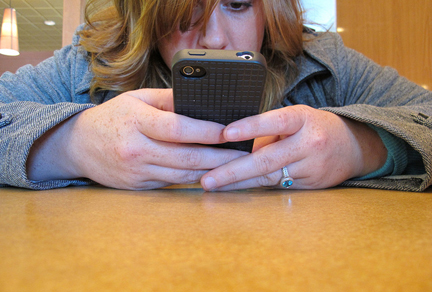
Checking email. Photo © www.buzzfarmers.com, via flickr and Creative Commons

Photo © www.buzzfarmers.com

When he was younger and had more hair, Nature Boy often marked this time of year by resolving to break annoying habits. These included snacking between meals, spending too much time onscreen, sleeping until the last possible minute before getting up and getting ready for work, and so on.

Year after year, he resolved to get smarter, fitter, faster or just get up.

You could say he was beginning to develop a habit of making resolutions to break bad habits.

Alas, as with so many resolutions made by so many people, a resolution-making habit does little to squelch the habits prompting the resolutions….


Read the rest of this editorial at the Victoria Times Colonist….
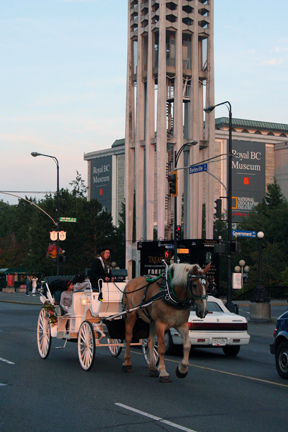
 

Royal BC Museum from Belleville Street, Victoria. Photo © Robin Zebrowski, via flickr and Creative Commons

This week, the Royal BC Museum opens its doors to the local community. For the price of a cash donation, residents and visitors can tour the museum’s galleries, travel back to the province’s early years, and view one of the world’s best collections of West Coast First Nations art and artifacts.

Some weeks ago, online travel-booking company TripAdvisor.ca announced that the museum ranked first in the company’s Top 10 Canadian museums for 2014. The museum was also confirmed as a Travellers’ Choice winner, a position the museum has enjoyed for several years. The awards are based on reviews and opinions posted on the online site by travellers.

TripAdvisor announced its news on November 18. That is also Canadian Museums Day. Marking the date with the announcement created synergies for TripAdvisor, the museums being celebrated, Canada’s museum industry, the travel and tourism industry, the online-booking industry, the power of people who share their opinions online….

But, in another sense, the timing was unfortunate….

Read the rest of this editorial at the Victoria Times Colonist….

Table Setting 74. Photo © Didriks, via Creative Commons and flickr. www.didriks.com

“I’m setting out the small dinner plates,” Nature Boy announced the other evening as we prepared to welcome guests. “It will help pace us through the meal.”

Nature Boy recently assumed responsibility for setting the table for evening meals. With meals round these parts typically being the quick and informal sort, the choice of dinnerware rarely receives much thought.

But the task becomes more complicated when, as with the evening in question, guests are expected, menus encompass multiple courses, and appetites must be managed throughout the evening. Such occasions call upon Nature Boy to tune up his geometry and social-engineering skills. It’s not just a matter of how to seat so many people around a limited dining surface, but (he asserts) incorporating the latest social and neurological science into the effects of the setting—and the setting of the table—on the perception and enjoyment of the food served.

Nature Boy’s efforts at table landscaping have climbed to new intellectual and socially manipulative heights.

The studies Nature Boy called on when he selected smaller plates determined that plate size affects how much food people serve themselves and how much they think they’re eating….

Read the rest of this editorial at the Victoria Times Colonist….
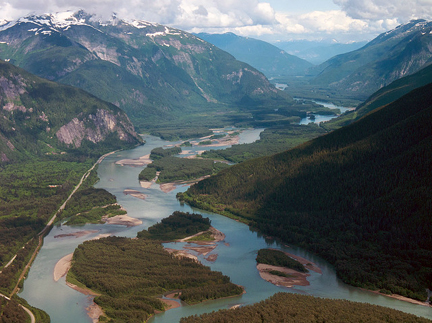
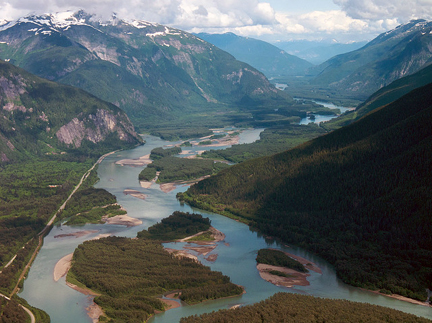
Spectacular Skeena River Valley. Photo © Sam Beebe, Ecotrust

Spectacular Skeena River Valley. Photo © Sam Beebe, Ecotrust

Enbridge first proposed Kitimat as the West Coast terminus of its Northern Gateway pipeline a decade ago. The company has been defending the choice ever since.

For much of the ensuing time, attention has focused tightly on that project.

Oh, sure, the deliberations and demonstrations about the Keystone XL pipeline project in the U.S. were noted, but, until recently, B.C. has concentrated on the Northern Gateway proposal….

Read the rest of this editorial at the Victoria Times Colonist….