Victoria residents recently demonstrated again how keen many of them are about birding. Preliminary results from this year’s Christmas Bird Count show more than 200 volunteers turned out in mid-December to watch for birds throughout the Capital Region. The birders recorded 144 species this year. Data collected by birders during the count are used to assess and monitor bird population numbers and health in communities across North America. Community organizers select one day from December 14 until January 5, and send their volunteers out to scour a 24-kilometre-diameter area that stays the same from year to year. Ninety-five communities in B.C. have taken part in the annual event this year. The final numbers of species sighted won’t be tallied until the event officially finishes tomorrow. Started by the Audubon Society in 1900, the Christmas Bird Count now provides 114 years of regularly collected data about bird population numbers across the continent. It helps bird scientists and ecologists assess and monitor species health in regions and individual communities. For example, scientists have used information gathered by community birders during the count to get the Western Screech-Owl, Rusty Blackbird, and Newfoundland Red Crossbill added to Canada’s Species at Risk lists. It also provides opportunity for regular people to engage in and contribute to science. In fact, the Christmas Bird Count is one of the longest-running and better-known citizen-science programs going. The concept of citizen science has grown in scope, popularity and opportunity during the last decade. Thanks in large part to advances in web technology, folk like you and me, who don’t have Ph.D.s and lack access to science labs, can make our own small marks in the scientific process—and learn more about things that interest us.

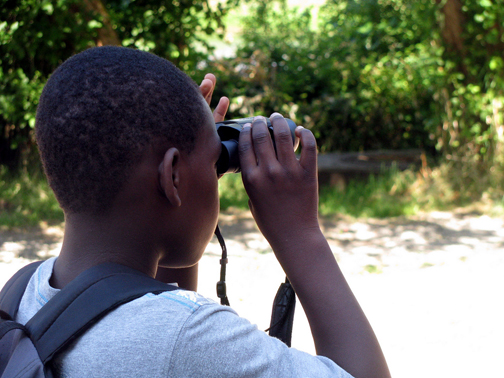
Victoria residents recently demonstrated again how keen many of them are about birding. Preliminary results from this year’s Christmas Bird Count show more than 200 volunteers turned out in mid-December to watch for birds throughout the Capital Region. The birders recorded 144 species this year.

Data collected by birders during the count are used to assess and monitor bird population numbers and health in communities across North America. Community organizers select one day from December 14 until January 5, and send their volunteers out to scour a 24-kilometre-diameter area that stays the same from year to year. Ninety-five communities in B.C. have taken part in the annual event this year. The final numbers of species sighted won’t be tallied until the event officially finishes tomorrow.

Started by the Audubon Society in 1900, the Christmas Bird Count now provides 114 years of regularly collected data about bird population numbers across the continent. It helps bird scientists and ecologists assess and monitor species health in regions and individual communities. For example, scientists have used information gathered by community birders during the count to get the Western Screech-Owl, Rusty Blackbird, and Newfoundland Red Crossbill added to Canada’s Species at Risk lists.

It also provides opportunity for regular people to engage in and contribute to science. In fact, the Christmas Bird Count is one of the longest-running and better-known citizen-science programs going.

The concept of citizen science has grown in scope, popularity and opportunity during the last decade. Thanks in large part to advances in web technology, folk like you and me, who don’t have Ph.D.s and lack access to science labs, can make our own small marks in the scientific process—and learn more about things that interest us….

View the rest of this article in the Victoria Times Colonist….
This content is password protected. To view it please enter your password below:

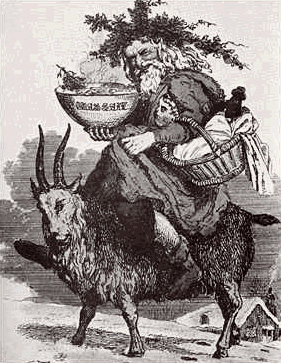
Saint Nicholas taking on new experiences by exchanging reindeer and sled for a goat. Image: WikiCommons (commons.wikimedia.org/wiki/File:Santaandgoat.gif)

Saint Nicholas taking on new experiences by exchanging reindeer and sled for a goat. Image: WikiCommons

A friend rings me in December every year and warbles, “Santa baby, slip a sable under the tree for me.” Her sometime-Eartha Kitt, sometime-Madonna Material Girl imitation morphs into one of a 10-year-old requesting a hippopotamus for Christmas.

Then she moves onto the greedier lines of Jolly Old Saint Nicholas, and ends with a rousingly nasal rendition of the Chipmunks demanding hula hoops and planes that loop the loop. We call this annual singsong The Gimme, Gimme, Gimme Medley. It seems to suit the season.

Yet, despite singing about wantin’ stuff, Bev and I inevitably end up talking about events and activities. The concerts we attend during December. The dinners with friends. The family gatherings, the anticipated holiday vacations, the quiet days with good books… .

Some of the activities we talk about come with price tags. Some require only time and effort.

Chances are, those experiences will influence our emotions to greater, longer-lasting and more positive effect than any possessions we acquire during the season, no matter how much we may covet the objects.

According to San Francisco State University psychologist Ryan Howell, people who invest in acquiring experiences over obtaining possessions report greater happiness and life satisfaction. Experiences can include anything from attending concerts or theatre to spending time at the spa, to travel or even going for walks….

Read the rest of this editorial in the Victoria Times Colonist….
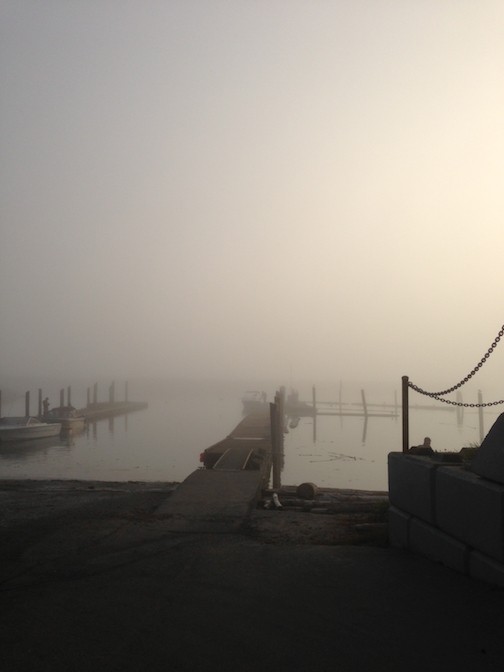
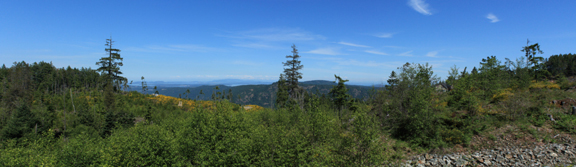
Some of Victoria's quieter places. Photo by Andy M. Smith

Quiet may be extinct, I thought atop the Highlands’s Jocelyn Hill. I was far from the nearest road, but the whine and hum of traffic climbing the Malahat drifted across Finlayson Arm.

And then a helicopter whirred into view below, drowning out pretty much everything else.

My friend Don tells me he found true quiet once. He had to climb to the top of the El Teide volcano on Tenerife, in the Canary Islands, to find it.

That’s a long way to go to find absence—absence of sound.

For the record, I don’t classify sounds of nature as noise. There are exceptions: the shotgun-crack of acorns hitting the rooftop, or predawn choruses of birdsong … or monkey screams or jackal howls or Nature Boy’s snores, depending on where I’m trying to sleep.

Research indicates we humans find run-of-the-mill everyday nature sounds relaxing. Serenades of birdsong and squirrel chatter soothe our usual stress responses, lower our blo.od pressure and heart rate, and slow and deepen our breathing….

Continue reading at the Victoria Times Colonist

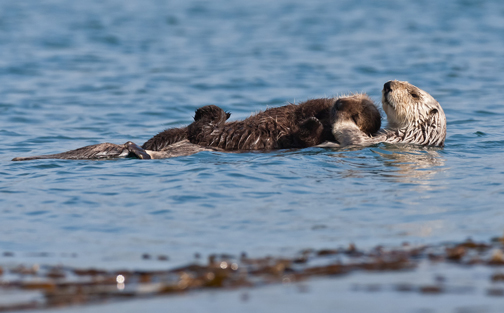
Sea Otter Moms with Pup, Morro Bay CA 13 Dec 2010. Photo © Mike Baird, www.bairdphotos.com

“Sea otters, bah!” Nature Boy says, tongue in cheek. “They’re too easy to love. How can you respect a plush toy?”

Nature Boy is responding to recent reports of sea otters off Langara Island, in Haida Gwaii, and elsewhere on our coast. Although still not common in mid-B.C. waters after its 1970s’ re-introduction, the small marine mammals are slowly repopulating their historic range.

The sea otter’s return is one of Canada’s conservation successes. Confirmed as extirpated by the 1920s, listed as “threatened” in 2002, the sea otter is now considered a “species of concern.”

Nature Boy continues, “Now, the sea urchin—that is a remarkable animal. It has these amazing, intricate jaws….”

“—No match for sea otter jaws,” I interrupt. “Nor is the sea urchin a species at risk. Unlike the sea otter. Or the abalone.”

“Abalone are pretty cool, too,” he admits. “They have those weird breathing holes in the shell, and of course lovely mother of pearl. And they taste real good, too.”

Always a disadvantage for an animal….


Read the rest of this editorial at the Victoria Times Colonist.

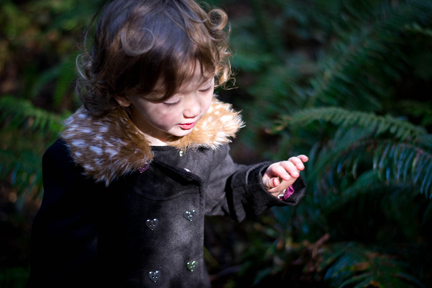
Young girl in nature. Photo © Julie Morris, www.BuffaloLucy.com

Nature schools are popping up like mushrooms around here. The preschools and kindergartens immerse kids in local parks and green spaces for half-days and full-days at a time. The kids play outside. They stay outside. They learn about plants and animals, they look at bugs and pond critters, they make friends with trees.

Colwood’s Sangster Elementary program started the trend. Parents have even camped out overnight to register their children in the program.

Saanich’s preschool at Swan Lake Nature Sanctuary started September fully booked, and takes advantage of nature programs offered by sanctuary education staff. The Cridge Centre also started a nature preschool this year. Kiddie Kapers operates out of Commonwealth Recreation Centre, and Victoria Nature School runs out of Mount Doug park and Gordon Head Recreation Centre.

Programs like these put the kinder into the garten — the child into nature. They capitalize on the benefits of being active and outdoors on kids’ mental, physical and emotional health and development….

Read the rest of this editorial in the Victoria Times Colonist….
Child on park boardwalk. Photo © Richard Step, richardstep.com


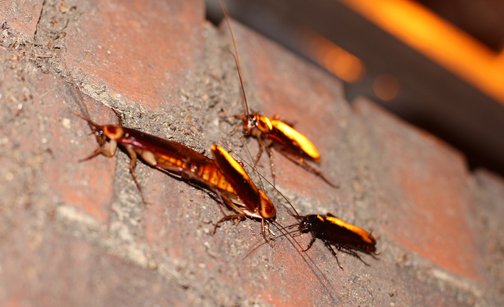
Cockroach brains may provide the next super-antibiotic. Photo © Sigurd Tao Lyngse (Malakith, flickr)

Cockroach brains may provide the next super-antibiotic. Photo © Sigurd Tao Lyngse (Malakith, flickr)

“Don’t do it,” I advise Nature Boy every time we travel in less-fortunate foreign parts. “If you eat that, you’ll get sick.” I remind him of what happened in (fill in the blank with any south Asian or Latin American country we’ve visited). “They had as many cockroaches running about as they do here.”

“But those vegetables look so good.”

Nature Boy usually risks it.

Then we spend days bound by his bowels to our rooms, or until his antibiotics nail the sick-making critters he ingests.

Somehow, he doesn’t learn.

He has, however, learned to bring a full course of antibiotics with him when he travels. The drugs limit his quality-illness toilet time, and permit him to learn all over again not to eat leafy greens or other suspect food when visiting countries with lower levels of sanitation.

Just one century ago, common illnesses like the food poisoning or typhus Nature Boy insists on courting frequently killed. Other diseases, such as whooping cough, scarlet fever, and tuberculosis, also often carried death sentences….

Read the rest of this editorial in the Victoria Times Colonist….

NASA

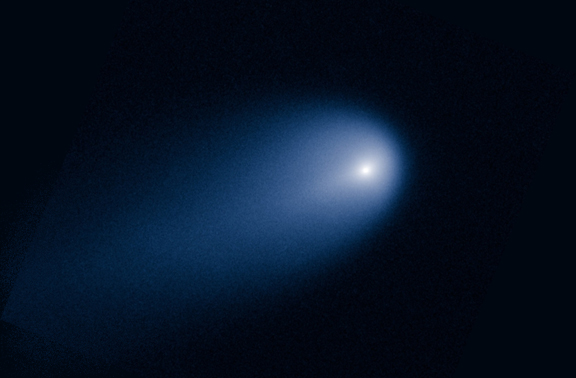
Comet ISON, photographed April 2013 by NASA, may present the biggest sky show of 2013.

A massive object is hurtling towards me.

It’s not Nature Boy racing to get the last of the pumpkin pie from the fridge.

No, the massive object in question is a giant snowball whizzing through space towards the sun. With its tail as big as a kite, Comet ISON provides the exclamation point on a year filled with objects appearing out of the great black yonder….

Read the rest of this column in the Victoria Times Colonist….