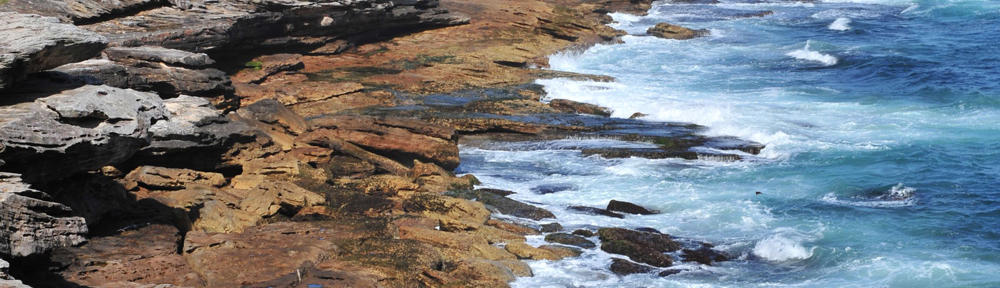
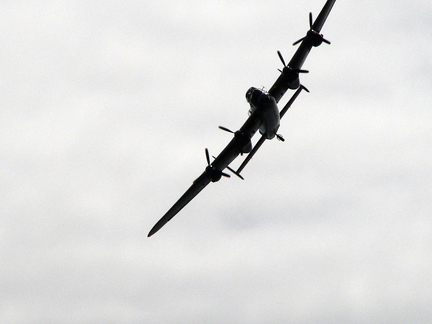
Lancaster Bomber. Photo © SNappa2006, via flickr Creative Commons

More than 70 years ago, Marcel Croteau, a veteran of the Royal Canadian Air Forces’ 425 Alouettes Squadron and my uncle, was flying nightly bombing raids over France.

Because of his role in those long-ago missions, Croteau is being inducted as a knight (chevalier) into France’s Order of the Legion of Honour today. It is the highest honour the French government confers.

It is one of many ceremonies taking place this year in which the French government is paying tribute to Canadian veterans who participated in the 1944 D-Day invasion to liberate France from Nazi Germany. This event is taking place in Sechelt, where 91-year-old Croteau, a former Victoria-area resident, now lives.

The smiles and congratulations of the 100 friends and family who will gather later today will provide a marked contrast to the night-time tensions experienced during the D-Day–related raids….


Read the rest of this editorial at the Victoria Times Colonist….


Eye. Photo © Melani Varela Fuentes, via creative commons and flickr

A proverb states “the eyes are the windows to the soul.” By looking someone in the eye, it is often possible to detect emotions, thoughts and intentions otherwise less clear.

Scientists have determined during the last decade that expansion of a person’s pupils can indicate interest, stress, problem solving and even arousal. The change in size is usually subtle—a far cry from what happens to pupils when lights dim in a room. However, most humans are able to detect it, often without consciously noticing it.

As well, Swedish research suggests the structure of colours and patterns in a person’s irises apparently may reveal more about our personalities than we are aware. The scientists found a relationship between the densely packed lines that radiate outwards in a person’s irises and greater warm-heartedness and trust in that individual’s character. They also found that people with more lines curving around the irises’ outer edges when their pupils dilate may tend towards greater impulsiveness and neuroticism.

The genes that determine iris structure may also help shape the brain’s frontal lobe, which influences personality. For example, a mutation in a gene that helps to control development of irises in embryos is linked to impulsiveness and poor social skills.

Now medical professionals are looking more closely at the eyes to see if they provide windows to the early stages of Alzheimer’s disease….

Read the rest of this editorial at the Victoria Times Colonist….
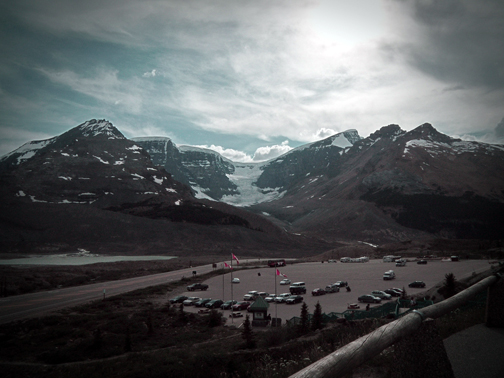
View of the Columbia Icefield from the visitor centre. Photo © Samantha Marx (@smath.com). via creative commons and flickr

When you stand on the new Glacier Skywalk, just off the Icefields Parkway in Jasper National Park, you can look down into the depths of the Sunwapta Valley 280 metres beneath your feet and up at the heights of the Continental Divide around you.

Nestled among these peaks is the Columbia Icefield, a massive complex of ice that first formed more than 10,000 years ago. Six kilometres long, almost a kilometre across, and in some places 300 metres thick, it feeds eight major glaciers and three major river systems.

One of these is the Columbia River. This waterway stretches 2,000 kilometres, from its Rocky Mountain headwaters, through eastern B.C. and four U.S. states. It drains a region the size of France, and now encounters 14 dams along its length, including three in this province.

The river is the subject of an international agreement on shared river management. On September 16, 1964—50 years ago this Tuesday—Canada and the U.S. ratified and implemented the Columbia River Treaty….

Read the rest of this editorial at the Victoria Times Colonist….


Studying. Photo © Lidyanne Aquino, via creative commons and flickr

An acquaintance who works at a B.C. college tells me she has caught students boldly copying and claiming other people’s work as their own.

“If they just credited the sources, there’d be no problem,” she says. “But they don’t, and they don’t even recognize they’ve broken the law or the college’s code of conduct.”

She says the students are shocked she can tell it’s ripped-off material, they’re shocked when she calls them on it, and they’re especially shocked when they learn their plagiarism could get them kicked out of school or delay their graduation….

Read the rest of this editorial at the Victoria Times Colonist….
Nature Boy faced a dilemma last night. As the person tasked with the weekly grocery run, he had splurged on tenderloin steaks.

As anyone who has recently emptied their wallets at the super market knows, buying high-end grilling meats these days practically requires pre-approval from a bank manager. According to Statistics Canada, retail prices for grilling steaks and ground beef increased by about 11 and 12 per cent since this time last year. That’s six times Canada’s overall inflation rate for the same period.

“Couldn’t we use that money for a vacation instead?” I asked. But Nature Boy pointed out that grilling season is upon us and, besides, the temperature outside these days simply requires use of the barbecue.

“Hmmm, okay. Just this once.”

The dilemma came in the evening. Nature Boy had seasoned and grilled the steaks—rare to medium rare… perfect. He deftly removed them from the heat and placed them on a clean plate. After turning the barbecue off, he took the plate and turned towards the door.

And tripped.

Through an impressive combination of flailing, twisting and flexibility, he saved himself and the plate.

The steaks, however, went flying. The year’s big vacation landed on the patio paving stones. The juice ran down the sliding doors.

There went France….

Read the rest of this editorial at the Victoria Times Colonist….
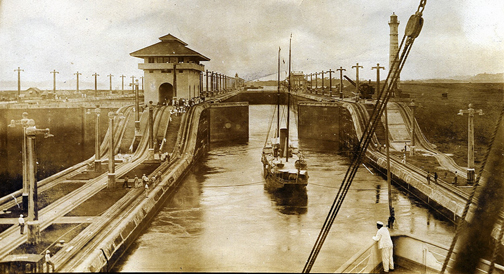
S.S. Panama in Panama Canal's Gatun Locks, ~1915. Photo via Richard (rich701), creative commons

S.S. Panama in Panama Canal’s Gatun Locks, ~1915. Photo via Richard (rich701), creative commons and flickr

When the steamship Ancon entered Pacific waters on August 15, 1914, transportation between North America’s east and west coasts changed forever. The Ancon made the journey from the Atlantic to the Pacific in 70 minutes. The journey normally took months and risked unpredictable weather and currents.

The Ancon’s passage marked the long-anticipated opening of that engineering marvel, the Panama Canal.

From one day to the next, the sea journey from New York to San Francisco became 12,600 kilometres shorter. Steamships carrying goods from this coast to Atlantic markets could—and did—cut months off their journey.

The immediate effect of the canal’s opening on the day-to-day lives of most people living in Victoria and British Columbia, however, turned out to be anti-climatic….

Read the rest of this editorial at the Victoria Times Colonist….
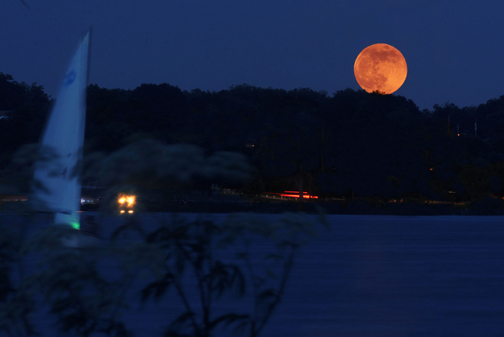
Supermoon. Photo © Robert Hensley (photography.roberthensley.com), via creative commons and flickr

Nature Boy calls it a peri-gee whiz moon, because “gee whiz, doesn’t the moon look big!”

That’s not its official name, of course.

Neither is it a peri-Cheez Whiz moon, another moniker bandied about the household in recent weeks. When a massy-looking full moon last appeared—just last month, on the night of July 12—it bore the fake-cheese colour.

Tomorrow night, anybody who steps outside and looks moonwards will see a similarly bloated orb. It is the second in a sequence of three oversized full moons we will be treated to this year, and is the biggest looking of them all.

The official name of the moon that we can view tomorrow night describes the event much more ploddingly than our alternatives. Because the Earth sits off centre within the moon’s egg-shaped path around our planet, once every month the moon approaches Earth about 50,000 km closer than when it swings out on the other, long side of its orbit.

That closer encounter is called the moon’s perigee.

When the timing of the perigee coincides with either the full or new phase of the moon, pointy-headedness truly comes into ascension. No doubt only after considering all the possibilities within the classical languages that science usually draws on and pondering innumerable likely references to laws of nature, wonders of the universe, and marvels of artificial cheese and other foodstuffs, Astronomy chose to label the phenomenon a “perigee moon”….

Read the rest of this editorial at the Victoria Times Colonist….

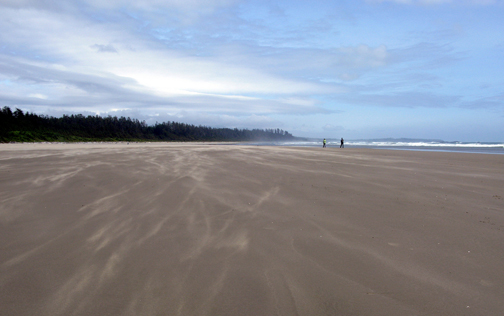
Long Beach, Pacific Rim National Park. Photo © Kyla Duhamel, via creative commons and flickr

Long Beach, Pacific Rim National Park.

Nature Boy uses a number of smartphone apps with his work. Some help him identify birds. Others help him key out wild plants, fungi and other assorted roughage. He opens the astronomy app whenever he’s outside on clear nights. And because he works with people, he often photographs—with permission—families, school groups and kids Doing Cool Stuff Together in Nature, then immediately emails the pictures to the respective parents and teachers.

For somebody who interfaces so intensely with the natural world, he’s pretty hip to the latest gadget, gizmo and gew-gaw. His use of technology to augment his and others’ experience of the outdoors exemplifies some of the more positive, constructive aspects of being constantly connected. ]

Those integrated, positive interfaces came to mind when news broke earlier this year that Parks Canada proposed to provide WIFI access at busy areas of some national parks and historic sites over the next few years.

For example, with park WIFI access, I could double-check the tides before paddling around Gulf Islands National Park Reserve. I could check the day’s weather before setting out on the Long Beach Challenge, the 9.5-kilometre route that Pacific Rim National Park is marketing as the latest, greatest B.C. marathon-fitness trail. I could get Nature Boy to look up that weed while we stomp about Fort Rodd Hill.

Of course, with cell-phone coverage in this region, I could do most of that without park WIFI. At Fort Rodd Hill, I may even receive annoying text messages from the U.S. about cell-phone roaming charges.

However, my reaction to the news about Parks Canada joining the 21st Century may have been atypical….

Read the rest of this editorial at the Victoria Times Colonist….