Dogs are attuned to their people, but who is in charge. Photo © Stefan Holodnick, dailyinvention.com, via creative commons.

Some dogs show more intelligence than most people. Or so their owners tell me.

Perhaps thinking of one’s four-legged best friend as brighter than one’s children—perhaps not one’s children, but possibly one’s in-laws—goes with the territory of being a dog owner. Much like people universally describing their driving skills or their children’s giftedness as better than average.

I don’t know if the “my dog is smarter than most people” phenomenon is universal to two-legged members of clan Canis. I do, however, know I am required by friends to adjust my vocabulary in certain canine company. Forbidden words include W-A-L-K, T-R-E-A-T, B-A-L-L and C-A-T.

According to University of B.C. psychologist and canine-intelligence expert Stanley Coren, dogs can learn about 160 words. Exceptionally bright pooches can attain a vocabulary of about 300 words….

Read the rest in the Victoria Times Colonist….


Nurse practitioner. Photo © Doug McIntosh, creative commons via Flickr

Nurse practitioner. Photo © Doug McIntosh, creative commons via Flickr


The B.C. government sometimes seems to suffer from attention deficit disorder.

Take the case of B.C.’s nurse practitioners. The province began regulating these health-care professionals in 2005. The goal was to increase patient access to health care in an affordable, effective manner.

Many studies show this happens when nurse practitioners are included in the health-care mix.

The government invested in the profession. It supported development of training programs at three B.C. universities. It provided provincial health authorities with money for new nurse-practitioner positions, then salary money for a limited number of new positions until this year.

And then it walked away….

Read the rest of this editorial at the Victoria Times Colonist….

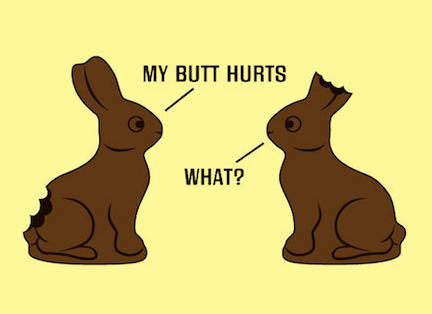
Chocolate bunny loses its ears. Photo © John-Paul Scoville, via creative commons. How odd that April and May are the only months lacking chocolate-celebration days. Perhaps the oversight is due to the surfeit of chocolate-related celebrations in preceding months—Chocolate Cake Day (January 27), Nutella Day (February 5), Valentine’s Day (you know…), Chocolate Mint Day (February 19), Chocolate Caramel Day (March 10), and Chocolate-covered Raisin Day (March 24).

Or maybe the lunar timing of (the unofficial) Eat Chocolate Easter Bunny Ears Day throws the makers, bakers, and shapers of chocolate goods off the scheduled promotion game. Easter, with its chocolate bunnies and eggs, is second in candy sales only to Halloween. The event presents an annual bonanza to chocolate makers and sellers, including those here in Victoria.

Yet, despite the rush on chocolate of all varieties and qualities, all has not been smooth, rich sweetness in Canada’s world of chocolate recently.

I’m not talking about the many local and artisan chocolate sellers in our region. Last year was an annus horribilis (mark the double “n” in that phrase, mind) for four of Canada’s biggest chocolate-candy dealers. In June, the Competition Bureau of Canada announced that, after a five-year investigation, it had uncovered evidence suggesting Nestlé Canada, Mars Canada, and ITWAL Limited, a national network of independent wholesale distributors, had attempted to fix prices of chocolate products in this country….

Read the rest of this editorial at the Victoria Times Colonist….

Chocolate bunny butt vs ears. Photo © card karma, cardkarma.com - creative commons

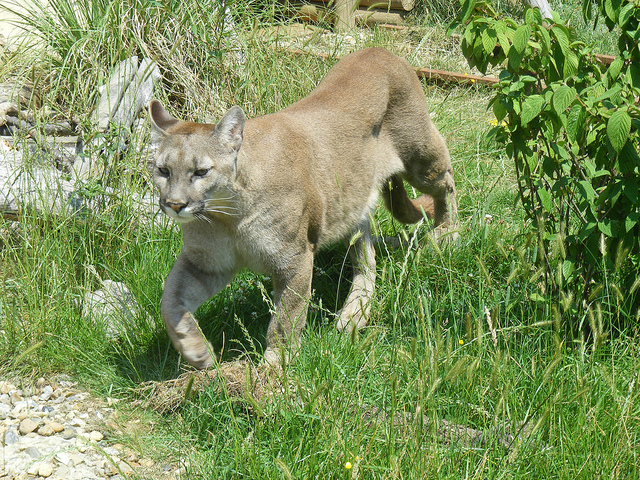
Cougar as stressor. Photo © Marie Hale, creative commons

You’re walking on Centennial Trail along West Saanich Road when suddenly a large, tawny animal leaps out of the bushes at you. The movement triggers your brain’s most ancient emotion-and-alarm system, deep in the most primitive part of your brain. Your amygdala, or fright centre, buzzes the nearby fear-processing centre in your hypothalamus, which instant-messages the alarm to your adrenal glands atop your kidneys, telling the glands to pump out stimulating epinephrine.

Almost simultaneously, your heart starts pounding, your muscles clench, your breath speeds up, you yell, you leap, pivot and crouch to face the animal with your arms raised defensively.

But, wait just a microsecond—your hypothalamus hasn’t finished with you. As you confront the threat, the hypothalamus recruits its nearby buddy, the pituitary gland, and goads it into sending its own alarm signal to the adrenal glands. This time, cortisol floods out, elevating blood-sugar levels and giving you energy to fight or flee—to save your skin.

And then—finally!—your prefrontal cortex kicks in. It analyses the visual data, it riffles through your memory index, and identifies the beast. The cougar about to sink its teeth into your neck… it’s a friendly house cat intent on winding its body around and between your tensed ankles….

Read the rest of this editorial at the Victoria Times Colonist….

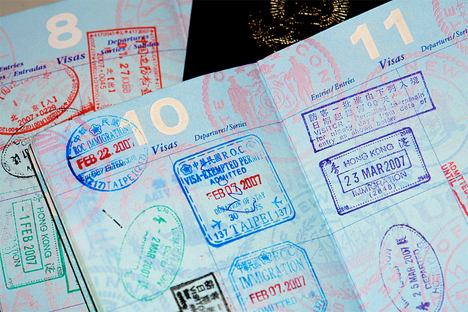
Passport. Photo © J Aaron FarrTheir very name indicates admission or entrance. A passport—from the French passer la porte, or pass through a port—is a document that allows a person to pass from one country to another, from world to another, even from life to another.

We’ve heard of two instances in the last month in which people have tried to use such documents to gain entrance to new countries, new worlds, new lives.  Just days after officials determined that two passengers aboard Malaysian Airlines flight 370 had been traveling under stolen passports, police in London, Ontario, arrested three people for allegedly using fake passports to write exams on behalf of other students.

The incidents are of different orders of magnitude in terms of potential threat, but both events indicate the power of these small documents to open doors and allow passage.

No evidence exists to suggest the two men who boarded flight MH 370 with stolen passports had anything to do with the airplane’s later disappearance. Investigations indicate the Iranians travelling as Christian Kozel of Austria and Luigi Maraldi of Italy had no known links to terrorist organizations, and may have just been trying to get out of Malaysia. Both passports had been listed in INTERPOL’s database of stolen passports. It may be we will never know the truth in this story.

The story of the surrogate students caught using fraudulent passports in Ontario is clearer, however. They were writing English proficiency exams for foreign students applying to attend university in Canada. Canadian colleges and universities use the exams to evaluate prospective students’ ability to read and write in the language of instruction. Students must pass the exams before their applications are accepted….

Read the rest of this editorial at the Victoria Times Colonist….
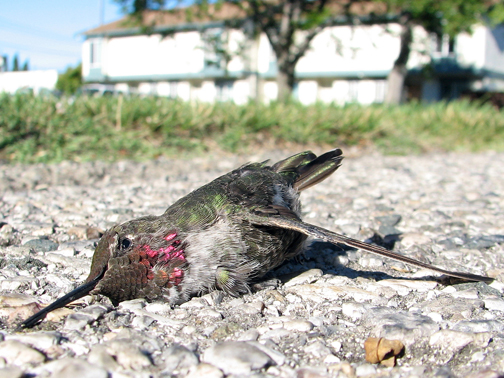
Dead Annas hummingbird. Photo © Lenore M. Edman, www.evilmadscientist.com, creative commons

Tonight, at 8:30 p.m., many people, businesses and institutions here on the eco-friendly south coast will be turning out the lights.

We’re taking part in Earth Hour, an international grassroots event started by former-Pearson International College graduate Todd Sampson and now hosted by the World Wildlife Federation. The goal is to celebrate our commitment to the planet by cutting energy consumption for an hour, raising awareness of our own, individual impacts on the environment, and sending a message to policy makers.

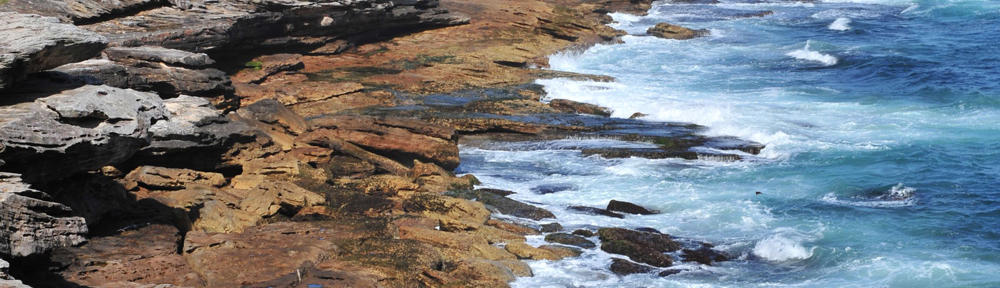
The event’s success in attracting participation is astounding. Since its start in 2007, the event has spread from Sydney, Australia, to more than 7,000 towns and cities in 153 countries. San Francisco’s Golden Gate Bridge, New York City’s Empire State Building, Seattle’s Space Needle, Ontario’s Niagara Falls and CN Tower, and our own B.C. Legislature will go dark for Earth Hour tonight—among hundreds of landmarks around the world.

The global nature of the event means a wave of more-dimness-than-usual will circle the planet, time zone by time zone.

In a way, it’s too bad the direction of the wave of darkness doesn’t run, say, from the equator to the planet’s poles. Oh, I get the circle-the-globe thing, but supposing it were possible for the wave to go from zero degrees latitude northwards, for instance, another emblem of the global web of ecological connectedness would also benefit from the resulting path of reduced lighting.

That emblem is the songbird….

Reach the rest of this editorial at the Victoria Times Colonist….
Sooke reservoir, March 5, 2014. Photo © Capital Regional District

We can relax. The Sooke Reservoir is filled to capacity—once again, and at last. The series of storms that recently charged across the region did the honours. Together, they dropped 83 per cent of the rainfall we typically see in all of a March in the month’s first nine days, and ended the region’s latest winter dry spell.

A full reservoir means we now face summer with only the usual limits on water use. Years of summertime water restrictions have trained many of us to turn blind eyes to brown lawns and dusty vehicles.

Managing water is key to ensuring enough remains to go around in coming years. Last year’s hot, dry weather provided a taste of what climate-change models predict for the coast in coming decades—longer, warmer, drier summers, and more more-intense storms, particularly in winter. Although we cannot control when, where or how much rain falls here, we can to some extent control what happens once it hits the ground.

Two measures in B.C. that relate to that concept come to mind….

Read the rest of this editorial at the Victoria Times Colonist….

Bottled water. Photo © Steven Depolo, creative commons

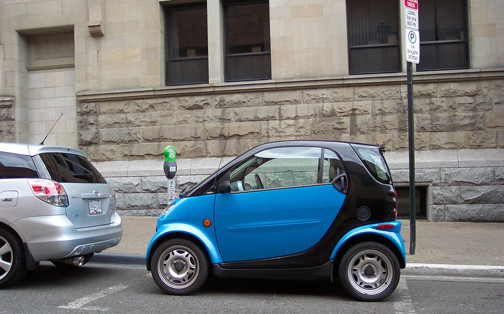
Curbside parking, Victoria. Photo © Christina T, creative commons on flickr

Parking brings out a surprising amount of passion in people. Whenever changes to parking rates and availability are proposed, claws unsheath, and accusations and fur fly.

Looking at the reactions since the City of Victoria proposed changes in February to city-controlled downtown parking, you’d think planners had suggested they intended to make young children and puppies play on Blanshard Street during rush hour, or use parkades for hospital-ward overflow.

Although I’m as delighted as the next person when I find free or cheap parking near a destination, I suggest we park passion and politics for a moment….

Read the rest of this editorial at the Victoria Times Colonist….