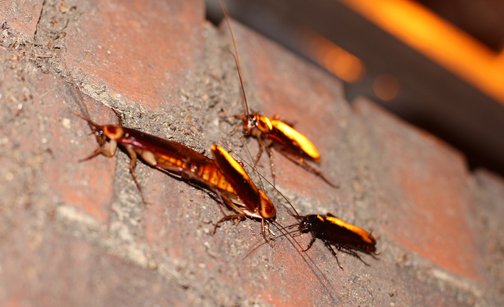
Cockroach brains may provide the next super-antibiotic. Photo © Sigurd Tao Lyngse (Malakith, flickr)

Cockroach brains may provide the next super-antibiotic. Photo © Sigurd Tao Lyngse (Malakith, flickr)

“Don’t do it,” I advise Nature Boy every time we travel in less-fortunate foreign parts. “If you eat that, you’ll get sick.” I remind him of what happened in (fill in the blank with any south Asian or Latin American country we’ve visited). “They had as many cockroaches running about as they do here.”

“But those vegetables look so good.”

Nature Boy usually risks it.

Then we spend days bound by his bowels to our rooms, or until his antibiotics nail the sick-making critters he ingests.

Somehow, he doesn’t learn.

He has, however, learned to bring a full course of antibiotics with him when he travels. The drugs limit his quality-illness toilet time, and permit him to learn all over again not to eat leafy greens or other suspect food when visiting countries with lower levels of sanitation.

Just one century ago, common illnesses like the food poisoning or typhus Nature Boy insists on courting frequently killed. Other diseases, such as whooping cough, scarlet fever, and tuberculosis, also often carried death sentences….

Read the rest of this editorial in the Victoria Times Colonist….

NASA

Comet ISON, photographed April 2013 by NASA, may present the biggest sky show of 2013.

A massive object is hurtling towards me.

It’s not Nature Boy racing to get the last of the pumpkin pie from the fridge.

No, the massive object in question is a giant snowball whizzing through space towards the sun. With its tail as big as a kite, Comet ISON provides the exclamation point on a year filled with objects appearing out of the great black yonder….

Read the rest of this column in the Victoria Times Colonist….

Shakespeare memorial at Southwark Cathedral, U.K. Photo © Duncan Harris.

William Shakespeare had a lot to say about the importance of sleep. His memorial at Southwark Cathedral, U.K.

We can sleep a little longer this weekend. Most of North America resets its clocks one hour back tonight, marking the end of daylight saving time.

If we choose to slumber through the hour gained, we’ll wake up slightly more rested and slightly better able to deal with the coming week’s events and obligations.

For some of us, that week includes attending Tuesday’s opening performance of the new show at Victoria’s Belfry Theatre. A Tender Thing, by British playwright Ben Power, re-imagines Shakespeare’s Romeo and Juliet as lovers grown old together. It is the second of three Shakespeare-inspired shows the Belfry audiences will see this season.

Victoria's Belfry Theatre. Photo © Jason M Vanderhill, illustratedvancouver.com

Victoria’s Belfry Theatre presents Shakespeare three ways this season. A Tender Thing starts the week after clocks change back to Pacific Standard Time.

As with so many aspects of life, William Shakespeare had something to say about the importance of sleep. Four centuries ago, he described sleep as “sore labour’s bath / Balm of hurt minds, great nature’s second course / Chief nourisher in life’s feast” (MacBeth).

Sleep research, most of which has occurred only within the last few decades, confirms the accuracy of Shakespeare’s 400-year-old descriptions. …

Continue reading this editorial at the Victoria Times Colonist….

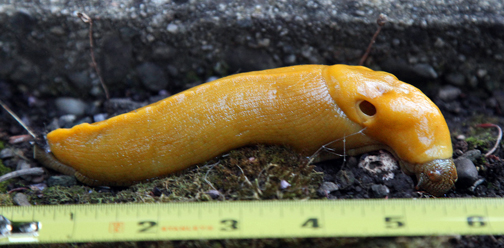
Pacific banana slug: secret origin of the slime-fountain of youth. Photo © Jitze Couperus, www.couperus.org

Could the Pacific banana slug be the secret behind the slime-fountain of youth?

Years ago, when commiserating about my squeamishness for slugs, Nature Boy speculated that these terrestrial molluscs might yet surprise us.

“Perhaps scientists will discover remarkable youth-preserving compounds in the slime, and we’ll start eagerly smearing slugs on our faces.”

You have no idea how sorry I am to report it has come to pass. Spas in Japan and the U.K. recently started offering snail facials. Clients pay handsomely for the privilege of having snails slither youth-enhancing slime all over their faces.

Its coiled shell distinguishes the snail from its naked cousin, the slug. Both slime-meisters belong to the mollusc group known as gastropods—so called because they appear to use their stomachs (gastro) as feet (pod).

Their slime apparently contains natural antibiotics, elastin, collagen, glycolic acid, hyaluronic acid and many compounds known to heal cuts, soften scar tissue, fight infections, repair sun damage, regenerate skin cells, and make skin look younger, tighter and brighter.

And younger.

Did I mention younger? ….

Read the rest of this editorial in the Victoria Times Colonist….

coffee art. Photo © Jeremy Keith, adactio.com

Oil is the world’s most-traded commodity. This rating emphasizes our dependence on the substance.

However, I’d say an altogether different commodity has played as important a role in the development of our society. This substance has been used throughout the western world for 700 years. It has fuelled technological, economic, political and social change. It is the world’s second most-traded commodity, but unlike oil, it is a renewable resource. And we are as addicted to it as we are to oil.

Where would we be today if our forebears hadn’t started drinking coffee?…

Continue reading this editorial in the Victoria Times Colonist….
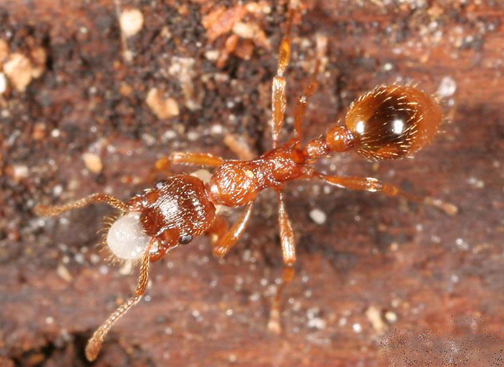
European imported fire ant. Photo by Gary Alpert, Harvard University, via bugwood.com

The European imported fire ant is one of many introduced insect species that are getting comfortable in the Victoria area.

In Germany earlier this year, a woman called the police after her doorbell rang repeatedly in the night, terrifying her. The cops apprehended the culprit—an ant nest built tight into the doorbell was tripping the switch.

My friend experienced a similar problem. Her home-security system spontaneously and repeatedly went off over a period of several months. It usually rang during the day, when she was at work. The alarm would signal the alarm company. The alarm company would notify the police. The police would come by and find nothing amiss. Telephone calls and letters from the company to my friend would follow. My friend would—again and again—call in technicians to find the problem.

It turns out the problem had eight legs and a dime-sized body, and liked to hide in crannies….

Read the rest of this editorial in the Victoria Times Colonist….
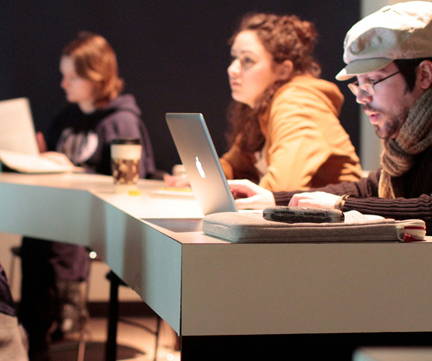
classroom laptop use. Photo © Parker Knight, on flickr

Here’s good news for those of us trying to pick up new skills and information. Experts on how learning happens within the human brain have identified the two most reliable methods for transferring new information into our little grey cells.

One method requires that students revisit and build upon their study of a particular topic or problem over time, preferably at monthly intervals.

The other most effective technique requires students take repeated practice tests on the information—again, over periods of time. Students can administer the quizzes themselves, solo or with others, by using flash cards, study charts, practice sessions, or other study tools.

Both methods force students to repeatedly draw on and build upon their memories of the information, tasks or skills they’ve learned. The recurring engagement of memory consolidates the learning, and builds multiple neural pathways within the brain, so students can more easily access and retrieve the information from memory.

The techniques benefit students of all ages and abilities, and enhance performance in most areas of learning….

Read the rest of this editorial in the Victoria Times Colonist….

 

Additional sources:

Laptop multitasking hinders classroom learning for both users and nearby peers

Will Listening to Mozart Really Make Me Smarter?

Female College Students’ Media Use and Academic Outcomes: Results From a Longitudinal Cohort Study + a synopsis that you don’t have to pay for

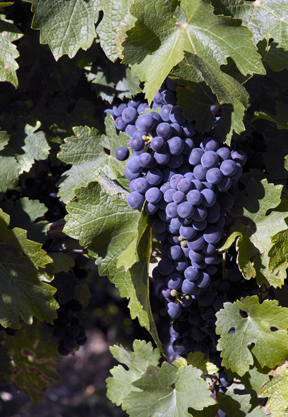
Grape clusters. Photo © Scott Mair

We rarely see grapes being crushed by foot these days, but visitors to the Cowichan Wine and Culinary Festival earlier this month witnessed an old-fashioned grape stomp. Seven teams, dressed in costume, with grape juice soaking the hems of their trousers, shorts, gowns and dresses, competed against each other to stomp the grapes the fastest.

Their bare feet and enthusiasm served to remind spectators of wine making’s fundamentals.

Here and everywhere, wine making starts with sun, water, soil, and vines that take all of the above and turn it into grapes. Those who tend the vines and those that turn the grapes into wine strive to create product that represents and reveals the most desirable qualities of the fruit, place, climate, and so on. Each resulting bottle contains a bit of the heart and soul of the land and of the people who work it.

Yet, behind the growers of grapes and makers of wine, another community of players calls the shots. I’m not talking about grape stompers, who have been mostly replaced by mechanical presses these days. I’m talking about more enduring, pervasive contributors.

In the most basic sense, microbes make the wine….

Continue reading this editorial at the Victoria Times Colonist….
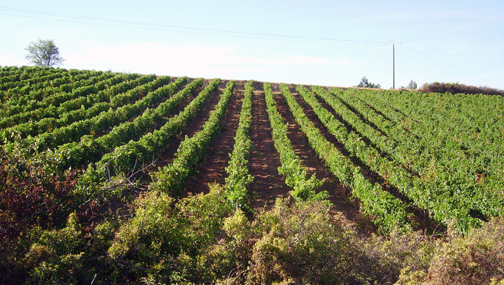
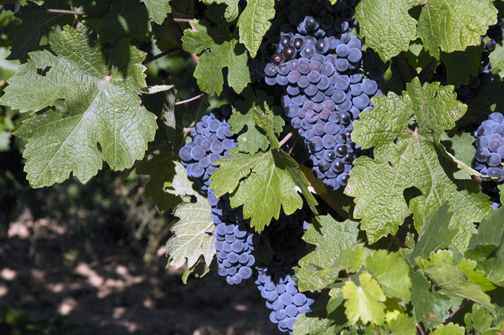
Grape vineyard. Photo © Monique Keiran 2009.