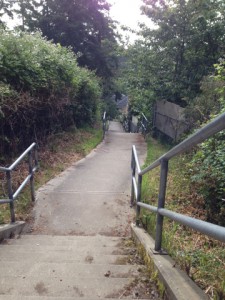
Pathway from Mildred Street to Wilkinson slips between backyards.A little-known network of shortcuts and passageways knits many of the region’s urban areas together.

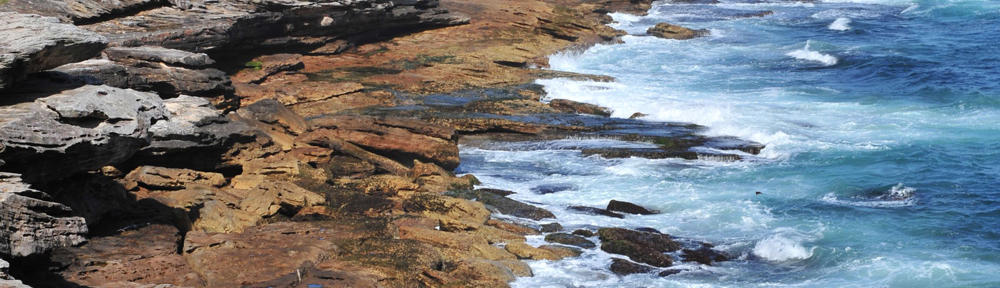
These connecting pathways—they’re too short to be called trails—pass unobtrusively among municipalities’ houses and yards. They stitch residential streets to other residential streets, quiet parks to formal trail systems, seemingly dead-ends to pedestrian-only exits, and neighbourhoods to crescent beaches or rocky shorelines. They wind through neighbourhoods, linking a person’s travels into lines and loops through local urban geography.

Each of the region’s municipalities treats these access points and rights of way differently. Some, like Saanich, glory in their abundance, and chart their locations like chicken scratchings on trail maps. Some municipalities, like Victoria, make the most of the few no-vehicle passageways that century-old urban planning and decades-old development have left them, and have worked them into formal walking and even lazy-day cycling loops. Some municipalities keep quiet about them, leaving local explorers to scrutinize municipal maps for faint lines and other signs that may—may—indicate the little-used laneways amidst the bolder cartographic connections.

Regardless of whether they’re published or not, most of these passages seem to remain neighbourhood secrets, known primarily to those who live alongside them.

In fact, these rights of passage could be seen as rites of passage….

Read the rest of this editorial at the Victoria Times Colonist….
This slideshow requires JavaScript.

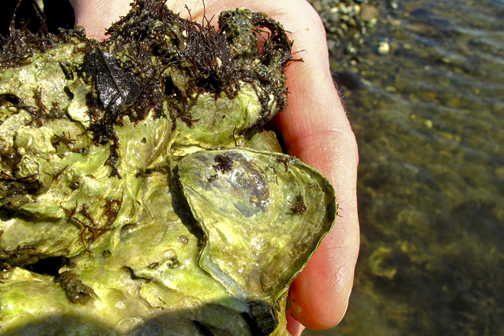
Olympia Oyster. Photo © Deep Bay Marine Field Station, Vancouver Island University, www.viu/deepbay

Beneath the quiet surface of the Gorge Waterway and Portage Inlet, life, death and survival play out in a drama affecting a rare, tasty B.C. marine species.

The Olympia oyster is the only oyster species native to the province. Once abundant from Alaska to Panama, it disappeared from much of its habitat by the early 20th century, a victim of its own tastiness, overfishing, and waters contaminated with sewage, chemicals and sediment that poisoned and suffocated the oyster beds. The fished-out waters included the Gorge Waterway, from which the oyster was considered locally extinct by the 1920s.

The state of Olympia oyster populations in the province remains such that Canada’s Species at Risk Act lists it as a species of special concern.

However, the oyster has surprised everyone. Some years back, researchers found the small, unprepossessing-looking mollusc had returned and set up house in the Gorge.

Read the rest of this editorial at the Victoria Times Colonist….
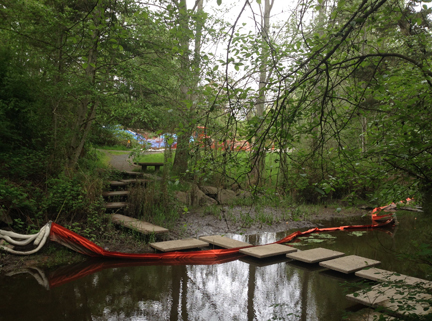
Colquitz Creek home-oil spill containment, May 2014. All rights reserved.

The B.C. government is seeking public comment on a proposed preparation and response system to protect the province’s environment from land-based hazardous spills.

It’s all part of Premier Christy Clark’s five conditions for blessing any new pipeline development through the province. As such, the proposed initiative currently focuses on industrial-scale transportation of heavy oil via pipeline or rail.

However, if fully implemented, the system will benefit B.C. even if the Enbridge and Kinder Morgan pipeline projects do not proceed. The system applies to spills of any hazardous material that could affect terrestrial environments, including lakes, wetlands, creeks, and coastal shorelines, regardless of where the spill originates.

This means it would apply to spills such as those that occur repeatedly along our own urban salmon stream, Colquitz Creek….

Read the rest of this editorial at the Victoria Times Colonist….
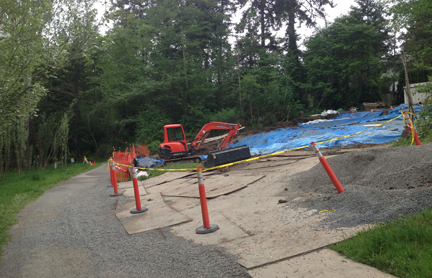
Owners of properties that are the source of hazardous spills are responsible for costs of containment, cleanup and remediation. All rights reserved.

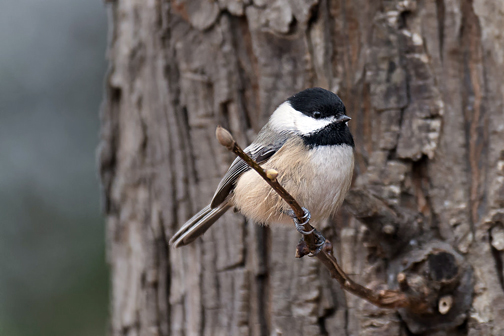
Sure, he's cute, but Vancouver's Bird of the Year? The Black-capped Chickadee. Photo © Russ, via creative commons & flickr

The robin chicks outside my window disappeared last night. At about 4:00 a.m., much rustling of shrubberies and great squawkings by Ma Robin occurred. When I poked my head outside, the three nearly grown babies had vanished.

For three weeks, the daily charting of the chicks’ progress was a household highlight. Their sudden, tragic loss has taken us all aback, bringing forth long faces and even a sniff or two. Last night, they no doubt became breakfast for an intrepid raccoon.

While Ma Robin built her nest, brooded eggs and stuffed bugs into gaping young beaks, our neighbours on the mainland elected Vancouver’s newest winged poster child. More than 700,000 people voted in the five-week-long popularity contest for Official City Bird of 2015. More than one-third of voters backed the Black-capped Chickadee over five other contenders.

Several things about the contest astonish me….

Read the rest of this editorial at the Victoria Times Colonist….
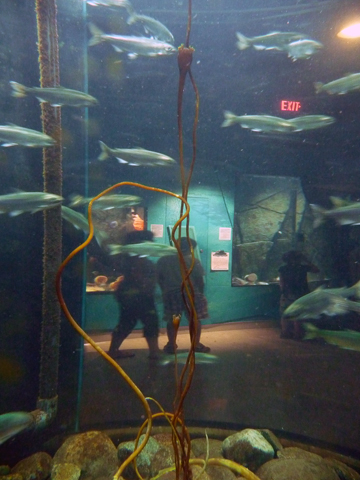
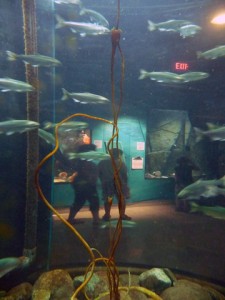
Through an aquarium at Shaw Ocean Discovery Centre, Sidney, B.C. Photo © Herb Neufeld, via flickr & creative commons

Shaw Ocean Discovery Centre, Sidney, B.C. Photo © Herb Neufeld, via flickr & creative commons

Picture a community hall on a weekday evening. About 40 people sit in rows. Official-looking sorts look back over the audience.

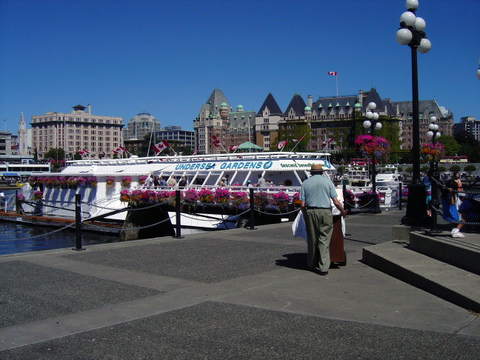
The people have gathered at this fictitious meeting to discuss the fate of a nearby fictitious historic site/nature centre/community museum/natural or cultural heritage site. Like so many real sites in the region—Craigflower Manor and Schoolhouse, the Centre of the Universe, Undersea Gardens, Crystal Gardens, BC Experience, the Soviet Submarine, or Anne Hathaway’s Cottage, to name a few—is no longer open to the public.

For two hours, those gathered have spoken in support of the site. Government Gus has presented how the government, which owns the site, is looking for a new operator—even if it means repurposing the site.

Education Eli has spoken of the site’s value to the community, especially to its youngsters. “It’s the kind of vital enrichment that connects classroom learning to the community,” she says.

Others have spoken, too, suggesting new activities, new uses, new revenue sources. Everyone agrees the site is an important resource. It helps define and focus the community. It creates common identity and builds community spirit….

Read the rest of this editorial at the Victoria Times Colonist….
Undersea Gardens no longer operates in Victoria, B.C.'s Inner Harbour. Photo © Brian Chow, via flickr & creative commons

Undersea Gardens no longer operates in Victoria, B.C.’s Inner Harbour. Photo © Brian Chow, via flickr & creative commons

Recycling via blue box programs. Photo © William Mewes, via flickr & creative commons

The Hartland landfill faces a revenue shortage. The $107 tipping fee covers the costs of running the dump and the region’s Blue Box recycling program. Although the Powers-That-Be are considering solutions, shortfalls in user-pay income at the dump will likely continue. As more and more items are diverted from the garbage stream, less material will end up at Hartland, and fewer fees will be paid.

We’ve all experienced other versions of this scenario. We’ve upgraded to energy-efficient appliances, draught-proofed our homes, and brought household energy use down. Yet, our Hydro bills are higher than ever. We’ve switched to water-efficient dishwashers, toilets and showers, landscaped our yards with drought-tolerant plants, and now use less water than ever. Yet, water bills have increased.

Even as we recycle more and more, the costs of managing our waste—be it materials that are reused, recycled, composted, turned into fuel, or landfilled—are unlikely to go down. How we pay those costs will change. New provincial recycling regulations, coming into effect May 19, will shift costs from taxpayers to producers and, ultimately, to consumers. But as traditional user-pay revenue streams shrink, more and more pressure will be placed on governments (read, taxpayers) to make up shortfalls.

And with the CRD aiming for an eventual zero-waste goal for the region, the question of how to pay for the Hartland Landfill will become ever sharper. To quote CRD Communications and Education Development Supervisor Monique Booth from the March 29 edition of this newspaper, “Our direction now is to move up the hierarchy, in the sense that if we reduce or reuse these items, we don’t even have to deal with recycling them. It’s about only buying what you need, buying items that are higher quality so you don’t have to replace them as frequently…. So it’s about being smart with your purchases and only buying what you need.”

Zero waste is a laudable goal. The world is awash in waste. A Texas-sized island of plastic garbage gyres in the mid-North Pacific. Beaches and bays along the coast accumulate refuse brought in on currents and tides. Landfills are filling up. The waste-incineration industry, which zero-waste proponents insist falls outside the reduce–reuse–recycle definition of zero waste, is booming in many countries.

But turning towards a zero-waste economy will entail excruciating growing pains….

Read the rest of the editorial at the Victoria Times Colonist….
Dogs are attuned to their people, but who is in charge. Photo © Stefan Holodnick, dailyinvention.com, via creative commons.

Some dogs show more intelligence than most people. Or so their owners tell me.

Perhaps thinking of one’s four-legged best friend as brighter than one’s children—perhaps not one’s children, but possibly one’s in-laws—goes with the territory of being a dog owner. Much like people universally describing their driving skills or their children’s giftedness as better than average.

I don’t know if the “my dog is smarter than most people” phenomenon is universal to two-legged members of clan Canis. I do, however, know I am required by friends to adjust my vocabulary in certain canine company. Forbidden words include W-A-L-K, T-R-E-A-T, B-A-L-L and C-A-T.

According to University of B.C. psychologist and canine-intelligence expert Stanley Coren, dogs can learn about 160 words. Exceptionally bright pooches can attain a vocabulary of about 300 words….

Read the rest in the Victoria Times Colonist….

 

Nurse practitioner. Photo © Doug McIntosh, creative commons via Flickr

Nurse practitioner. Photo © Doug McIntosh, creative commons via Flickr


The B.C. government sometimes seems to suffer from attention deficit disorder.

Take the case of B.C.’s nurse practitioners. The province began regulating these health-care professionals in 2005. The goal was to increase patient access to health care in an affordable, effective manner.

Many studies show this happens when nurse practitioners are included in the health-care mix.

The government invested in the profession. It supported development of training programs at three B.C. universities. It provided provincial health authorities with money for new nurse-practitioner positions, then salary money for a limited number of new positions until this year.

And then it walked away….

Read the rest of this editorial at the Victoria Times Colonist….